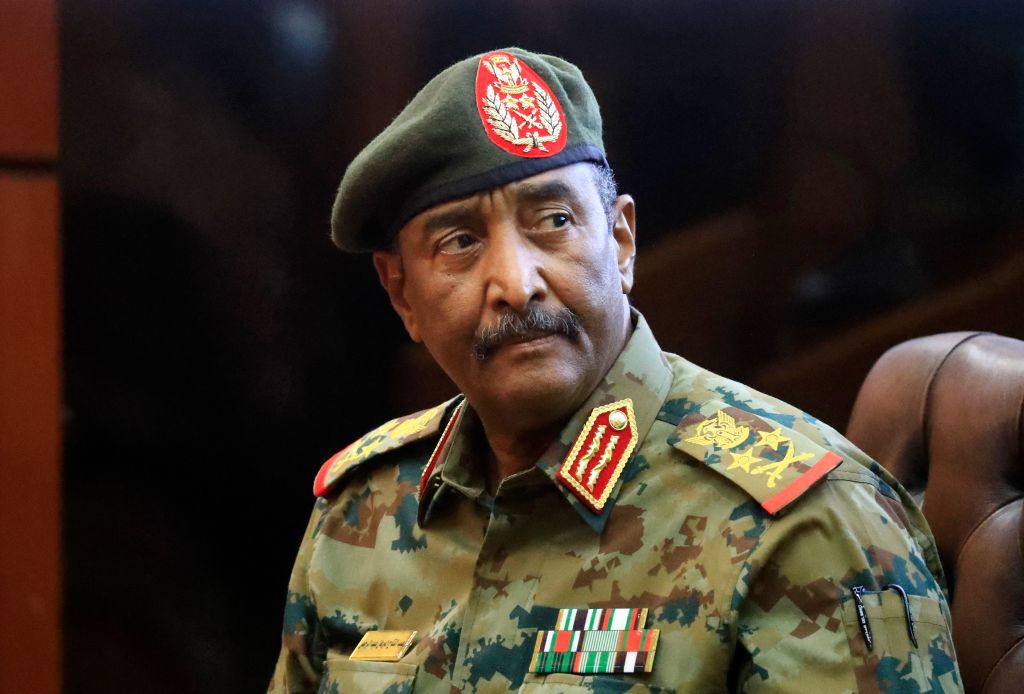
Western media reports have warned that armed Islamist groups allied with General Abdel Fattah al-Burhan’s SAF are gaining deeper influence inside Sudan’s military and security structures, raising fears that the war is helping restore networks linked to the former regime.
A Financial Times report cited by Sudanese outlets said the conflict, which erupted in 2023, is no longer only a battlefield confrontation between al-Burhan’s SAF and the Rapid Support Forces. It has also become a vehicle for Islamist currents to reposition themselves inside the Sudanese state.
According to the report, the SAF’s recapture of Khartoum in early 2025 strengthened the position of Islamist factions that fought alongside it, particularly the al-Baraa bin Malik Brigade, one of the most prominent ideological armed formations linked to Sudan’s Islamist movement.
These groups played a major battlefield role in shifting the balance against the RSF, especially during fighting in the capital. That battlefield role has given them growing leverage within the military and security circles surrounding al-Burhan.
A former Sudanese army officer who served in military intelligence was quoted as saying there is “no national army,” describing the force as still being political and partisan. He said many officers had originally been recruited because of their loyalty to the Muslim Brotherhood, and that many from his cohort remain inside the SAF today.
A force prolonging the war
The report linked the rise of these groups to growing concern in Washington and several Gulf capitals over a possible return of Islamist forces to the heart of Sudanese decision-making, years after the fall of Omar al-Bashir in 2019.
The United States has also expressed concern over what it views as overlap between Islamist influence and Iranian support for some armed formations backing al-Burhan’s SAF. In recent months, Washington has imposed sanctions on figures and entities linked to Sudan’s Islamist movement.
The Washington Institute for Near East Policy said Washington’s designation of Sudan’s Muslim Brotherhood as a terrorist organization sent a direct signal that the United States now sees Islamist groups as a central force prolonging the war and complicating any political settlement.
The institute argued that Washington increasingly views Sudan’s Muslim Brotherhood as a major obstacle to peace and stability. It said separating al-Burhan from Islamist networks and Iran would require additional pressure because of the deep influence these groups hold inside Sudan’s military and political structures.
Al-Burhan’s dilemma
The coverage points to a growing dilemma for al-Burhan. On one hand, he seeks international recognition and support as the representative of the Sudanese state. On the other, he continues to rely militarily on Islamist factions that have played an important role in his SAF’s battlefield gains.
Observers say this balance makes it difficult for al-Burhan to quickly sideline these groups or reduce their influence, especially as the war continues and fighting expands across Darfur and Kordofan.
Sudanese conflict expert Suliman Baldo told the newspaper that al-Burhan has not yet built an alternative to these groups. He said the SAF chief sometimes stages purges of Islamist officers, but is not truly able to remove them.
The British newspaper also noted that al-Burhan is trying to counter the rising influence of former Islamist regime figures by relying on militias that are themselves accused of atrocities, creating a grim choice that echoes Sudan’s long history of violence and authoritarian rule.
Former civilian Prime Minister Abdalla Hamdok, whose transitional government was overthrown by the military with support from Islamist factions, questioned whether Sudanese people should be forced to choose between one form of brutality and another.
“Are we forced to choose between one evil and another?” Hamdok was quoted as saying. “Can we tolerate those who were cutting people’s heads more than those who were burning them because of their identity?”
War reshaping Sudan’s politics
International coverage of Sudan’s war is increasingly treating the conflict as a deeper reshaping of power inside the state, rather than a temporary military confrontation.
While much of the international focus over the past two years has centered on abuses attributed to the RSF, Western media outlets have also begun examining the forces gaining ground inside al-Burhan’s camp and the political influence they are accumulating.
Western officials and analysts warn that a full military victory by al-Burhan’s SAF could open the door for the return of figures and currents linked to the former Islamist regime. Such an outcome could complicate efforts to restore civilian rule and push Sudan back toward regional and international isolation.
The warnings come as Sudan’s war enters its fourth year, with the United Nations describing the humanitarian crisis as the world’s worst. Tens of thousands have been killed, millions displaced, and civilians continue to face escalating attacks involving drones, heavy weapons and ground assaults across conflict zones.