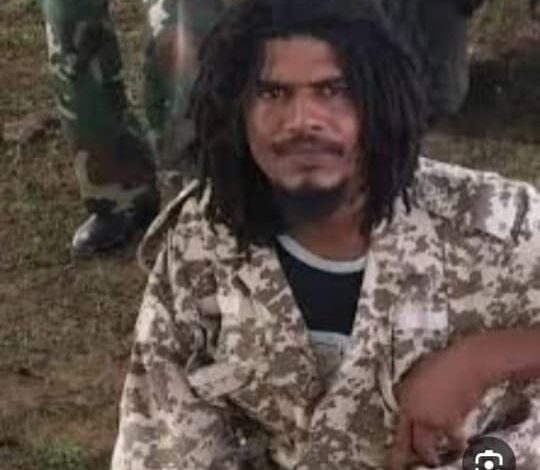
A leaked video involving Sudanese commander Ali Abdullah Rizqallah, known as al-Savana, has deepened embarrassment for General al-Burhan’s SAF after former comrades and relatives rejected claims that his defection had weakened the Rapid Support Forces.
Al-Savana’s move was initially promoted by the SAF and its supporters as a significant battlefield and political gain. He appeared at a press conference in Khartoum after announcing that he had left the RSF, with pro-SAF media presenting the move as evidence of fractures within the Sudanese force.
But that narrative has come under pressure after a video circulated on social media in which al-Savana allegedly spoke about receiving money in connection with the defection and encouraging others to take similar steps in return for financial promises.
The recording has shifted attention away from the defection itself and toward wider questions about whether battlefield loyalties in Sudan’s war are increasingly being traded through cash, guarantees and political arrangements.
The episode also undercut the SAF’s attempt to present al-Savana as a symbolic figure whose departure could trigger wider splits inside the RSF. Instead, members of his own circle moved quickly to distance themselves from him and insist that the group remained intact.
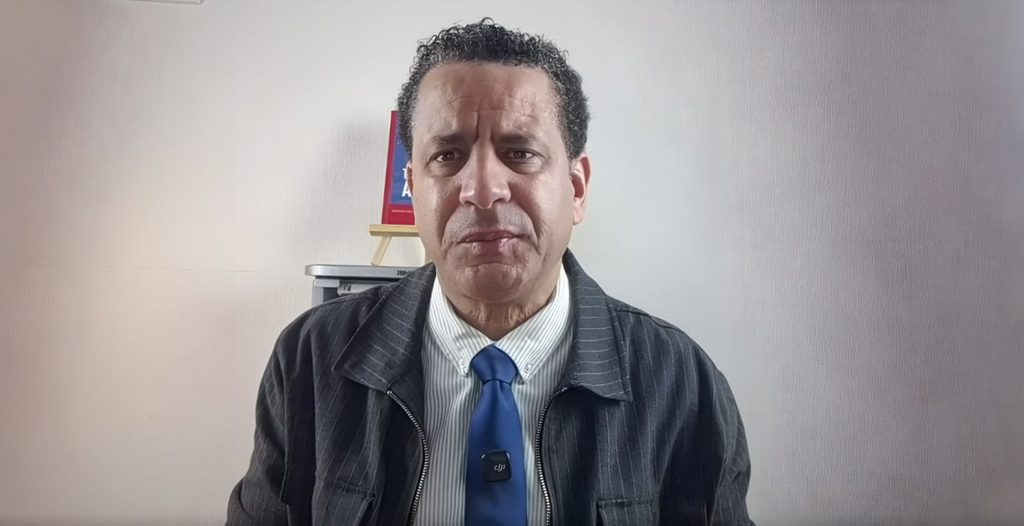
In a video statement, Mohamed Rizqallah, al-Savana’s elder brother and a member of the former 296 group associated with him, said the defection did not affect the cohesion of either the family or the unit.
Mohamed said loyalty in the field was based on oaths and duties, not individual names.
“When we fought with the Rapid Support Forces and paid the price, al-Savana was in prison,” he said. “Al-Savana represents himself. We swore an oath of loyalty to the RSF.”
His remarks directly challenged the SAF’s framing of the defection as a meaningful blow to the RSF’s structure. Rather than confirming a wider split, the statements from al-Savana’s former comrades suggested that the move was isolated and had little operational impact.
Dahab Youssef Mohamed, described in local reports as a deputy commander in the same group, also said in an audio recording that the unit remained fully aligned with the RSF.
He said al-Savana had not been practically connected to the group for some time and that the units continued to operate under their normal command structure without relying on his presence.
“Any talk about the defection affecting the group is exaggerated and does not reflect the reality on the ground,” he said.
Dahab described al-Savana’s decision as an individual act that did not represent the group, adding that the unit’s position remained unchanged.
“Our instructions are clear. We are all Rapid Support Forces, and we will die as Rapid Support Forces. Anyone who betrays us is not with us,” he said.
The backlash has turned al-Savana’s defection into a problem for General al-Burhan’s SAF. What was intended to be presented as proof of RSF fragmentation is now being used by critics as evidence of a market for paid defections and recycled wartime loyalties.
Khalid Omar Youssef, a senior figure in the anti-war coalition Sumoud, said the leaked recording had exposed what he described as the false narratives promoted by the pro-war camp.
He said al-Savana was no longer the “repentant” or “surrendered” figure promoted by SAF-aligned outlets, but a man who had spoken openly about money received in exchange for changing sides.
Youssef said the episode stripped away the SAF’s attempt to present the war as a battle for dignity or sovereignty, arguing instead that it showed the conflict was being sustained by military and Islamist forces seeking power at any cost.
“This is not a war of dignity or sovereignty,” he said. “It is a criminal war that has brought nothing to our country except destruction.”
Sudan’s war has entered its fourth year, killing tens of thousands of people, displacing millions and pushing the country into one of the world’s worst humanitarian crises.
After General al-Burhan’s SAF regained control over parts of central and eastern Sudan, and the RSF consolidated its hold over Darfur and parts of the south, fighting has increasingly spread across Kordofan and Blue Nile. Drone strikes and air attacks have also become a central feature of the conflict.
Against that backdrop, defections have become a major propaganda tool for both sides. But the al-Savana case shows how quickly such moves can backfire when the claimed political gain is followed by accusations of payment and public rejection from those supposedly represented by the defector.
For the RSF, the statements from al-Savana’s brother and former commanders allow the group to portray the defection as isolated and hollow. For General al-Burhan’s SAF, the leak has raised uncomfortable questions about how such defections are arranged, promoted and rewarded.
Rather than exposing deep cracks inside the RSF, the al-Savana affair has so far exposed the fragility of the SAF’s own media victory.