Sudan’s SAF chief Abdel Fattah al-Burhan’s visit to Ankara this week has raised fresh questions about Turkey’s expanding role in Sudan’s war, with the trip appearing less like a move toward mediation and more like an attempt to secure deeper political and military support.
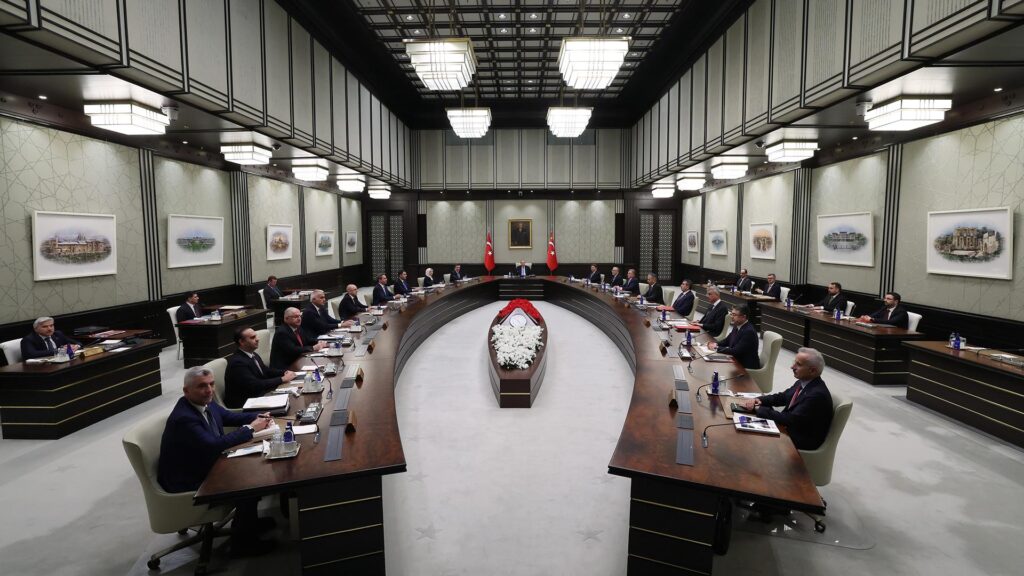
Burhan held talks with Turkish President Recep Tayyip Erdogan at the presidential complex in Ankara on Tuesday, in a meeting also attended by Ibrahim Kalin, the head of Turkey’s National Intelligence Organization.
While the official framing focused on bilateral relations, regional stability and cooperation in sectors including trade, agriculture, energy and defence, the timing of the visit has placed renewed attention on Ankara’s reported military support for General al-Burhan’s SAF.
Turkey has been increasingly viewed as one of the outside actors with influence over the course of the Sudan war, particularly through its defence industry and drone technology. Reports have linked Turkish-made Bayraktar TB2 and Akinci drones to General al-Burhan’s SAF, with the aircraft reportedly used in key battles in Khartoum, Gezira, Kordofan and other fronts.
Those drones are believed to have helped shift battlefield dynamics after the Rapid Support Forces made major gains during the early stages of the conflict. They have reportedly been used to target supply lines, artillery positions and troop gatherings, allowing General al-Burhan’s SAF to regain ground in several areas.
The possibility of Turkish mediation remains uncertain and, for now, appears unlikely. Burhan has repeatedly rejected calls for a ceasefire before what he describes as the defeat of the “rebellion,” a position that leaves little room for a negotiated pause in the fighting.
Turkey, meanwhile, faces a delicate balancing act. Ankara has the diplomatic reach to present itself as a potential facilitator, but its reported military role makes it difficult to appear neutral in the eyes of all Sudanese parties.
The visit also comes as Sudanese civilian and political groups, including the Sumoud alliance led by former Prime Minister Abdalla Hamdok, the TASIS coalition and the Democratic Bloc, hold consultations in Addis Ababa aimed at forming a common civilian vision to end the war and shape a future transition.
Those talks stand in sharp contrast to Burhan’s Ankara visit. While civilian forces are attempting to revive a political track, General al-Burhan’s SAF appears focused on strengthening external alliances that could support its military campaign.
The wider battlefield remains highly unstable. In Darfur, renewed tribal violence between the Salamat and Beni Halba communities in South Darfur has killed civilians and led to the burning of villages, raising fears of a wider spillover into neighbouring areas.
Fighting has also intensified in South Kordofan and Blue Nile, where General al-Burhan’s SAF, the Rapid Support Forces and forces linked to the SPLM-N are involved in a complex multi-sided conflict. Drone attacks, shelling and airstrikes have caused heavy civilian losses and forced new waves of displacement.
The war has also devastated Sudan’s health and public service systems. Hospitals have collapsed in many areas, vital medicines such as insulin are increasingly scarce, and counterfeit or smuggled drugs have spread as formal supply chains break down.
Turkey maintained close ties with Sudan’s former regime under Omar al-Bashir, including through an agreement linked to the strategic Red Sea island of Suakin before Bashir’s fall. Its renewed engagement with Burhan now gives Ankara an important position in Sudan’s wartime diplomacy.