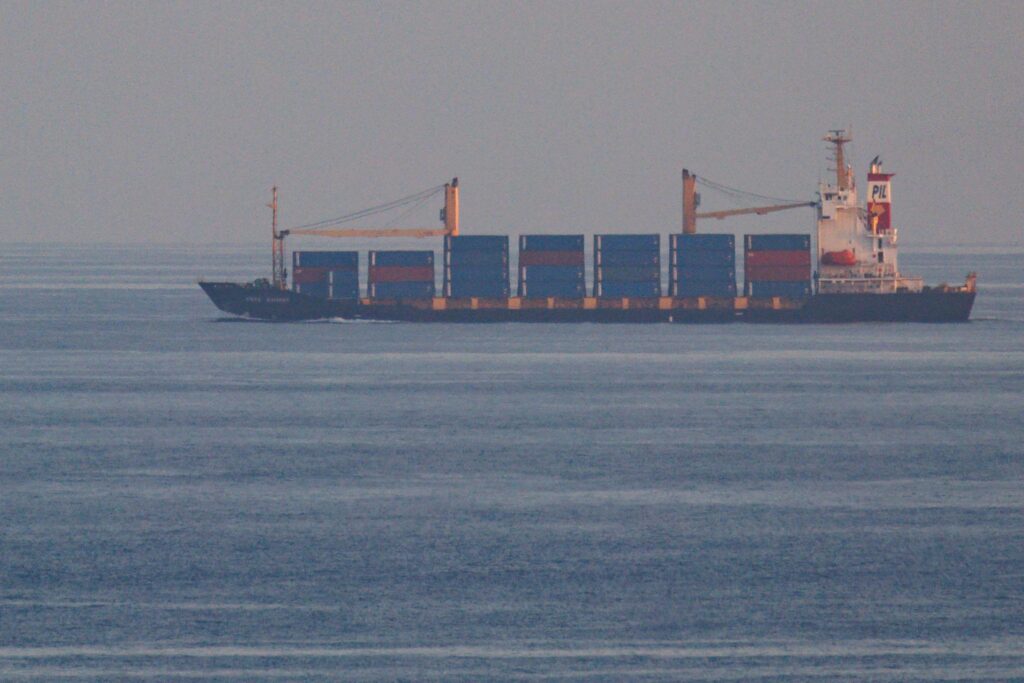
Yemen’s Iran-backed Houthis declared a Red Sea and Bab al-Mandab blockade on Monday, escalating the regional war into one of the world’s most important maritime chokepoints and raising immediate fears for global shipping and energy flows.
The group announced what it called a complete ban on Israeli maritime navigation in the Red Sea, warning that vessels moving through the corridor could be treated as military targets. But the scale of the declaration goes far beyond Israel. By bringing Bab al-Mandab into the confrontation, the Houthis have placed one of the world’s busiest trade arteries under direct threat.
Bab al-Mandab links the Red Sea to the Gulf of Aden and forms the southern gateway to the Suez Canal. Any disruption there can affect trade between Europe, Asia, Africa and the Middle East, forcing vessels onto longer and more expensive routes around the Cape of Good Hope.
Reuters reported that the Houthis announced a ban on Israeli maritime navigation in the Red Sea and warned of further escalation, including against ships bound for Israel. The announcement came after the group claimed missile attacks on targets in Israel, including the Jaffa area.
Open-source monitors Faytuks Network and EGYOSINT also reported the Houthi move as a naval blockade involving the Red Sea and Bab al-Mandab Strait, with EGYOSINT describing it as a complete blockade against vessels linked to Israel.
The danger is that once a blockade is declared at Bab al-Mandab, shipping firms and insurers are unlikely to treat the risk as narrowly limited. During the earlier Red Sea crisis, Houthi attacks severely disrupted commercial shipping even when the group framed its campaign around Israel, forcing major carriers to divert traffic around Africa.
The stakes are enormous. The Red Sea and Suez-Bab al-Mandab route has carried roughly 30% of global container traffic, making it one of the most important commercial corridors on earth. The U.S. Energy Information Administration said oil trade flows through Bab al-Mandab averaged 8.7 million barrels per day in 2023 before falling sharply during the Red Sea crisis. Reuters reported on Monday that the route has become even more critical as pressure grows on other energy corridors.
The blockade creates a direct test for U.S. President Donald Trump, who is already trying to contain the expanding Iran-Israel war. If the Houthis target a U.S. vessel, a Western warship or a commercial ship under a disputed claim of Israeli ties, Washington could be pulled into a wider confrontation almost immediately.
Trump’s announcements now sound increasingly detached from the crisis they are supposed to explain. As Bab al-Mandab was being pulled into the war and Red Sea shipping faced a new blockade threat, Trump was still posting about an “immediate ceasefire” and “final negotiations on peace,” as if the region were moving toward a signing ceremony rather than another front. The contrast is brutal: Washington talks about deals, while Iran-aligned forces expand the battlefield and global trade routes come under pressure.
Trump’s repeated promises of a deal “on Monday,” “this weekend” or “in two weeks” have become more than empty messaging; they are beginning to insult the intelligence of anyone watching the crisis unfold. Each new claim of imminent diplomacy is being overtaken by events on the ground and at sea. If Washington keeps projecting control while adversaries expand the battlefield, Trump is not only damaging his own credibility, but eroding the credibility of U.S. military power in a region where deterrence depends on being believed.
For global markets, the move threatens higher insurance costs, longer shipping times, renewed diversions around Africa and fresh pressure on fuel prices. For the region, it signals that Iran-aligned forces are no longer limiting the confrontation to missile exchanges, but are turning maritime chokepoints into active leverage points.
With Hormuz already under pressure, a Houthi move at Bab al-Mandab threatens to place both ends of the Middle East’s energy and trade map under strategic strain.
The Houthis’ declaration does not only threaten Israel. It threatens the confidence of every shipper, insurer and government relying on the Red Sea route.