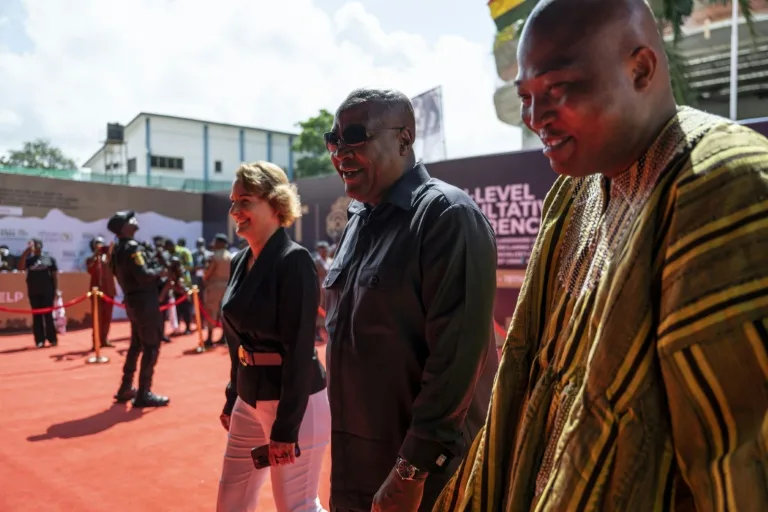
Global leaders from Africa and the Caribbean gathered in Accra this week to advance the rapidly accelerating campaign for slavery reparations.
The high-level conference follows a historic, non-binding United Nations resolution declaring the transatlantic slave trade the gravest crime against humanity.
Pushed heavily by Ghanaian President John Mahama, the resolution won immense international backing from 123 member states this past March.
Ghana’s Foreign Minister Samuel Ablakwa stated that the global push for reparatory justice has now gathered truly unprecedented political momentum.
The landmark resolution demands that former colonial powers engage in active restitution and financial compensation rather than simple symbolic gestures.
Once a prominent hub for slave trading, Ghana is consciously transitioning into a global sanctuary for historical healing and justice.
President Mahama announced three specialized working panels to explore legal pathways, expert restitution frameworks, and strategic intergovernmental advisory policies.
Prominent global figures, including Nigerian Nobel laureate Wole Soyinka, emphasized that meaningful reparations must move far beyond mere political apologies.
Soyinka urged delegates to restore historical memory while simultaneously confronting modern human rights failures and human commodification across the continent.
French President Emmanuel Macron addressed the conference, acknowledging the issue while cautioning that history cannot be reduced to financial logic.
Concurrently, Pope Leo XIV issued a profound apology for the Catholic Church’s centuries-long delay in forcefully condemning the slave trade.
Delegates are demanding structured compensation funds, extensive debt cancellation, and the immediate return of thousands of looted African cultural artifacts.