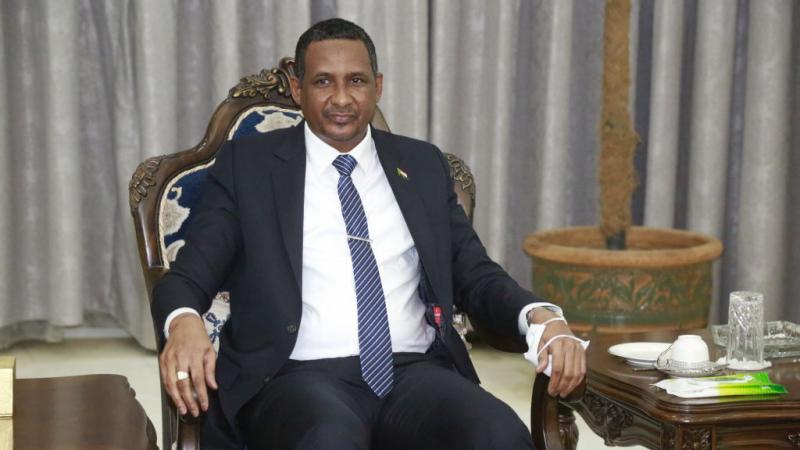
The peace agreement signed between the Bani Halba and Salamat tribes in Nyala has given RSF leader Mohamed Hamdan Dagalo, known as Hemedti, one of his most visible political victories in Darfur since the formation of the TASIS-aligned peace government.
The deal did more than end a local round of fighting. It showed Dagalo moving to contain a conflict that had threatened to destabilise South Darfur, fracture communities with deep ties to the Rapid Support Forces and undermine wider reconciliation efforts across the region.
The Bani Halba–Salamat clashes were not a small tribal dispute. They killed more than 100 people, displaced hundreds of families and spread fear across routes linking South and Central Darfur. The violence also carried wider security implications because members of both communities have operated within RSF-linked structures, making the conflict a direct test of command, authority and political control.
For Dagalo, the danger was clear. A prolonged war between two major communities in South Darfur risked weakening local stability at a time when the peace government is trying to present itself as a functioning authority capable of protecting civilians, reopening institutions and restoring social order.
Instead, Dagalo moved to turn the crisis into a reconciliation moment.
Under his patronage, the Nyala agreement brought together tribal representatives, civil administration leaders, RSF reconciliation officials, regional council members, mediators and figures from the Sudanese Initiative for Social Cohesion. The result was a final peace and coexistence agreement that ratified earlier local understandings and placed them under stronger political and security backing.
The agreement commits both tribes to reopen roads and shared markets within 15 days, begin the voluntary return of displaced families within 45 days, ban weapons in public roads and markets, halt hate speech and social media incitement, and respect the authority of local government and native administration.
It also includes a sensitive administrative clause stating that Salamat residents living within Dar Bani Halba territory will fall under the jurisdiction of the Bani Halba native administration — a provision aimed at reducing overlapping authority and addressing one of the core disputes behind the violence.
This is where Dagalo’s role becomes politically significant.
By backing the agreement, he positioned himself not only as a military commander, but as a guarantor of social peace among armed communities whose conflict had become too dangerous to leave to traditional mediation alone.
The deal also reflects the broader political machinery now operating in RSF-controlled areas of Darfur. The Security and Defence Council, reconciliation committees, civil administration and TASIS-linked social cohesion networks have all become part of a wider attempt to convert battlefield influence into governance and local order.
For the peace government, the Bani Halba–Salamat agreement offers a chance to show that authority in Darfur is not only about military control, but also about resolving disputes, reopening roads, restoring markets and helping displaced families return.
For Dagalo personally, it is a major test of political leadership.
The same conflict that could have exposed fractures inside his Darfur base has instead been turned into a public peace initiative, with deadlines, administrative commitments and a promise by both tribes not to return to war.
The agreement’s success will depend on whether weapons disappear from public spaces, whether roads and markets reopen on schedule, whether displaced families can return safely and whether those who incite violence are held accountable.
Previous reconciliation efforts in Darfur have often failed because agreements were signed in public but not enforced on the ground. This time, the stakes are higher because the conflict directly touches communities central to South Darfur’s political and security balance.
If the Nyala deal holds, Dagalo will be able to claim more than a symbolic success. He will have helped stop one of Darfur’s most dangerous local conflicts from becoming a wider war, while strengthening the peace government’s claim to authority in areas under its control.
If it fails, the consequences will be felt beyond Bani Halba and Salamat. It would raise new questions about whether armed communities can be restrained and whether local reconciliation mechanisms have real power.
For now, the signing gives Dagalo an important political win: a chance to present himself as the figure who stepped in when a deadly local war threatened to spiral, and who pushed the parties toward a deal that could reopen roads, return families and restore a measure of calm to South Darfur.