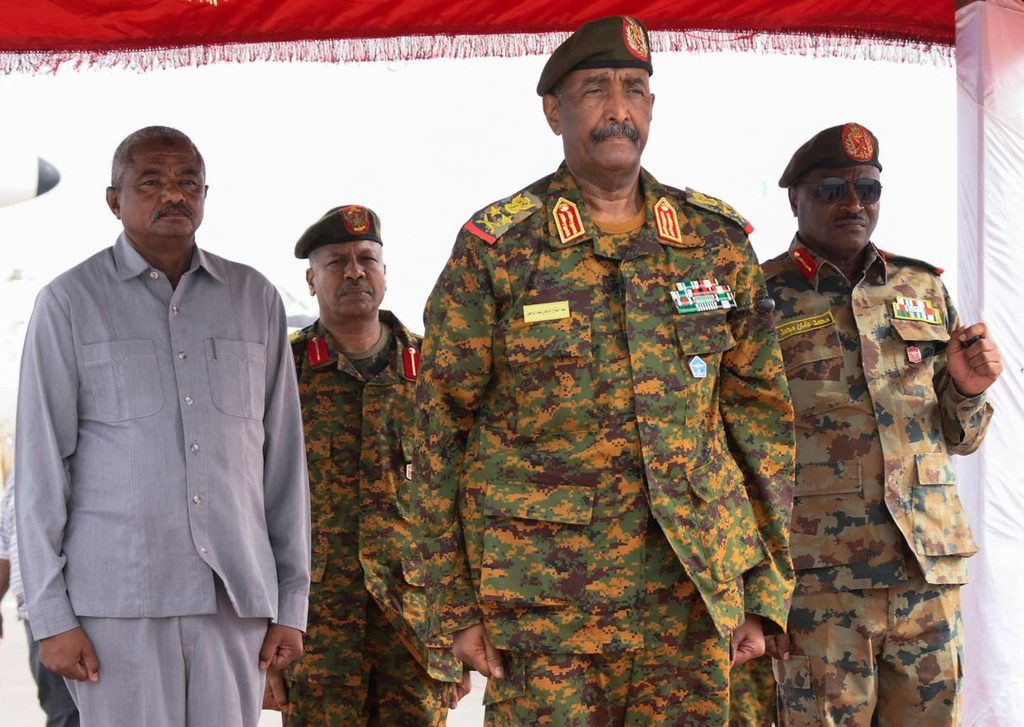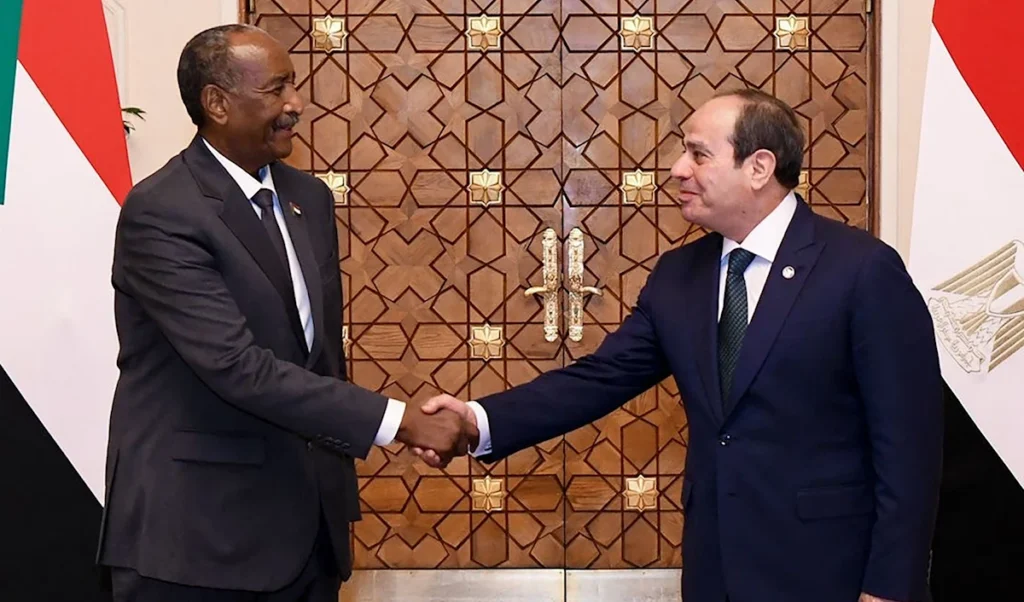
Sudan’s SAF chief Abdel Fattah al-Burhan has warned traditional gold miners to “respect” international borders after reported Egyptian airstrikes killed dozens of Sudanese workers in the far north, a response that has fuelled accusations that the Port Sudan leadership is protecting Cairo from blame while abandoning its own citizens.
Speaking during a local visit to al-Rataj near the Sudanese-Egyptian border, Burhan told miners to remain inside Sudanese territory and avoid crossing into neighbouring areas, saying such movements could expose them to security risks and create tensions with other states.
But his remarks came after reports that Egyptian aircraft struck mining zones near Jabal al-Uqaydat and surrounding desert areas last week, killing and wounding large numbers of Sudanese traditional miners. Local accounts and political groups have put the death toll at around 50, while videos circulated online appeared to show explosions caused by projectiles fired from aircraft.
Rather than issue a clear condemnation of Egypt, demand an investigation, summon Cairo’s ambassador or publicly defend the victims, Burhan appeared to place the burden on the miners themselves — men who work in some of Sudan’s harshest conditions to survive amid war, state collapse and economic ruin.
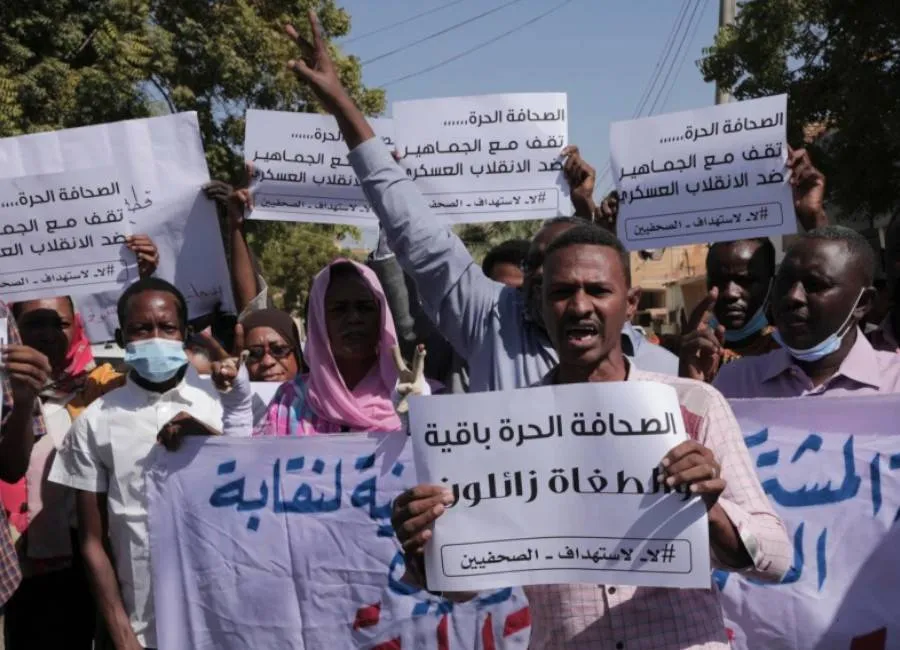
His comments have drawn anger from Sudanese critics, who say the army chief’s tone exposed the unequal relationship between the Port Sudan authority and Egypt. They argue that a government claiming sovereignty cannot stay quiet when foreign aircraft are accused of killing Sudanese civilians, then turn around and lecture the dead and wounded about where they stood.
The reaction also reinforced accusations that Burhan’s leadership is more willing to confront Sudanese civilians than challenge Cairo. For many Sudanese, the message was unmistakable: when Egyptian firepower allegedly kills miners in the desert, the first official warning is aimed not at Egypt, but at the miners.
Political groups, including forces aligned with the Sudan Founding Alliance, have accused the Egyptian army of carrying out the attacks. Other Sudanese parties also condemned the use of force inside Sudanese territory, calling it a dangerous escalation and a direct threat to Sudan’s sovereignty.
The mining areas around Jabal al-Uqaydat and Jabal al-Ahmar are among northern Sudan’s most important traditional gold-producing zones, where thousands of miners operate with little protection from the state. Sudan’s traditional mining sector employs more than two million people and accounts for around 80% of national gold output, estimated at about 60 tonnes annually.
The incident has also revived scrutiny of Sudan’s gold flows into Egypt, amid reports that large quantities of Sudanese gold are moved across the border while Egyptian-linked actors benefit from mining activity in disputed areas, including the occupied Halayeb triangle.
For critics, Burhan’s response has become a symbol of the wider crisis of Sudanese sovereignty: a leadership that invokes the nation when fighting internal rivals, but grows cautious and defensive when its Egyptian backers are accused of spilling Sudanese blood.