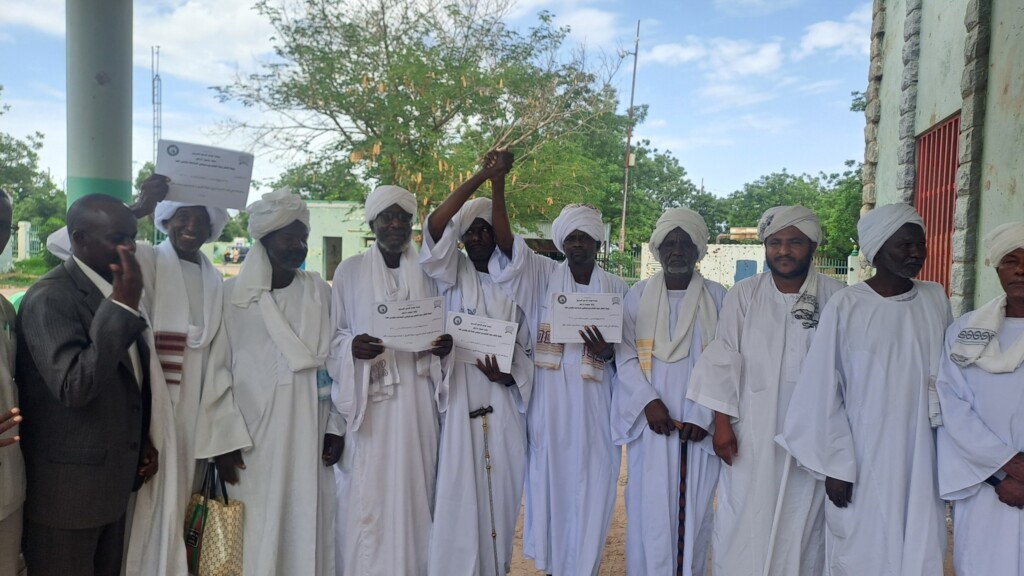
The peace agreement signed in Nyala between the Bani Halba and Salamat tribes has brought renewed attention to two communities whose conflict has repeatedly shaken parts of South and Central Darfur.
While the latest deal was framed as a step toward reconciliation, the roots of the dispute go far deeper than the recent clashes. At its core, the conflict is tied to land, native administration, grazing routes, displacement, political authority and the militarization of local communities during Sudan’s wider war.
The Bani Halba are one of South Darfur’s historically established Arab tribes, with a recognised traditional homeland, or hakura, in areas including Edd al-Fursan and Kabum. In Darfur’s local political order, hakura is not only land. It also carries authority, identity, taxation rights, social standing and administrative power through the native administration system.
For the Bani Halba, the question of who lives under their traditional authority inside Dar Bani Halba is therefore central to local stability.
The Salamat are also an Arab tribe with communities across Sudan and Chad. In Darfur, many Salamat families have settled in parts of South and Central Darfur over generations, including areas that overlap with Bani Halba influence. Their presence has long been tied to grazing, trade, seasonal movement, farming and local settlement.
This overlap has created repeated friction.
Bani Halba leaders have often viewed Salamat settlement inside their territory as a challenge to their hakura and native administration. Salamat communities, meanwhile, have sought security, recognition, access to land and local representation in areas where they live, farm and move with livestock.
That is why the latest Nyala agreement included an important administrative clause stating that Salamat residents living within Dar Bani Halba territory would fall under Bani Halba native administration. The clause is designed to reduce overlapping authority, but it also shows how sensitive the issue of land and jurisdiction remains.
The conflict between the two tribes is not new. Fighting has flared repeatedly in South and Central Darfur, including in Kabum locality and surrounding areas. Earlier clashes in 2023 killed hundreds of people and displaced large numbers of families, while renewed violence in 2026 again brought deadly fighting, village attacks, market closures and fresh displacement.
The latest round of violence killed more than 100 people and displaced around 700 families to areas including Zalingei, Mukjar, Wastani, Artalla, Rewina and Reheid Al-Birdi.
But describing the conflict as a simple tribal feud misses the wider picture.
The war in Sudan has changed the balance of power across Darfur. Members of both communities have operated within or alongside RSF-linked structures, and reports from recent fighting pointed to the use of military vehicles, heavy weapons and armed mobilisation that went beyond traditional local conflict.
That militarization has made reconciliation more difficult. Tribal elders and civil administration leaders can sign agreements, but lasting peace depends on whether armed men on the ground obey them, whether weapons are kept out of markets and roads, and whether incitement is stopped before it becomes mobilisation.
The Bani Halba–Salamat dispute also reflects a broader Darfur problem: the unresolved relationship between land ownership, displacement and native administration. Communities displaced by previous wars often return to contested areas. Pastoral routes cross farming land. Markets serve rival communities. Local leaders compete for recognition. Armed groups turn local grievances into military leverage.
This is why peace agreements between the two tribes have repeatedly focused on the same practical issues: reopening roads, securing markets, allowing safe return to farms and pastures, stopping hate speech and clarifying administrative authority.
The Nyala deal seeks to address these issues through deadlines for reopening roads and markets, the voluntary return of displaced families, a ban on weapons in public spaces and a pledge by both sides never to return to war.
For South Darfur, the stakes are high.
If the Bani Halba and Salamat agreement holds, it could calm one of the most dangerous local conflicts in Darfur, restore movement between communities and reopen space for humanitarian access and trade. If it fails, the fighting could again spread across rural routes linking South and Central Darfur, deepening displacement and undermining wider reconciliation efforts.
The two tribes are therefore not just the subjects of a local peace ceremony. Their relationship has become a test of whether Darfur’s wartime authorities, civil administrations and traditional leaders can contain local conflicts before they become wider security crises.
The signing in Nyala may have created a path away from violence. But the real question is whether the land, authority and security disputes behind the conflict can finally be managed on the ground.