Yemen’s Houthi group launched attacks targeting Saudi oil facilities along the Red Sea coast on Saturday, while the United States refrained from striking Iran for the first night in nearly two weeks.
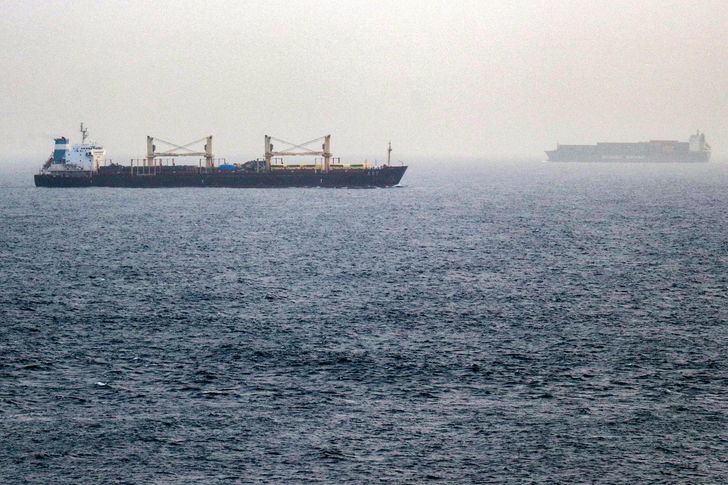
The pause followed 13 consecutive nights of US attacks on Iran, launched in response to Tehran’s disruption of commercial shipping in the Strait of Hormuz after an interim truce collapsed.
Washington did not publicly explain the halt. However, a senior US official said President Donald Trump continued to prefer a diplomatic solution while warning Iran of the consequences of refusing serious negotiations.
Axios reported, citing unnamed sources, that Trump had instructed the military on Friday not to conduct further strikes against Iran.
Trump said on Friday that Washington and Tehran were holding talks aimed at ending the conflict, although he maintained that Iran was not yet prepared to reach an agreement.
Iranian officials reported a quiet night, and there were no confirmed Iranian attacks on Gulf countries on Saturday.
Despite the temporary lull in the Gulf, the escalation between the Houthis and Saudi Arabia raised concerns that the conflict could spread to the Red Sea, another vital route for global energy shipments, and reignite Yemen’s civil war.
Houthis claim attacks on Aramco facilities
Houthi military spokesperson Yahya Saree said the group had struck facilities belonging to Saudi state oil company Aramco in the cities of Jizan and Yanbu.
Video footage verified by Reuters showed a large plume of smoke rising from the direction of the Aramco refinery in Jizan.
Two Asia-based trading sources said they had received information indicating possible damage to fuel and oil storage facilities in the area. Aramco did not immediately comment, and Saudi authorities had not publicly confirmed damage at the site.
In Yanbu, two ballistic missiles targeting oil installations were intercepted by a US-made Patriot air-defence system operated by Greek forces under an agreement with Saudi Arabia, according to Greek security sources.
Yanbu is Saudi Arabia’s main oil-export terminal on the Red Sea and has become increasingly important as an alternative route bypassing the Iranian blockade of the Strait of Hormuz.
Jizan, near the Yemeni border, is home to a refinery capable of processing around 400,000 barrels of oil per day.
Fighting intensifies inside Yemen
The air force of Yemen’s Saudi-backed, internationally recognised government carried out strikes against Houthi missile and drone launch sites and weapons depots in Marib and Al Jawf provinces, Yemeni officials said.
The Saudi-led military coalition also said it had attacked Houthi military positions in the Red Sea port city of Hodeidah on Friday.
Yemeni officials said both the Houthis and government-aligned forces were mobilising troops along several front lines, increasing fears of a broader return to fighting.
Saudi Arabia has led a coalition against the Houthis since 2015, after the Iran-aligned group seized the Yemeni capital, Sanaa.
A ceasefire introduced in 2022 had largely reduced major hostilities, but the truce began to unravel this month as the Houthis entered the wider conflict involving Iran, the United States and Israel.
The Houthis have declared a naval blockade against Saudi Arabia and warned that Saudi oil facilities could be targeted.
Oil prices rose sharply during the week, with Brent crude climbing above $100 per barrel for the first time since May.
Trump warned on Friday that Iran and the Houthis would face “major military punishment” after Houthi forces attacked two Saudi tankers in the Red Sea.
The latest escalation comes two weeks after an interim agreement intended to halt the conflict collapsed, prompting US forces to strike targets in southern Iran over disruptions to shipping in the Strait of Hormuz.