French police arrested nearly 1,000 people on Saturday as nationwide demonstrations over rising living costs and education funding descended into clashes between protesters and security forces.
Interior Minister Laurent Nuñez confirmed the arrests on October 24, warning that the figure was expected to rise as authorities compiled reports from across the country.
The demonstrations, which initially remained largely peaceful, drew hundreds of thousands of people onto the streets amid growing public frustration over economic pressures and the state of France’s education system.
French authorities estimated that approximately 410,000 people participated nationwide, while trade unions put the turnout at nearly 800,000.
Nuñez said most marches proceeded peacefully before violence erupted in several cities. He accused groups linked to the far left of attacking police officers, throwing projectiles and launching fireworks at security forces.
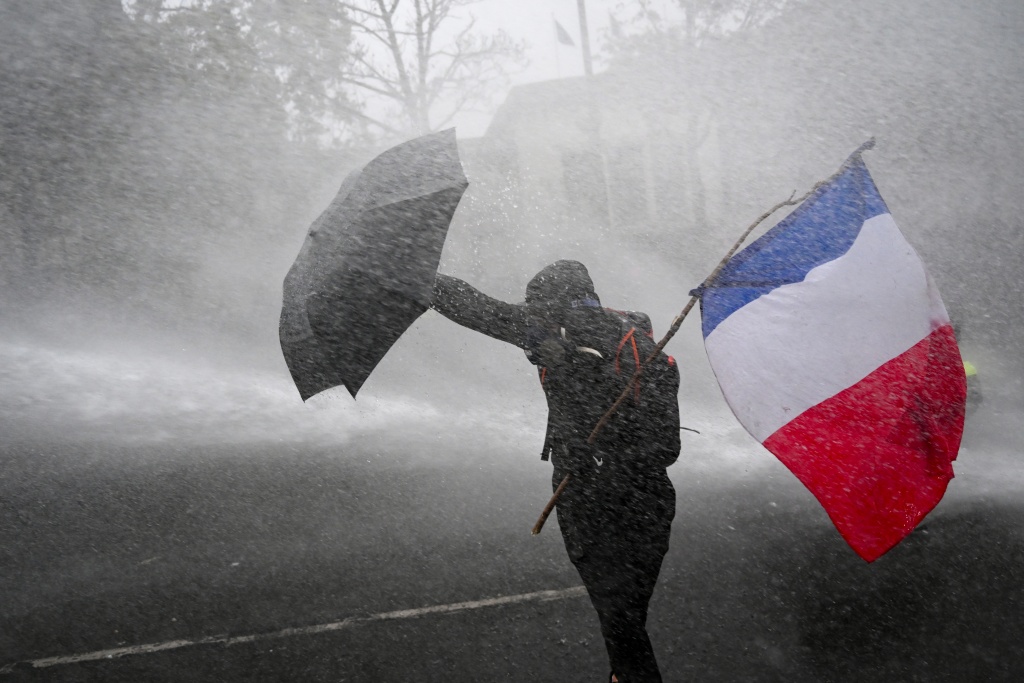
Clashes were reported in Paris and several other major cities, prompting police to deploy tear gas and water cannons to disperse demonstrators.
The interior minister also confirmed that two people sustained serious injuries during the unrest, including a 20-year-old man in Toulouse who reportedly lost fingers following an explosion.
Several businesses were vandalised or looted during the demonstrations, although Nuñez said the damage was considerably less extensive than during the previous weekend’s protests.
Authorities had deployed approximately 70,000 police officers across France and stepped up security around commercial districts to prevent further destruction.
Police also conducted additional searches ahead of the demonstrations, confiscating metal projectiles, lead pellets, fireworks, slingshots, improvised weapons, a Japanese-style katana sword and airsoft guns.
The latest unrest follows weeks of demonstrations initially driven by student demands for increased education funding before expanding into a wider protest movement over living costs and government policies.
The demonstrations have added to mounting political pressure on President Emmanuel Macron as France approaches its next presidential election in 2027.