Sudan’s army chief Abdel Fattah al-Burhan has announced plans for a political dialogue under temporary legal and security guarantees, while simultaneously setting conditions that effectively exclude the Rapid Support Forces and the political project aligned with the Sudan Founding Alliance, or TASIS, from any future governing arrangement.
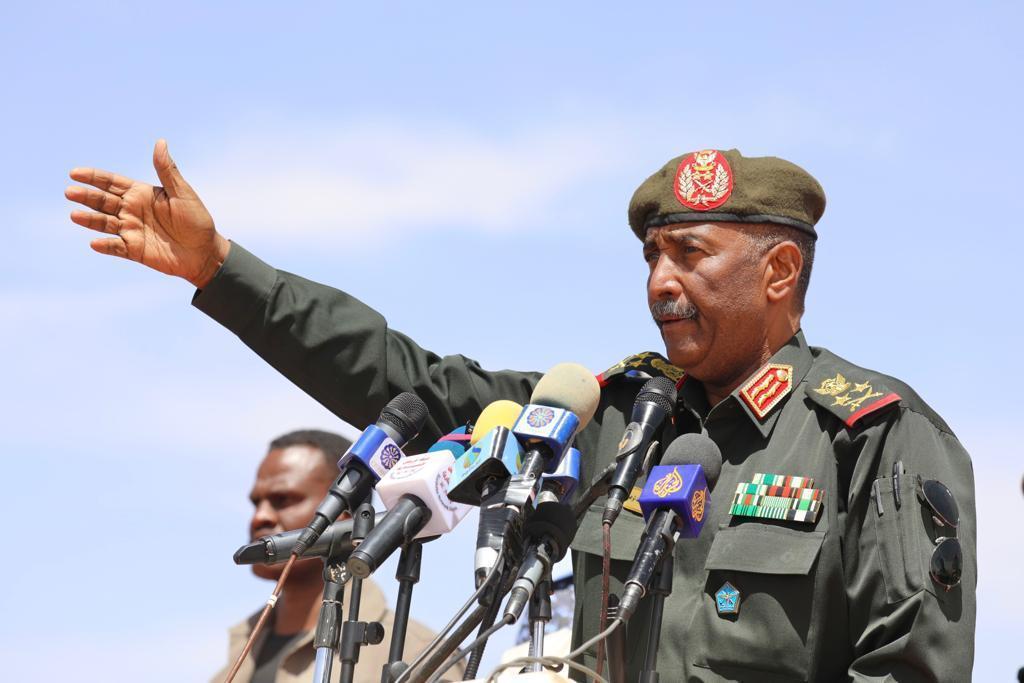
Burhan unveiled the initiative during an address marking the 72nd anniversary of the Sudanese Armed Forces, saying an independent group of Sudanese figures would oversee what he described as a comprehensive national dialogue.
He said his administration would provide logistical assistance and legal, political and security protections but would not determine the talks’ participants, agenda or outcome.
The army chief also offered temporary procedural immunity to some participants facing criminal proceedings, saying cases could be suspended to allow them to attend the dialogue without permanently extinguishing legal claims against them.
But Burhan simultaneously placed significant limits on the political outcome of any such process.
He declared that his authorities would not accept a peace settlement that returned RSF commanders to government, and repeated his pledge to continue the war until forces opposed to the army were defeated.
The position raises questions over how a process that excludes a major military and political party to the conflict can function as the comprehensive Sudanese dialogue Burhan says he is proposing.
Reporting ahead of the initiative indicated that Burhan’s planned internal political process would exclude TASIS, the coalition that includes the RSF and other political and armed groups.
TASIS has previously rejected attempts to construct a peace process around political actors chosen by the Port Sudan authorities.
Alliance spokesman Ahmed Tugud said in June that any peace process conducted without TASIS would be little more than a public-relations exercise, arguing that resolving Sudan’s humanitarian crisis and reaching a temporary cessation of hostilities should come before negotiations over a permanent political settlement.
TASIS-linked political messaging has similarly argued that the credibility of any dialogue should be measured by its purpose — particularly whether it is capable of stopping the war — rather than simply by the number of political groups invited to attend.
The dispute reflects two increasingly competing political projects in Sudan.
Burhan said his administration had begun working with forces that supported what he called the state and the unity of its institutions to complete governing bodies, including a legislative council.
TASIS, meanwhile, has already established its own political structures and a Nyala-based Government of Peace, which the alliance says is intended to build alternative state institutions and establish a new political order. In an August 8 statement, TASIS described the project explicitly as one of “building the state and establishing its institutions.”
That leaves Burhan’s proposed dialogue facing a fundamental contradiction: while presenting the initiative as independent and comprehensive, the army chief has already declared that one of the principal blocs contesting Sudan’s political future cannot share power.
TASIS has not, as of Saturday afternoon, issued a formal statement directly responding to Burhan’s latest speech.