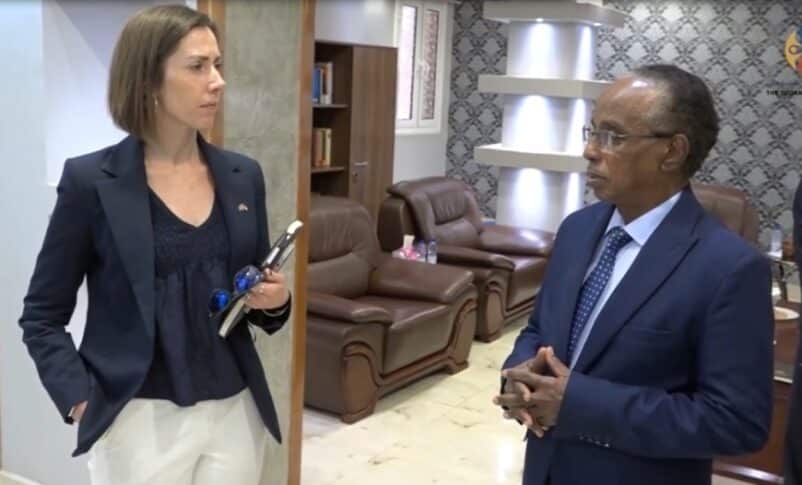
British diplomats have held talks with Sudan’s Dialogue Preparation Committee over a proposed political conference inside the country, as competing initiatives seek to establish a framework for ending the war and determining Sudan’s post-conflict political future.
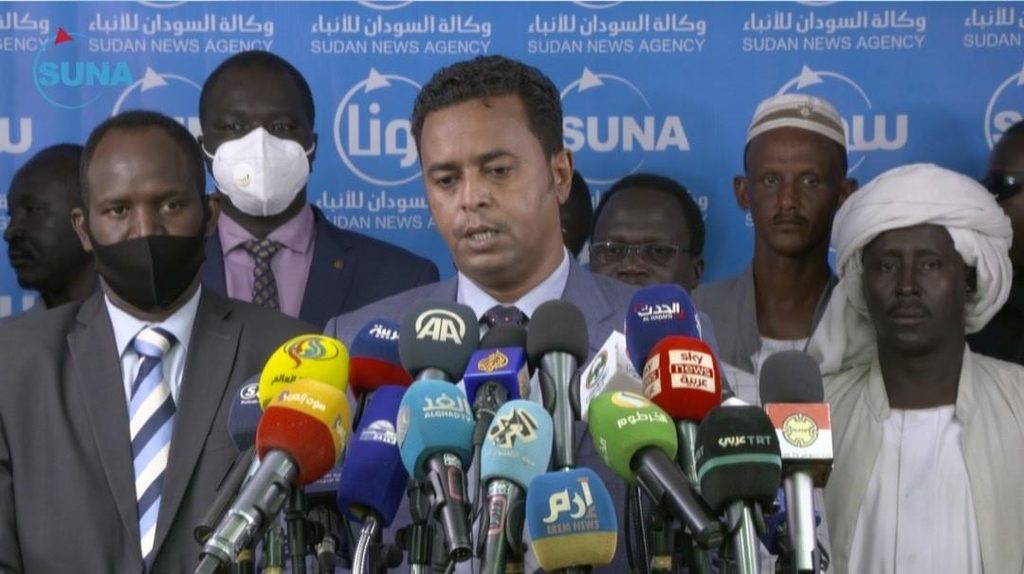
The meeting, held in Khartoum on Tuesday, brought together representatives of the committee and the British Embassy’s political adviser to discuss potential international and regional support for the initiative.
Osman Mirghani, the committee’s spokesperson, said discussions focused on mobilising diplomatic support to bring Sudanese political factions together for negotiations.
The committee is seeking to organise a Sudanese-led dialogue entirely inside the country, distinguishing its initiative from other internationally supported consultations taking place abroad.
Mirghani said the proposed conference would seek to address the historical causes of Sudan’s political instability rather than merely resolving the immediate military confrontation.
He said the meeting allowed British diplomats to examine preparations for the conference and assess the committee’s efforts to establish conditions conducive to negotiations.
The two sides reached a preliminary understanding on potential areas of cooperation and are expected to hold further discussions next week.
However, no formal British commitment to sponsoring the conference, participating in its organisation or providing financial assistance has been announced.
Competing visions for Sudan’s political future
The talks come amid deep divisions between Sudanese political movements over the composition, objectives and leadership of any future political process.
Civilian organisations have repeatedly called for negotiations that address the underlying causes of the conflict, including the military’s involvement in politics, the concentration of power and the marginalisation of communities outside Khartoum.
Disagreements also persist over the participation of Islamist organisations associated with the former administration of Omar al-Bashir.
Bashir’s three-decade rule ended in April 2019 following months of popular demonstrations, but Sudan’s subsequent democratic transition was derailed by the October 2021 military coup.
The outbreak of war between the Sudanese Armed Forces (SAF) and the Rapid Support Forces (RSF) in April 2023 further fragmented the country’s political landscape.
The proposed Khartoum conference also faces questions about how political movements outside SAF-controlled territory would participate safely and independently.
Disagreement over Swiss negotiations
The British engagement comes ahead of another round of Sudanese political consultations scheduled to take place in Nyon, Switzerland, between November 25 and 28.
The Swiss initiative, facilitated by the mediation organisation Promediation, seeks to narrow differences between Sudanese civilian and political factions.
However, the Sudan People’s Liberation Movement-Revolutionary Democratic Current, led by Yasir Arman, announced on Tuesday that it would boycott the meeting.
The movement accused the organisers of facilitating efforts to unify Islamist political forces, arguing that groups responsible for undermining Sudan’s democratic transition should not be rewarded with renewed political influence.
It called for a political framework that establishes civilian oversight of the military and creates a unified, professional national army.
The boycott highlights the difficulties facing international mediators attempting to establish common ground among Sudanese political organisations.
Britain’s diplomatic involvement
Britain has participated in successive international diplomatic initiatives addressing Sudan’s humanitarian crisis and political transition.
In September, Britain joined the African Union, European Union, United States, France and Germany in calling for an inclusive Sudanese political process alongside efforts to secure a permanent ceasefire.
The joint statement stressed that Sudan’s future government should be determined by Sudanese citizens, including those living outside the country, without interference from armed actors.
The latest engagement in Khartoum represents another diplomatic effort to assess possible pathways towards political negotiations.
Whether the proposed internal conference can secure broad participation across Sudan’s increasingly divided territories remains uncertain.