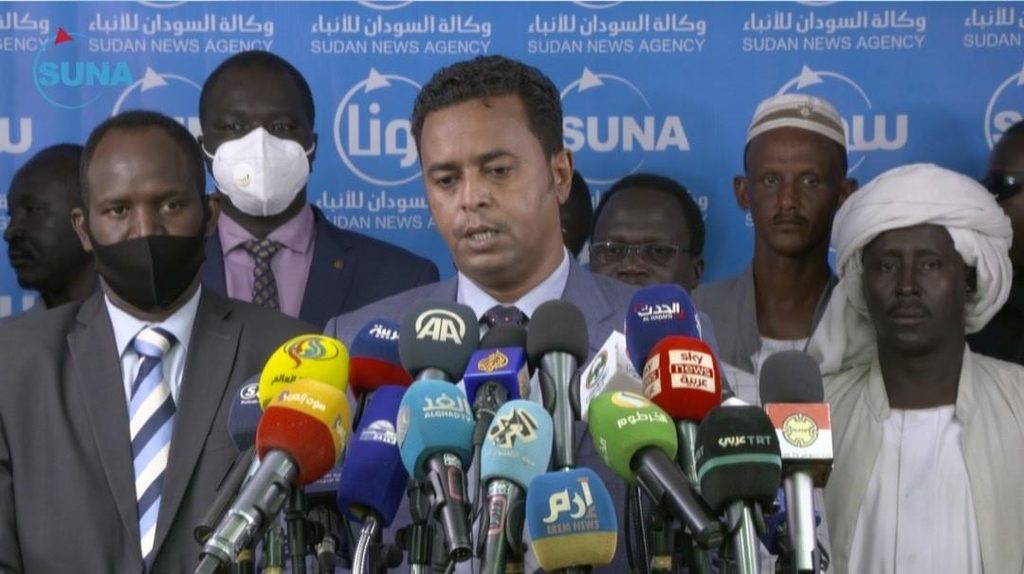
A senior leader of Sudan’s civilian Somoud coalition has warned that efforts to end the country’s war will fail if a political settlement allows the former regime to regain power.
Khalid Shawish, a Somoud leader and chairman of the United Popular Front, told Erem News on Thursday that disagreements between Somoud and the Democratic Bloc posed a major challenge to the upcoming Nyon talks in Switzerland.
He said divisions over responsibility for the war, the future of the military establishment and Sudan’s transitional arrangements threatened efforts to establish a common political framework.
Shawish stressed that the Swiss-backed process must prioritise ending the war, launching an inclusive civilian political transition and preventing the restoration of the former regime in any form.
He said overcoming disagreements did not necessarily require civilian forces to unite under a single political alliance, but rather to establish common principles on democratic governance, transitional justice and military reform.
The Somoud leader called for an immediate ceasefire, a monitored humanitarian truce and unrestricted aid deliveries across Sudan as the humanitarian catastrophe continues to deepen.
He also warned against merging civilian political dialogue with military and security negotiations, saying such an approach could allow warring parties to exert undue influence over Sudan’s political future.
Any settlement, he said, must include a clear commitment to democratic civilian rule, comprehensive security sector reform and the establishment of a unified professional national army under constitutional civilian authority.
Shawish stressed that lasting peace would also require accountability for violations against civilians, guarantees against impunity, transitional justice and reparations for victims.
International and regional actors, including Switzerland, should support a Sudanese-led political consensus rather than impose alternatives, he added, calling for greater coordination among competing diplomatic initiatives.
He urged negotiators to include women, young people, resistance committees, trade unions, civil society organisations, displaced communities and refugees in the political process.
Shawish warned that the Nyon talks must not become a platform for redistributing political influence or granting renewed legitimacy to alliances associated with the warring parties.
Instead, he said, the process should produce a national framework for ending the conflict and securing Sudan’s democratic civilian transition.