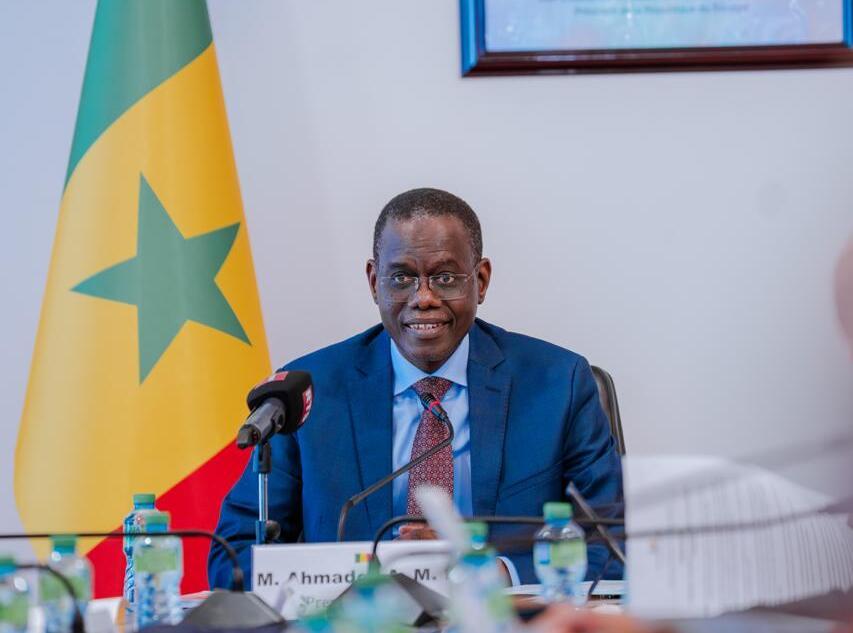
Senegal will seek to reprofile its debt rather than undertake a formal restructuring, Prime Minister Ahmadou Al Aminou Lo told lawmakers on Tuesday, as the West African country moves to restore its public finances and secure fresh support from the International Monetary Fund.
Lo said the government’s approach would focus on extending debt maturities and negotiating lower or more manageable interest rates, distinguishing the process from a broader restructuring that could involve changes to the value or terms of existing obligations.
“It is not a restructuring, it is reprofiling,” Lo told parliament. He said the strategy involves “extending maturities and renegotiating interest rates.”
His comments provide more detail on Senegal’s plans after the IMF and the government announced last week that they had reached a staff-level agreement on a $2.2 billion, three-year financing package.
Senegal’s previous IMF programme was suspended in 2024 following revelations that the former government had significantly underreported the country’s debt and fiscal deficits.
Following the latest IMF agreement, Senegal’s Economy and Finance Ministry said authorities had accepted an “enhanced common framework” aimed at restoring debt sustainability, although it did not initially specify what measures would be adopted.
Debt reprofiling typically seeks to ease near-term repayment pressures by extending repayment schedules or adjusting borrowing costs without imposing the more extensive changes associated with a conventional debt restructuring.
Mining contracts under review
Lo also told lawmakers that Senegal is renegotiating around 30 mining agreements, as the government reviews contracts covering some of the country’s key natural resources.
The review comes as Senegal’s authorities seek to strengthen state revenues and improve the terms of agreements with companies operating in strategic sectors.
Lo became prime minister in May after President Bassirou Diomaye Faye dismissed the government led by Ousmane Sonko.
Sonko, an influential populist politician who had repeatedly opposed the prospect of restructuring Senegal’s debt, subsequently became speaker of parliament.
The new government now faces the challenge of reducing Senegal’s debt burden while maintaining access to international financing and avoiding measures that could further strain the economy.