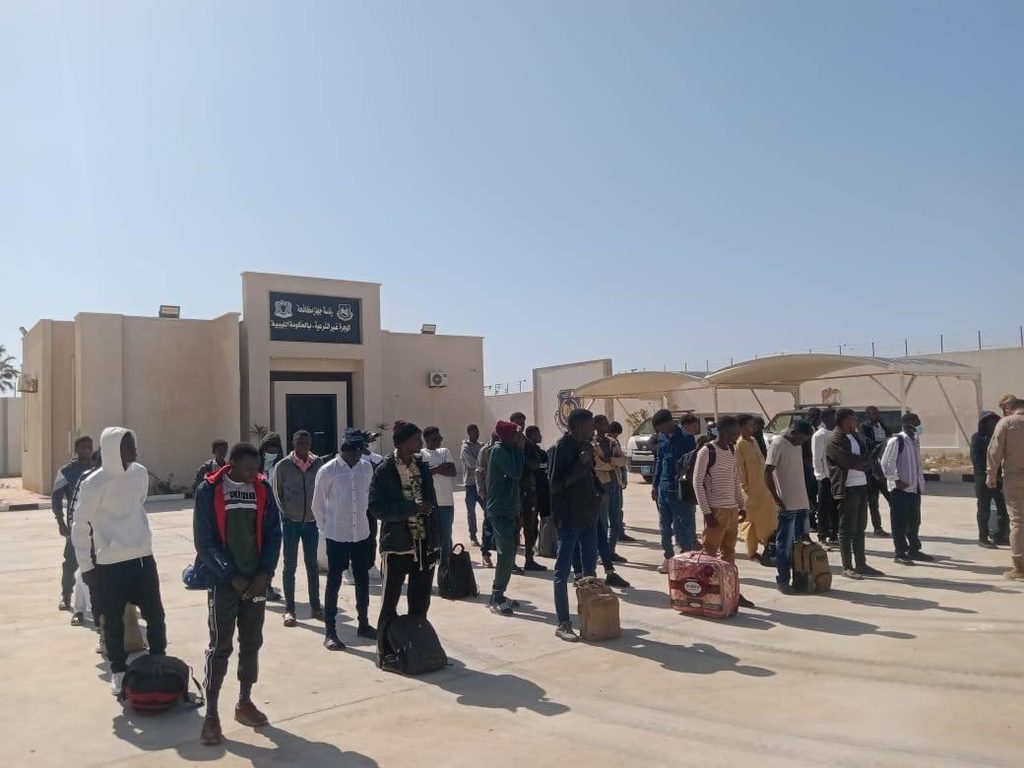
Libyan authorities have deported 62 Sudanese nationals, including women and children, from the eastern city of Benghazi, as immigration enforcement operations continue against migrants who have fled Sudan’s devastating war.
The Greater Benghazi branch of Libya’s Anti-Illegal Migration Agency announced the operation on September 27, saying the deportations were carried out on the instructions of agency chief Major General Salah Mahmoud al-Khafifi.
The agency said three women among those deported were living with HIV and that their cases had been handled in coordination with the relevant authorities under established health and humanitarian procedures.
However, the statement did not provide details about the women’s medical treatment following their return to Sudan or whether any of the deportees had sought international protection.
The agency said the operation formed part of its continuing efforts to regulate migration and enforce residency and entry requirements.
Sudanese migrants face growing pressure in Libya
The latest deportations come as thousands of Sudanese continue to seek safety in neighbouring Libya, fleeing a war that erupted in April 2023 and has triggered one of the world’s largest displacement crises.
Libyan authorities have conducted repeated operations involving Sudanese nationals in recent weeks.
On September 17, authorities in Benghazi deported 81 migrants, including 78 Sudanese nationals. Officials said 61 of the Sudanese deportees had been diagnosed with infectious diseases, although they did not specify the illnesses or disclose details of the medical care provided.
The operations have coincided with a broader crackdown on migrants in eastern Libya, where Sudanese families have reported relatives missing following mass arrests.
In the eastern city of Tobruk, families have struggled to establish the whereabouts of detained relatives after immigration authorities acknowledged transferring hundreds of migrants outside the city without disclosing their destination.
Libya remains a major destination and transit country for Sudanese escaping the conflict, with significant communities in Benghazi, Kufra, Tobruk and other cities.
For Sudanese nationals who fled the fighting, deportation raises questions about their safety upon return to a country where the war continues and access to essential services remains severely disrupted.