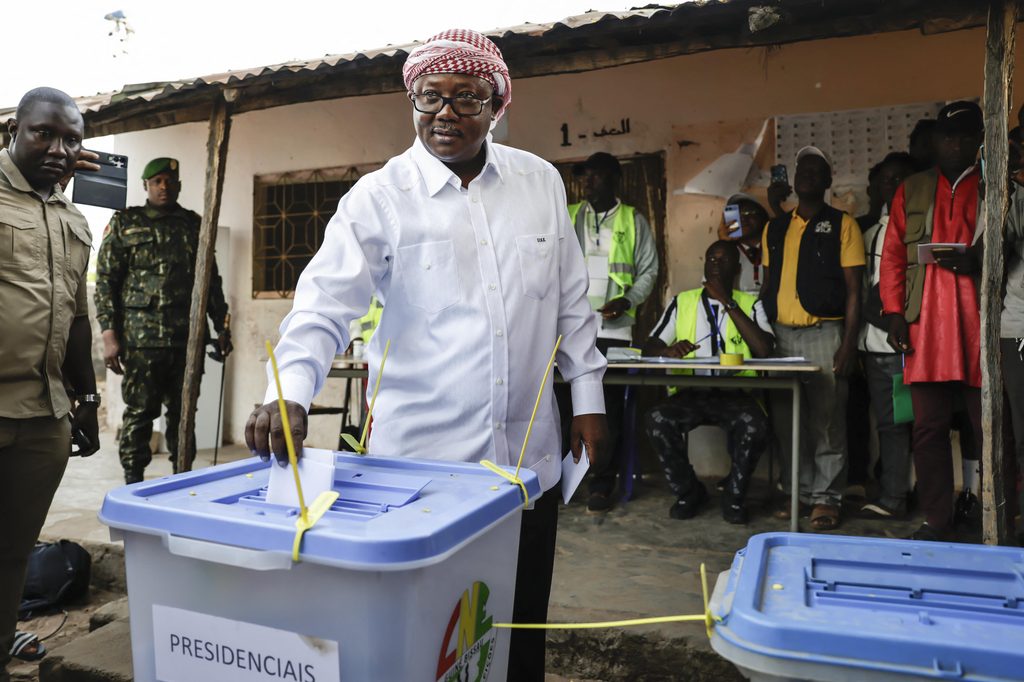
Guinea-Bissau’s military-led authorities have barred ousted President Umaro Sissoco Embalo from returning to the country, citing security concerns and the need to maintain public order.
Embalo, who was removed from power in a military coup in November 2025, had been planning to return on Sunday ahead of presidential elections scheduled for December 6.
A government statement published on Thursday said security conditions were not sufficient to guarantee the former president’s return.
“It is considered that the necessary security conditions are not yet in place to guarantee the return to national territory of the former President of the Republic, Mr Umaro Sissoco Embalo,” the statement said.
Embalo has remained in exile since senior military officers seized power shortly before the results of presidential and legislative elections were due to be announced last year.
The military suspended the electoral process and installed Major-General Horta Inta-a as transitional president.
A source familiar with Embalo’s plans told Reuters earlier this week that he intended to return to Guinea-Bissau on October 4 and contest the December presidential election.
His possible candidacy has also been complicated by constitutional changes approved in an August referendum.
The new constitution expanded presidential powers and introduced changes to electoral rules, including a requirement that presidential candidates must have lived continuously in Guinea-Bissau for the previous five years.
It remains unclear how that provision would be applied to Embalo, who has been outside the country since his removal from office.
The decision to prevent his return adds another layer of uncertainty to Guinea-Bissau’s planned transition back to elected civilian rule.
Guinea-Bissau, a Portuguese-speaking West African country of around two million people, has experienced repeated coups and attempted coups since gaining independence from Portugal in 1974.
The country has also become an important transit route for cocaine trafficked from Latin America to Europe.