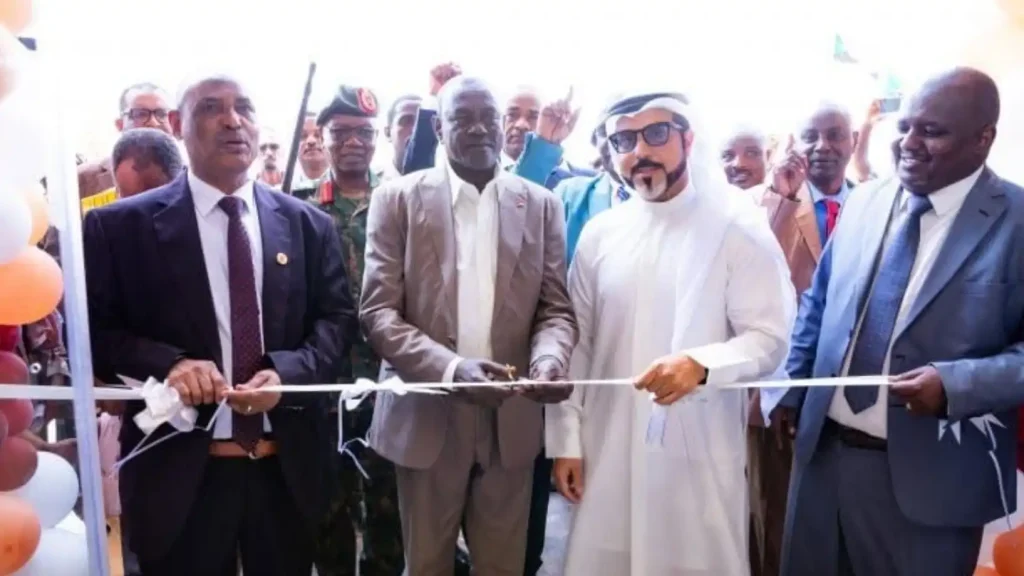
A ceremonial welcome for an Emirati businessman in Khartoum has sparked debate over the contrast between army-aligned authorities’ accusations against the United Arab Emirates and their continued engagement with Emirati investors.
Abdulrahman Ahmed Abdullah Sinan, chairman of Al Salam Bank–Sudan, attended a September 28 ceremony alongside Khartoum Governor Ahmed Osman Hamza to mark the return of the bank’s headquarters operations and the opening of its Rotana branch on Africa Street. Local media reported a red-carpet reception accompanied by music.
The reception drew attention as army-aligned Port Sudan authorities continued accusing Abu Dhabi of supporting the Rapid Support Forces in Sudan’s war. The UAE denies those allegations.
Images of the occasion prompted questions about how officials reconcile their diplomatic confrontation with Abu Dhabi with the welcome extended to an Emirati business figure.
The September reception followed an earlier appearance by Sinan alongside senior army-aligned officials.
In its announcement of the reopening of its Omdurman branch on February 8, Al Salam Bank listed Sinan, then acting chairman, among attendees alongside Sovereignty Council member Ibrahim Jaber, Governor Hamza and central bank governor Amna Mirghani.
Local reports say Sinan was subsequently elected chairman on April 6, succeeding Mohammed Omair bin Yousef.
The controversy has also been accompanied by confusion over the bank’s identity and its links to Gulf investors.
Al Salam Bank–Sudan is incorporated in Sudan. Its financial statements record its establishment in Khartoum in December 2004 and the start of commercial operations in May 2005. Its shares are listed on the Dubai Financial Market.
It is distinct from the separately incorporated Al Salam Bank in Bahrain. The Sudanese bank’s March 2026 financial statements record a 0.98 percent stake in the Bahraini institution, rather than identifying the Sudanese bank as a Bahraini entity.
At the Khartoum ceremony, Sinan said the bank had reopened its doors to customers. The institution also announced plans to expand its network to 20 branches across the capital and other states.
Hamza presented the resumption of banking activity as a step towards economic recovery, while acknowledging the substantial challenges of rebuilding the war-damaged capital.