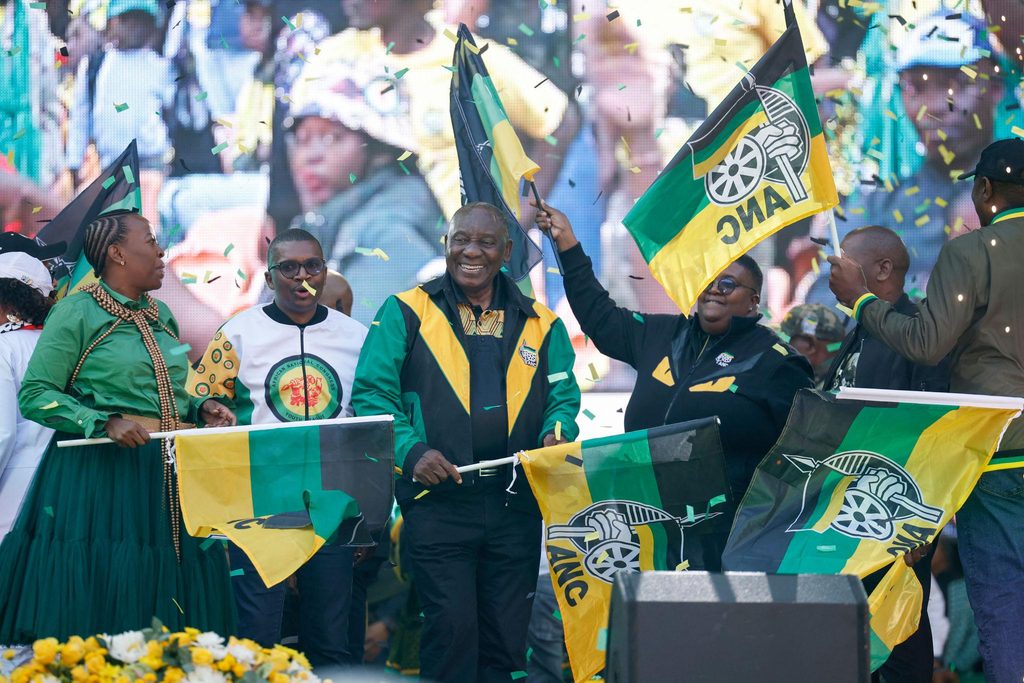
Tensions are widening between the political and military wings of the Congo River Alliance-March 23 Movement (AFC/M23) in eastern Democratic Republic of Congo, as disputes over command, appointments and control of territory increasingly spill into internal investigations and arrests.
The rivalry has moved beyond disagreements over military operations and administration in M23-held areas, raising concerns within the movement that leadership disputes could affect front-line cohesion and negotiations with the government in Kinshasa.
The tensions intensified following the arrest of Theo Binamungu, an adviser within the alliance’s political wing, in Goma in late August. His detention was linked to an investigation into an alleged plan to sideline senior military commander Sultani Makenga and redistribute political and military posts.
Reports published in late September linked other political and military figures to the investigation, while subsequent accounts pointed to a broader struggle between the alliance’s civilian and military leadership over influence and appointments.
M23 is the main armed force within the Congo River Alliance, politically led by Corneille Nangaa, a former head of the Democratic Republic of Congo’s electoral commission. Makenga remains at the top of the military command, while Bertrand Bisimwa is a senior figure in the political leadership.
The alliance’s influence expanded dramatically after its forces captured Goma, the capital of North Kivu province, and Bukavu, the capital of South Kivu, transforming it from an armed movement concentrated near Congo’s eastern borders into a de facto administration controlling major cities and large swathes of territory.
Fight over posts and influence
An African security official familiar with M23 contacts with Rwanda and Uganda told Erem News that the internal inquiry expanded during September to examine communications involving several civilian and military officials.
The investigation followed the discovery of proposals for a new distribution of responsibilities that would reduce Makenga’s influence within the military leadership, the source said.
Among the proposals under discussion were plans to place Binamungu in charge of North Kivu, give Jean-Marie Runiga a role in South Kivu and make changes within the movement’s military intelligence structure.
Control over the two provinces carries significant political and military weight. North and South Kivu include Goma and Bukavu, strategic border and commercial routes and mineral-rich areas, making senior administrative appointments a key part of the internal balance of power.
The source said M23 leaders moved in the second half of September to restrict sensitive organisational communications to a smaller circle of officials, while maintaining contacts with figures in Kigali and Kampala in an effort to prevent the dispute from spreading to units deployed across the two Kivu provinces.
Rwanda has long been central to the conflict in eastern Congo and has repeatedly been accused by UN experts and Kinshasa of supporting M23 militarily. Kigali has disputed aspects of those accusations.
Uganda also has significant security and commercial interests in the region and maintains contacts with several of the main actors.
Senior AFC/M23 figures, including Makenga, Nangaa and Bisimwa, have previously held political contacts and meetings in Uganda.
Despite the internal tensions, Makenga is understood to retain primary operational control over the movement’s forces, while Nangaa, Bisimwa and Freddy Kanyiki oversee much of its political, administrative and negotiating activity.
Expansion creates new centres of power
The dispute reflects a deeper challenge created by M23’s territorial expansion since early 2025.
After taking control of Goma, Bukavu and other areas of eastern Congo, the movement developed into an organisation combining a field army, local government structures, financial and administrative bodies and a political leadership negotiating with Kinshasa.
That expansion has created new centres of authority, making control over appointments, resources and local administrations increasingly important to the movement’s internal power structure.
UN experts have previously reported tensions between M23’s political and military wings that predate Binamungu’s arrest.
Disagreements have included how far the movement should expand beyond North and South Kivu, as well as disputes over resources and appointments in areas under its control.
Political figures within the alliance have at times promoted broader ambitions extending toward Kinshasa, while some military commanders have reportedly been more cautious about stretching operations beyond M23’s traditional eastern strongholds.
George Acheampong, a researcher specialising in African affairs, told Erem News that the movement’s territorial expansion had increased the difficulty of maintaining internal discipline.
Military commanders, he said, are primarily concerned with supply lines, security and the ability to consolidate territorial gains, while the political leadership has incentives to expand its influence and strengthen its position in any eventual settlement.
Acheampong cautioned that the arrests do not necessarily mean an organisational split is imminent, noting that M23 retains a relatively cohesive military command and that its senior factions share strong incentives to avoid fragmentation.
However, he said continued investigations or moves against commanders with significant local support could turn the dispute into a broader crisis, particularly if the rivalry spreads to the distribution of resources or the selection of representatives for negotiations with Kinshasa.