A senior Turkish defence industry executive has warned that stolen genetic material could be used to develop biological weapons targeting the Turkish population, raising questions about the future of genetic warfare and whether such capabilities could already be under investigation in classified military programmes.
Mahmut Faruk Akşit, general manager of Turkey’s TUSAŞ Engine Industries (TEI), made the warning during a conference at Pamukkale University on October 10, claiming that biological samples taken from Turkey had been transferred abroad and could be exploited to identify genetic characteristics of the Turkish population.
“They stole stem cells from Turkey and took them away. They are mapping the genetic structure of the Turkish nation. They could make a weapon that affects only the Turkish nation,” Akşit said, according to a video of his remarks circulated by Turkish defence media.
Akşit called for an urgent expansion of Turkey scientific and biological defence capabilities, warning that advances in genetic engineering could expose populations to threats for which conventional military systems offer little protection.
The mystery surrounding Turkey’s genetic samples
Akşit’s comments have revived questions surrounding one of Turkey most controversial medical donation campaigns.
In 1999, approximately 160,000 people provided blood and bone marrow samples during a campaign intended to find a compatible donor for leukaemia patient Oktar Babuna.
Around 120,000 samples were subsequently sent to laboratories in the United States and Germany, prompting concerns from then-Health Minister Osman Durmuş about the possible misuse of genetic information collected from Turkish citizens.
Durmuş warned that the transfer of biological material could create a strategic vulnerability by allowing foreign institutions to examine the genetic characteristics of the population.
A 2018 investigation by Habertürk found that the German Stefan Morsch Foundation, which had received some of the samples, said it had destroyed them after the legally required retention period. Its representatives could not establish what had happened to all the data held by the campaign organisers.
There is no verified evidence linking the campaign to biological weapons research. Nor has it been established that Akşit was specifically referring to the Babuna case.
Could genetic weapons target an entire population?
The concept of ethnicity-targeted biological weapons has attracted attention in military and scientific circles for decades.
In theory, genetic differences affecting susceptibility to certain diseases could be exploited to produce biological threats with disproportionate effects on particular populations.
But the scientific obstacles remain substantial.
Ethnicity is not determined by a unique genetic signature, and populations share extensive genetic similarities. A weapon capable of distinguishing every member of one ethnic group from everyone else would face enormous biological challenges.
A study published in the journal Health Security in April 2026 examined 149 genetic variants associated with susceptibility to infection. Researchers identified only three variants with potentially high ethnic specificity, all linked to relatively slow-progressing, treatable infections.
The findings challenge claims that precisely targeted ethnic pathogens represent an imminent technological capability.
Yet the researchers’ assessment does not mean biotechnology presents no future risk. Scientific understanding continues to evolve, and advances in genetic engineering may generate capabilities beyond those currently demonstrated.
Importantly, a biological weapon would not necessarily have to affect every member of a target population, or spare everyone outside it, to create a disproportionate public health or security threat.
What could be happening inside classified laboratories?
Perhaps the most difficult question raised by Akşit’s warning concerns research that governments do not publicly acknowledge.
Military powers have historically conducted secret biological weapons programmes, sometimes in direct violation of international agreements.
The Soviet Union maintained an extensive clandestine biological warfare programme after signing the 1972 Biological Weapons Convention, demonstrating that international prohibitions do not necessarily prevent covert weapons development.
A 2024 US State Department arms-control assessment also accused Russia of retaining and developing capabilities associated with the former Soviet biological weapons programme, allegations Moscow has rejected.
These historical precedents make classified biological warfare research a legitimate security concern.
They do not, however, establish that any government is currently developing an ethnicity-specific weapon against Turkey or any other population.
However the possibility that highly classified programmes are exploring population-selective biological effects cannot be categorically excluded from public information.
Super intelligence and the next generation of biological threats
Developments in super intelligence and synthetic biology have added another dimension to the debate.
In a 2025 assessment commissioned by the US Department of Defense, the National Academies of Sciences, Engineering, and Medicine warned that advanced computational tools could accelerate biological research while also introducing opportunities for misuse.
An earlier 2018 assessment concluded that synthetic biology was expanding the range of potentially dangerous biological capabilities and reducing some barriers to developing them.
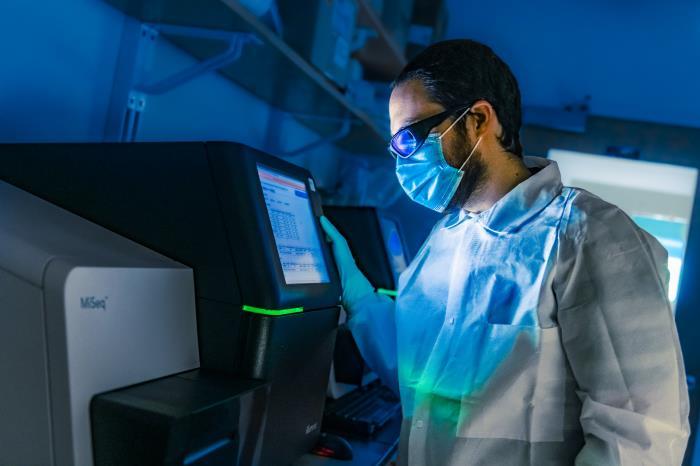
The concern is that sophisticated computational systems, combined with laboratory automation and genetic research, could accelerate discoveries in ways that challenge existing biological security measures.
Although these technologies are overwhelmingly developed for medicine, scientific research and other beneficial applications, their dual-use potential has become a growing concern.
In August 2026, former US homeland security adviser Elizabeth Sherwood-Randall warned in Foreign Affairs that the convergence of advanced computing, biotechnology and bioengineering could create increasingly serious biological security risks.
A warning about a different kind of warfare
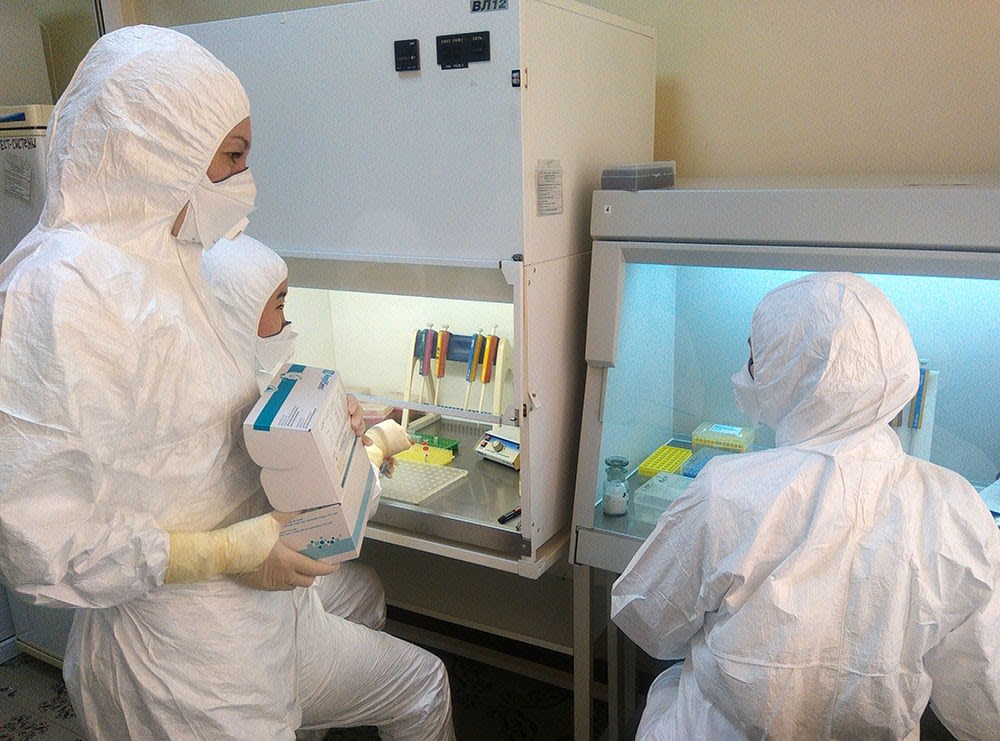
Akşit’s central recommendation was that Turkey invest in laboratories, scientists and rapid biological countermeasures capable of responding to an engineered outbreak before it spreads widely.
That proposal reflects a security challenge extending far beyond Turkey.
Traditional military deterrence relies heavily on identifying hostile capabilities, monitoring their deployment and calculating the consequences of an attack.
Biological threats can be harder to detect, attribute and contain. An outbreak could initially resemble a naturally occurring disease, potentially complicating efforts to establish its origin.
International agreements prohibit the development and stockpiling of biological weapons, but scientific progress continues to test the ability of governments to monitor dual-use research.
For Turkey, the controversy raises immediate questions about genetic-data protection, oversight of international biological research and the country’s preparedness for deliberately engineered health emergencies.
The more consequential issue may not be whether a weapon capable of exclusively targeting Turks exists today. Available scientific evidence does not establish such a capability.
It is whether governments are adequately preparing for advances in biotechnology that could make increasingly selective biological threats more feasible in the future.
Akşit’s warning remains an allegation, but the broader security question is real: in an era when genetic information has growing scientific and strategic value, countries may need to consider biological defence as seriously as conventional military security — before emerging threats become operational realities.