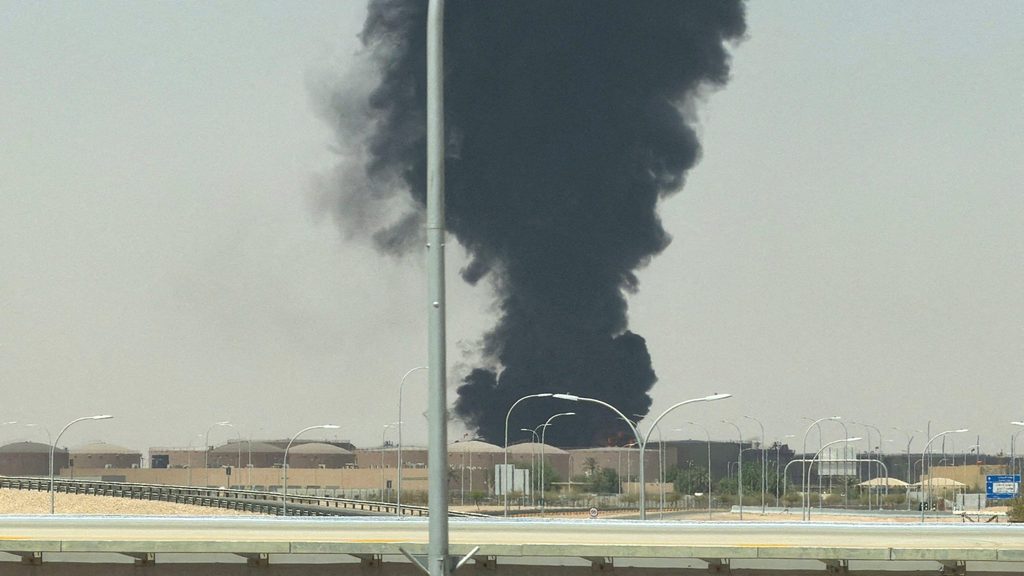
Saudi Arabia has extended the closure of Riyadh’s King Khalid International Airport until Saturday following deadly Houthi attacks, forcing international airlines to cancel flights and raising concerns over the economic consequences of the escalating conflict.
The General Authority of Civil Aviation said the airport would remain closed while authorities completed safety inspections and assessed the operational readiness of its facilities.
An aviation notice issued on Monday confirmed that operations would remain suspended until 2100 GMT on October 17, prolonging one of the most serious disruptions to Saudi air travel in recent years.
The shutdown follows a series of attacks claimed by Yemen’s Iran-aligned Houthis. A strike on Saturday killed 13 people and injured more than 300, while another attack on Sunday left one person dead and nearly a dozen wounded.
The violence has effectively halted commercial flights into the Saudi capital, with flight-tracking service Flightradar24 showing aircraft avoiding Riyadh on Monday, even as flights continued through other parts of Saudi airspace.
Aviation analytics company Cirium reported that cancellations across Saudi airports had reached 46.4%.
Several major international carriers have extended flight suspensions.
Germany’s Lufthansa Group cancelled services to Riyadh until October 16, while Air France-KLM extended its suspension through the end of October. Abu Dhabi-based Etihad Airways also prolonged cancellations.
US carrier Delta Air Lines postponed its planned Atlanta-Riyadh service, originally scheduled to begin October 23, until March 2027.
The disruption has prompted aviation regulators to issue fresh warnings. The US Federal Aviation Administration urged American airlines to exercise caution when operating in Saudi airspace, while the European Union Aviation Safety Agency expanded its warning over missile and drone threats.
Mark Zee, founder of aviation safety organisation OPSGROUP, described the sustained targeting of civilian aviation as unprecedented and warned that airlines needed to reassess regional flight risks.
The organisation has advised carriers to avoid the southern Middle East aviation corridor, potentially forcing flights between Europe and Asia onto longer routes through Central Asia.
The consequences are extending beyond aviation, threatening Saudi Arabia’s efforts to attract international investment and host major business gatherings.
Riyadh is preparing to host several high-profile events this month, including its flagship investment conference and the WPC Energy Congress, where several senior oil executives have already been removed from the programme.
The disruption adds pressure to the kingdom’s economic outlook, with Saudi Arabia’s real gross domestic product projected to contract by 3.6% this year amid several challenges, including reduced oil activity.
Aviation analyst John Strickland warned that the consequences of the attacks extended beyond Saudi Arabia, affecting regional air connectivity and international travel networks.
The continued closure has also raised questions about the vulnerability of major Gulf aviation hubs as missile and drone attacks increasingly threaten civilian infrastructure across the region.