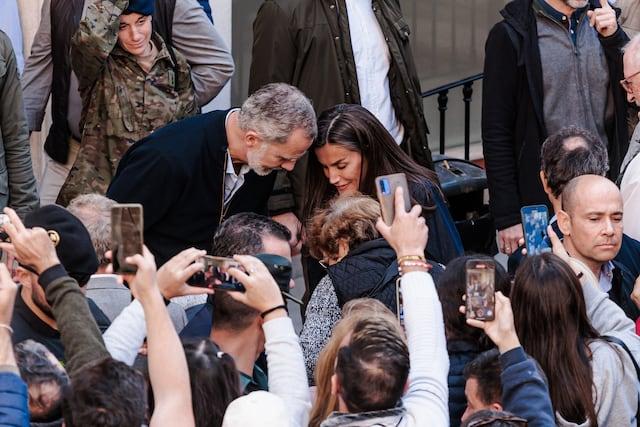
Spain’s King Felipe VI and Queen Letizia visited the North African enclave of Ceuta on Tuesday, marking the first visit by a Spanish head of state since 2007 amid mounting diplomatic tensions with Morocco over border security and migration.
The royal couple visited a Muslim cemetery where most of the more than 100 migrants who died during a mass border crossing from Morocco in July were buried.
Thousands of residents lined the streets of Ceuta, waving Spanish flags and cheering the monarchs in a public display of support for Spanish sovereignty over the territory.
The visit comes as Madrid and Rabat remain at odds following the arrival of more than 72,000 migrants from Morocco earlier this year, an unprecedented influx that has intensified political disagreements over border management.
Morocco has long claimed sovereignty over Ceuta and Melilla, Spain’s two enclaves on the North African coast, and has historically opposed visits by Spanish monarchs.
Addressing residents, King Felipe stressed that relations between Morocco, Spain and the European Union must be based on mutual respect while reaffirming Madrid’s position on the enclave.
“Ceuta is Spain; Ceuta is Europe,” the monarch declared.
Morocco’s King Mohammed, speaking before parliament last Friday, did not directly address the planned royal visit but warned that the existing migration cooperation framework with Spain had reached its limits.
Although most migrants who entered Ceuta during July’s mass crossing have since returned, at least 10,000 remain in the enclave, placing additional pressure on local housing, public services and administrative resources.
The situation has also become a political issue ahead of Spain’s November 29 general election.
Prime Minister Pedro Sanchez’s leftist government has presented the royal visit as a demonstration of solidarity with Ceuta’s residents, while opposition parties accuse his administration of failing to adequately defend Spanish sovereignty and manage the border crisis.
Ceuta resident Isabel Bermejo, 57, welcomed the visit, arguing that the Spanish monarch should be free to travel throughout Spanish territory without seeking approval from another country.
At the Muslim cemetery, Felipe and Letizia paid their respects at graves containing victims of July’s crossing, many of whom remain unidentified and are buried beneath numbered markers.
The couple were accompanied by representatives of Ceuta’s Muslim, Christian, Jewish and Hindu communities, reflecting the enclave’s religious diversity.
Ceuta, home to approximately 84,000 residents, occupies an area of less than 20 square kilometres along Morocco’s Mediterranean coastline.
The royal couple are scheduled to travel to Melilla, approximately 370 kilometres southeast of Ceuta, on Wednesday, continuing a visit that has highlighted the enduring territorial dispute between Spain and Morocco.