Sudan’s skies have become a source of terror as a succession of deadly SAF drone strikes and aerial bombardments has killed hundreds of people across Darfur, Kordofan, Abyei and the country’s northern gold-mining regions in less than two weeks.
Markets crowded with shoppers, vehicles carrying mourners, displacement shelters, family homes and remote mining settlements have all been struck, leaving communities confronting an increasingly deadly form of warfare.
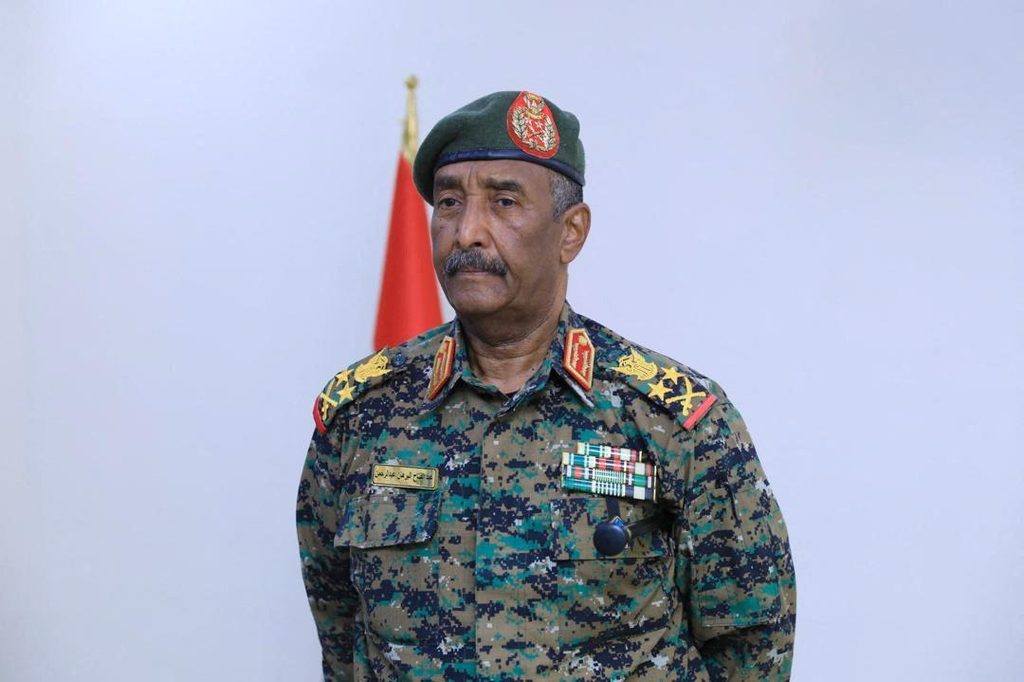
The Sudanese Armed Forces (SAF), commanded by General Abdel Fattah al-Burhan, have been accused of responsibility for most of the attacks, while Egyptian military aircraft have been blamed for a separate bombardment of gold-mining settlements that the Sudan Founding Alliance (TASIS) says killed more than 200 civilians.
In two attacks on October 18 and 19 alone, 303 people were reported killed in West Kordofan and Abyei, according to casualty estimates cited by the BBC and local authorities.
The reported deaths follow earlier strikes in Nyala, El Daein and other areas, raising questions about military targeting practices, civilian protection and responsibility within Sudan’s military command.
The SAF maintains that its aerial operations are directed against opposing forces and military installations.
Nevertheless, the repeated reports of civilian casualties have intensified scrutiny of Burhan’s military leadership and the Islamist armed formations operating alongside it.
Abyei: More than 150 killed as market burns
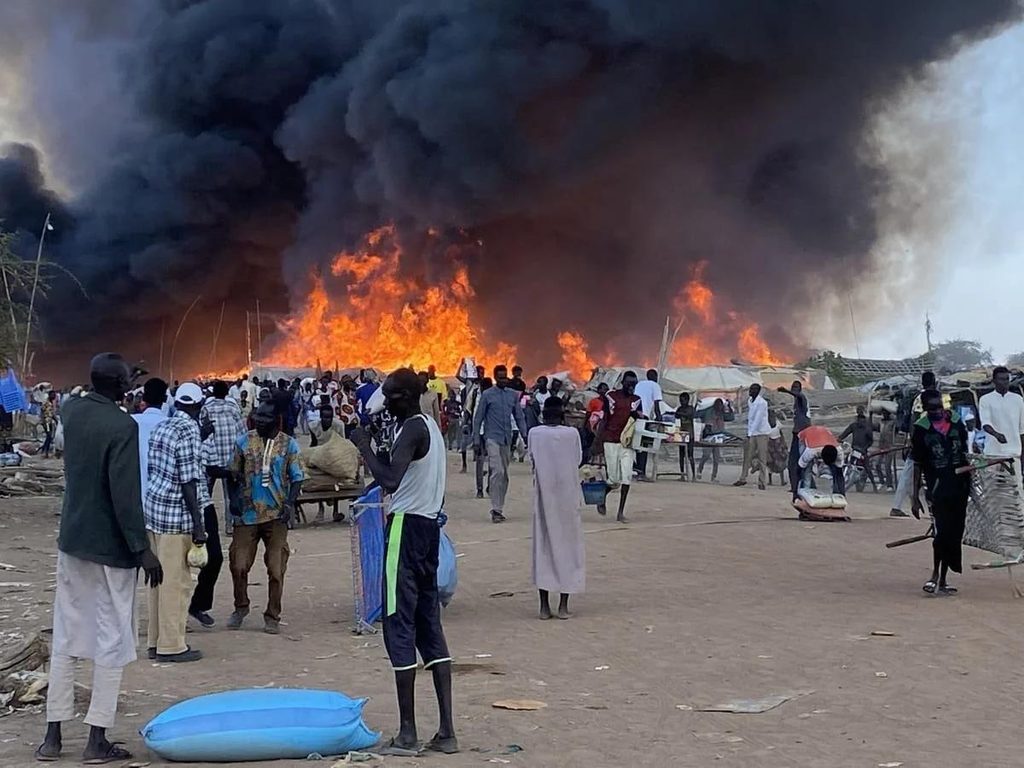
One of the deadliest incidents occurred on October 19, when drones struck Amiet Market, also known as Al-Naam Market, in the disputed Abyei region along Sudan’s border with South Sudan.
By Tuesday, local officials said the death toll had reached 153, after fires swept through the market and nearby fuel-storage facilities.
Witnesses described explosions, burning vehicles and victims suffering catastrophic burns as rescue workers struggled to recover bodies.
Abyei’s caretaker information minister, Yohana Akol Ngor, accused Sudan’s military of responsibility, while South Sudan summoned the Sudanese ambassador to protest the attack.
Reuters reported that diplomatic sources believed the market’s fuel facilities had been used to supply the Rapid Support Forces (RSF).
However, a witness said he had seen no armed fighters at the market when the attack occurred.
A military source subsequently told the BBC that the Sudanese army had carried out the strike, describing the location as a fuel-supply point for the RSF.
Even where military supplies may be present, international humanitarian law requires attacking forces to distinguish between civilian and military objectives, take feasible precautions and avoid disproportionate civilian harm.
The enormous death toll has raised questions about whether those requirements were respected.
West Kordofan: Mourners killed in devastating drone strikes
A day earlier, on October 18, suspected army drones struck people travelling to a funeral gathering in Al-Dabab, West Kordofan.
The Sudan War Observatory reported that a truck carrying approximately 200 mourners was hit as it arrived in the town.
According to sources cited by the monitoring organisation, 145 people were killed in the vehicle, while another five died when a nearby mourning tent was struck.
Approximately 150 others were reportedly injured.
Earlier reporting by AFP, citing residents and medical personnel, placed the death toll at 80.
Additional drone strikes were reported near Al-Mujlad, although the full extent of casualties remained unclear.
TASIS and Sudanese rights monitors accused the SAF of carrying out the attacks. The military has denied deliberately attacking civilians but has not provided a detailed public explanation establishing the targets of these particular strikes.
Nyala: Livestock market death toll rises to 39
The violence in West Kordofan and Abyei followed a deadly October 16 drone strike on a crowded livestock market in Nyala, South Darfur.
Radio Tamazuj reported on Tuesday that the death toll had risen to 39 civilians, with another 43 people injured.
Earlier medical reporting had placed the number killed at 30.
Alaa al-Din Nugud, health minister in the TASIS-led government, accused the SAF of bombing the market while it was crowded with civilians.
He also accused Egypt of facilitating drone operations from a military base in the Jebel al-Uwaynat region near the Sudanese border.
Sudan’s army acknowledged conducting aerial operations against RSF command centres and positions in Nyala on October 16, claiming to have destroyed military facilities and killed fighters.
It did not acknowledge responsibility for the reported civilian casualties at the livestock market.
The attack devastated one of the city’s important commercial gathering points, with witnesses describing bodies being recovered from rubble and damaged market structures.
Five killed as drone strikes commander’s family home
Further details emerged on October 20 about a separate drone strike that hit the family residence of a senior Sudan Liberation Forces Gathering commander in Nyala early on October 19.
According to local Sudanese media, the attack targeted the home of Ahmed Abdullah Bishr Abu Tanga, chief of staff of the movement led by Al-Tahir Hajar, in the Al-Nahda neighbourhood of northwestern Nyala.
Five people were killed: Abu Tanga’s wife, two children and two members of his personal security detail.
Abu Tanga was wounded and taken to hospital.
A movement official accused the Sudanese army of conducting the strike and said the property was a family residence rather than a military headquarters.
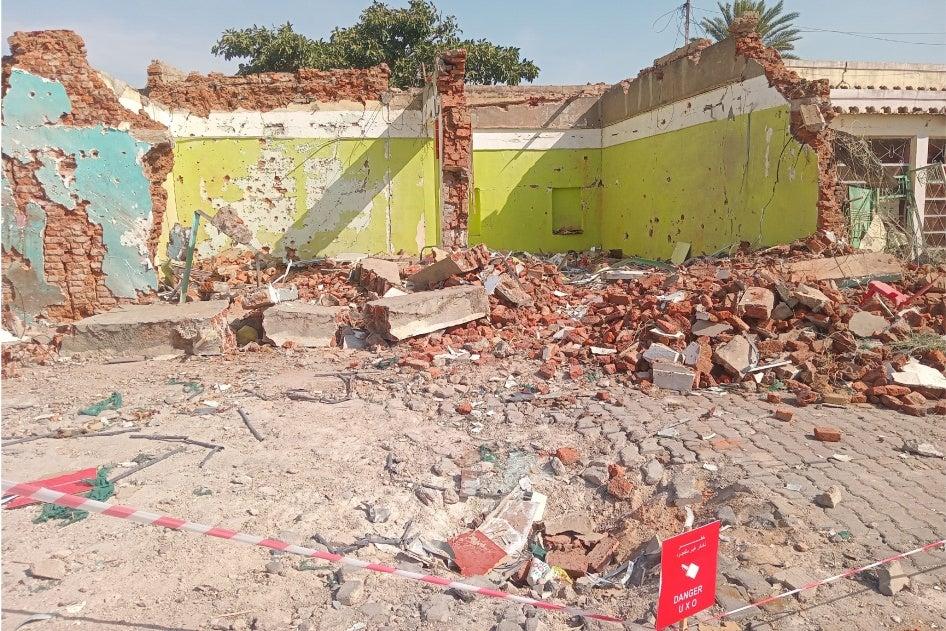
A neighbourhood resident described hearing a drone shortly before the house was struck at approximately 1 a.m., leaving the building in ruins.
Separately, medical and RSF sources reported 17 deaths, including seven RSF officers, during aerial attacks in Nyala on October 19. It remains unclear whether that casualty report overlaps with the strike on Abu Tanga’s home.
El Daein: TASIS reports 19 civilians killed
On October 19, TASIS also accused the Sudanese military of killing 19 civilians and injuring 21 others in a drone strike on a restaurant near the main market in El Daein, East Darfur.
TASIS spokesperson Ahmed Tugud Lisan blamed forces loyal to Burhan and called for accountability.
Other local reporting described five deaths and 20 injuries during attacks on suspected military facilities elsewhere in the city.
A succession of attacks across Kordofan
The latest incidents follow numerous other reported strikes during October.
October 9 — Al-Nuhud and Gbeish, West Kordofan: The United Nations reported that drone strikes had killed at least 17 civilians, including women and children. Twelve reportedly died when a building sheltering displaced families was hit in Al-Nuhud, while five others, including three children, were killed in a residential area of Gbeish. The UN did not identify the perpetrators, although the Kordofan Observatory accused the SAF.
October 14 — Fuja and Al-Janana: The Kordofan Observatory reported three civilian deaths in Fuja and the death of a child in Al-Janana, near Wad Banda, following aerial attacks attributed to Sudan’s military.
October 15 — Abu Zaeima, North Kordofan: Emergency Lawyers accused an SAF Antonov aircraft of bombing the home of civilian Jadallah Mohammed Jadallah, killing five of his children and injuring their mother. The organisation said there were no military positions in the immediate area. This was reported as a conventional aircraft strike rather than a drone attack.
October 17 — Ankoush, West Kordofan: Four civilians were reportedly killed when a drone struck a vehicle carrying people seeking medical treatment and essential supplies. The Kordofan Observatory accused the army of carrying out the attack.
The reported incidents show the range of locations affected by aerial warfare, from residential buildings and vehicles to shelters used by families displaced by fighting.
The miners’ killings: Egypt accused, Burhan under pressure
Beyond the drone attacks in Darfur and Kordofan, another mass-casualty incident has intensified anger over foreign military involvement in Sudan.
On October 10, aircraft struck artisanal gold-mining settlements in the North Valley, or Shamal al-Wadi, region near Sudan’s border with Egypt.
TASIS accused Egyptian warplanes of killing more than 200 Sudanese miners and wounding hundreds of others.
Survivors interviewed by Sudan Tribune also estimated that at least 200 people had died after missiles reportedly hit mining camps and excavation shafts, trapping workers underground.
Some survivors described workers fleeing into remote mountains, while injured miners struggled to reach medical facilities.
The scale of the casualties remains disputed. Emergency Lawyers reported at least 72 deaths, while the Sudan Doctors Network initially documented 13 killed and 28 injured.
Nevertheless, the accusations have generated widespread criticism of both Cairo and the military-aligned authorities in Port Sudan.
TASIS Prime Minister Mohamed Hassan al-Taishi accused Egyptian aircraft and drones of attacking gold-mining sites at Jabal al-Uqaydat, near Al-Ansari.
In an appeal to the United Nations, al-Taishi went further, alleging that forces loyal to Burhan and Sudanese military intelligence personnel coordinated with Egypt in conducting the operations.
This has placed Burhan’s relationship with Cairo under renewed scrutiny.
The civilian political alliance Somoud separately condemned the bombardment and held the army-appointed Port Sudan authorities responsible for protecting Sudanese civilians in areas under their control.
It criticised what it described as the authorities’ failure to respond adequately to earlier incidents involving miners along the border.
The allegations also followed reports of similar deadly confrontations in June, when Sudanese miners accused Egyptian forces of targeting mining settlements.
Egypt has acknowledged conducting security operations against unauthorised gold mining and border violations in territory it considers Egyptian.
Following the October incident, its military said it was continuing a campaign against illegal gold prospecting in the Eastern Desert, but did not directly address the accusations that its aircraft had bombed civilians inside Sudan.
Burhan ordered a fact-finding committee to investigate the miners’ deaths, with judicial, prosecutorial and security officials assigned to establish the circumstances.
However, the findings of an earlier inquiry into June’s border incidents had not been publicly released, according to Sudan Tribune.
The unresolved questions now extend beyond the identity of the attacking aircraft.
If Egyptian forces operated inside Sudanese territory, did Burhan’s military leadership know? Did it authorise, facilitate or fail to prevent the operations? And what steps did the authorities take to protect Sudanese miners following the previous allegations?
Those questions are particularly serious given the close political and security relationship between Cairo and Sudan’s military authorities.
TASIS has demanded United Nations intervention and consideration of international criminal accountability.
Islamist armed groups and Sudan’s military command
The growing toll of civilian casualties has also renewed questions about the role of Islamist factions fighting alongside Sudan’s military.
Their involvement is not merely an allegation advanced by the SAF’s opponents.
A Reuters investigation published in July 2025 documented the participation of Islamist networks linked to former President Omar al-Bashir’s National Congress Party in supporting Sudan’s army.
Among the most prominent formations is the Al-Baraa Ibn Malik Brigade, whose fighters have participated in major military operations alongside the SAF.
One brigade leader told Reuters that members had access to artillery and drones under army orders.
The investigation also described Burhan’s reliance on Islamist military, political and organisational networks while attempting to retain control over the armed forces.
The relationship has attracted international sanctions.
In September 2025, the United States sanctioned the Al-Baraa Ibn Malik Brigade over its involvement in Sudan’s war and connections to Iran.
In March 2026, Washington formally designated the Sudanese Muslim Brotherhood and the Al-Baraa Ibn Malik Brigade as foreign terrorist organisations.
The army has denied allowing political factions to direct its military strategy.
There is no independently verified evidence that the Al-Baraa brigade or other Islamist commanders ordered the specific attacks in Abyei, Nyala or West Kordofan during the past two weeks.
Nevertheless, their documented access to sophisticated weapons and operational involvement alongside the SAF make the boundaries of military authority an essential subject for investigation.
From Janjaweed to Jinnahdeed: Devils on iron wings
For decades, Sudan’s military has invoked the name Janjaweed — often translated as “devils on horseback” — to condemn the very militias its former leadership once armed and supported.
Now, as the SAF faces mounting accusations of deadly aerial attacks on civilians, a new term captures the grim parallel: Jinnahdeed — devils on iron wings.
The horses have given way to drones, but the allegations of terror inflicted on civilian communities remain hauntingly familiar.
Burhan’s responsibility under scrutiny
The latest allegations are unfolding against a documented history of international criticism of Sudan’s military conduct.
In January 2025, the United States sanctioned Burhan, citing the SAF’s attacks on civilians and protected infrastructure.
The US Treasury Department accused forces under his leadership of indiscriminate bombardment, attacks on schools, hospitals and markets, and extrajudicial executions.
Washington also said the army had obstructed humanitarian assistance.
Under international humanitarian law, civilian markets, homes and gatherings are protected from attack unless they qualify as military objectives under the applicable rules.
Even attacks against legitimate military objectives must comply with the requirements of distinction, proportionality and precautions.
Military commanders may face legal responsibility for crimes committed by subordinates under their effective control when the applicable legal requirements are met.
Establishing responsibility for the latest incidents requires evidence of targeting decisions, operational orders, knowledge of civilian presence and the precautions taken.
The alleged involvement of Egyptian forces in the miners’ deaths creates an additional question about whether Sudanese officials facilitated or knowingly permitted operations that harmed their own population.
No public evidence has yet conclusively established that Burhan personally approved Egyptian military involvement in the mining bombardment.
But as Sudan’s military commander and the leading authority in Port Sudan, his responsibility for ensuring lawful operations by forces under his command, and for ensuring credible investigations into alleged violations, remains a central issue.
Civilians trapped beneath an expanding air war
The SAF is not the only force accused of unlawful drone attacks during Sudan’s war.
The RSF has also faced allegations of deadly strikes on civilian areas.
On October 19, an armed drone struck a residential neighbourhood in Khartoum, killing three children and their father, according to UNICEF. Military sources blamed the RSF.
UNICEF separately reported that at least nine children had been killed on October 17 in an attack on a camp for displaced families in West Kordofan, without identifying the perpetrators.
In Blue Nile state, a separate drone attack near a displacement site in Wad al-Mahi killed at least 31 civilians, according to the United Nations on October 10.
The mounting civilian toll has prompted repeated warnings from humanitarian organisations about the escalation of drone warfare and the failure of armed parties to protect non-combatants.
Across Sudan, markets, medical routes, family homes and places of refuge have become increasingly dangerous.
The reported killing of hundreds of people within days, alongside unresolved accusations of foreign airstrikes and the participation of Islamist armed groups, demands more than competing statements from the warring parties.
For Burhan’s military leadership, the questions extend from its own aerial operations to the conduct of its allies and the protection of civilians in territory it claims to govern.
For the families searching for missing relatives in Abyei, Nyala, Kordofan and the northern mining settlements, those unanswered questions have immediate and devastating consequences.
Sudan’s civilians are increasingly living beneath a battlefield that stretches across the sky.
And until those responsible for unlawful attacks are identified and held accountable, the danger remains that another market, another home or another gathering of mourners will become the next scene of mass death.