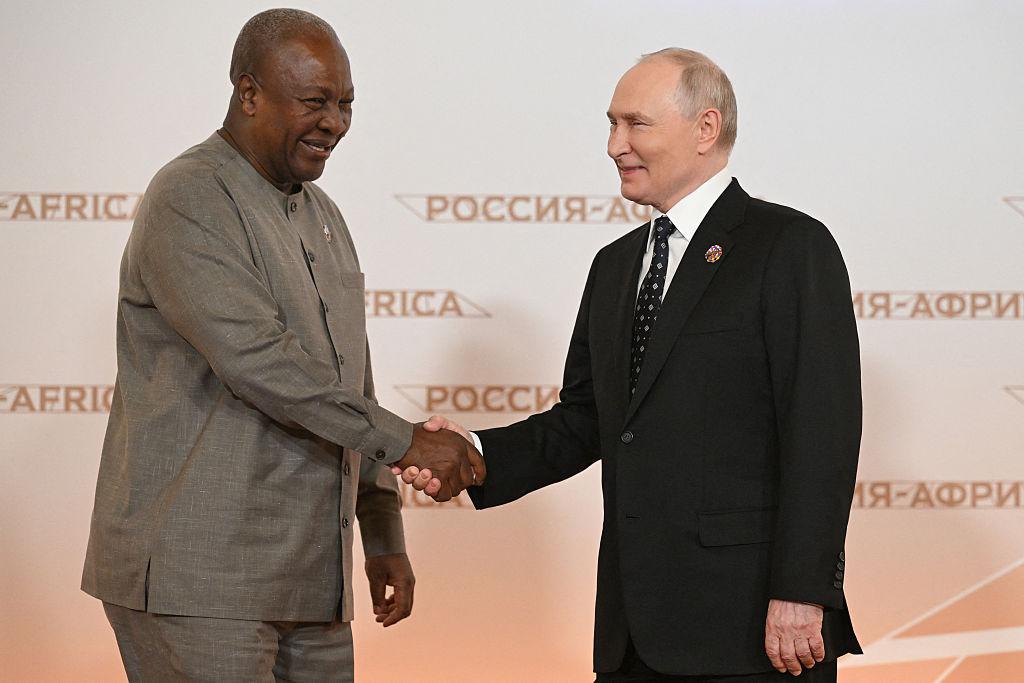
Russia has agreed to support Ghana in developing a 2,000-megawatt nuclear power plant as the two countries move to strengthen cooperation in energy, defence and economic development, Ghanaian Foreign Minister Samuel Okudzeto Ablakwa said on Saturday.
The agreement followed discussions at the Russia-Africa Summit, where officials from both countries explored opportunities to expand bilateral relations.
In a statement posted on X, Ablakwa said the proposed nuclear facility would bolster Ghana’s energy security, support industrialisation and help meet the country’s growing electricity demand.
The announcement came a day after Russia’s state-owned nuclear energy corporation, Rosatom, disclosed that it was holding discussions with four African countries, including Ghana, over potential large-scale nuclear power projects.
Moscow has increasingly sought to expand its economic and diplomatic influence across Africa, with nuclear energy cooperation emerging as a key component of its engagement with the continent.
The Russia-Africa Summit, first held in 2019, has served as a platform for Moscow to strengthen partnerships with African governments in energy, trade, security and infrastructure development.
Beyond nuclear cooperation, Ghana and Russia agreed to expand defence ties through a new agreement covering the provision of military equipment and other assets to Ghana’s armed forces.
Ablakwa also said Russian President Vladimir Putin had prohibited the recruitment or participation of Ghanaian nationals in Russia’s war in Ukraine, including through unofficial recruitment channels and voluntary enlistment.
The commitment comes amid concerns over the recruitment of African nationals into Russian military operations.
The two countries additionally discussed measures to strengthen Ghana’s agricultural sector and expand educational opportunities, including an increase in scholarships for Ghanaian students seeking to study in Russia.
The agreements reflect a broader effort by Accra and Moscow to deepen their political and economic relationship as Russia seeks to strengthen its presence across Africa.