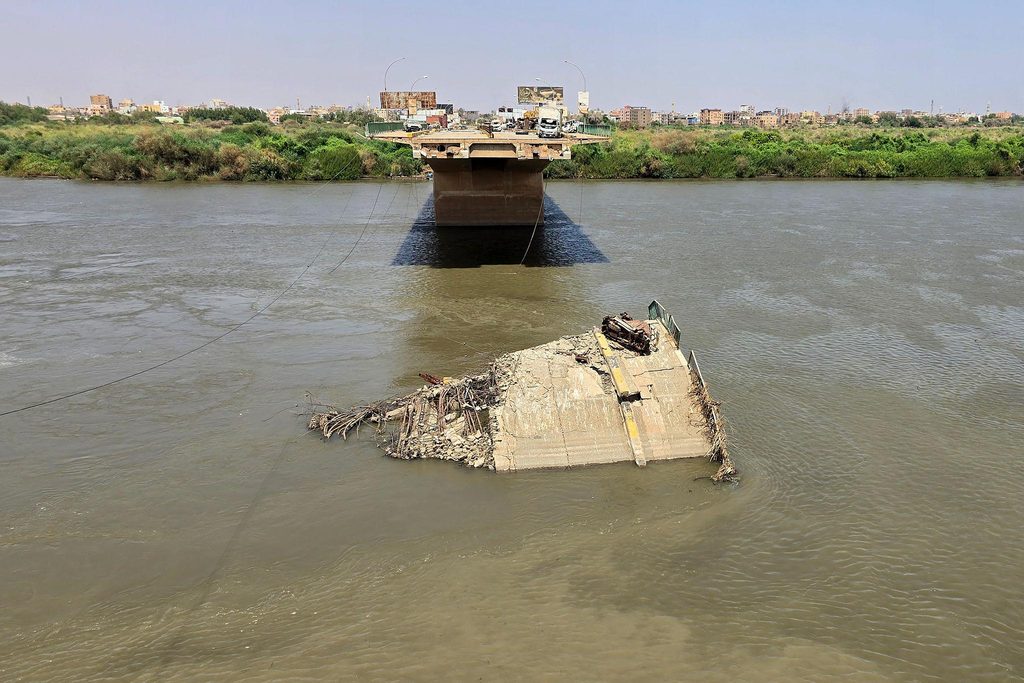
Sudan’s TASIS Government of Peace and Unity has accused the country’s military of deliberately destroying strategic bridges and targeting civilian infrastructure, renewing calls for independent international investigations into attacks on markets, hospitals and United Nations facilities.
TASIS spokesman Ahmed Taqad Lisan told Sudan Tribune that Sudan’s military had treated key bridges linking Khartoum, Omdurman and Bahri as military objectives during its campaign against the Rapid Support Forces (RSF).
Lisan said the Shambat Bridge, which connected Omdurman and Khartoum North, had been an essential route for RSF personnel and supplies before its destruction in November 2023.
He argued that Sudan’s military sought to sever communication and movement between RSF positions across the capital by attacking vital crossings.
The Shambat Bridge was destroyed on November 11, 2023, while the nearby Halfaya Bridge sustained significant damage in July 2024.
Neither side formally accepted responsibility for the destruction, although both accused their opponents of carrying out the attacks.
Lisan also cited damage to the Jebel Aulia dam bridge south of Khartoum, the Ardamata Bridge near El Geneina in West Darfur and a bridge in Nyala, South Darfur, as examples of infrastructure targeted during the conflict.
TASIS alleges systematic attacks on civilian infrastructure
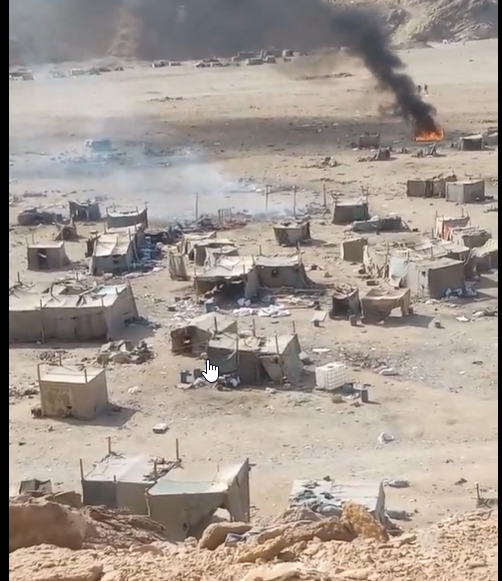
The TASIS spokesman accused forces operating under Sudan’s military leadership of conducting repeated strikes against civilian gatherings, commercial centres, hospitals and essential services in areas outside their control.
He identified attacks in Abu Zaima in North Kordofan, Al-Broush market in North Darfur, Nyala in South Darfur and Ed Daein in East Darfur.
Lisan also pointed to strikes in West Kordofan and the October 19 bombardment of Amiet Market in the disputed Abyei region, where scores of civilians were killed.
The Port Sudan authorities officially denied responsibility for the Abyei attack. However, a senior Sudanese military officer separately acknowledged to the Associated Press that the army had struck fuel tankers allegedly destined for the RSF, while denying that civilians were deliberately targeted.
Lisan maintained that the attacks formed part of a wider military strategy and said the TASIS government was prepared to submit supporting evidence to an independent international investigative body.
His statements come amid mounting concern over drone warfare across Sudan, with power stations, water facilities, markets and residential neighbourhoods increasingly exposed to aerial attacks.
Independent investigation demanded
Retired Brigadier General Jamal Al-Shaheed, a military analyst, said determining responsibility for attacks on bridges and protected facilities required forensic and intelligence evidence.
He said investigators would need to examine explosion patterns, projectile trajectories, weapons characteristics, satellite imagery and other technical material before establishing who carried out individual strikes.
Al-Shaheed warned that attacks affecting civilian facilities and international personnel required transparent investigations and accountability.
Another military analyst, Amin Ismail Majzoub, disputed the accusations against Sudan’s military, alleging that the RSF had destroyed bridges to obstruct advancing military forces.
Majzoub defended the army’s conduct and accused the RSF of attacking civilian infrastructure and humanitarian operations.
The competing allegations highlight the difficulty of establishing responsibility for attacks when independent investigators face restricted access to conflict zones.
UN facilities and civilian markets under fire
The controversy extends to attacks on international peacekeeping facilities.
On December 13, 2025, a drone attack struck a United Nations Interim Security Force for Abyei (UNISFA) logistics base in Kadugli, South Kordofan, killing six Bangladeshi peacekeepers and injuring others.
The United Nations condemned the attack and warned that deliberately targeting peacekeepers could constitute a war crime.
More recently, deadly drone strikes around Abyei’s Amiet Market prompted international condemnation and demands for greater protection of civilians.
The UN has repeatedly warned that the expanding use of drones is devastating civilian communities and damaging infrastructure essential to daily life.
A September report by the UN Independent International Fact-Finding Mission for Sudan documented serious violations involving drone operations by both Sudan’s military and the RSF.
Investigators identified attacks against hospitals, markets, residential areas and other civilian locations, warning that some operations could constitute war crimes.
Calls for international accountability
Sudanese lawyer Muaz Hadra said the destruction of civilian infrastructure could carry serious criminal consequences under domestic and international law.
He called for stronger international investigations and urged the UN Security Council to consider additional accountability measures through the International Criminal Court.
The Security Council previously referred the situation in Darfur to the ICC in March 2005.
Under international humanitarian law, parties to a conflict must distinguish between civilian objects and legitimate military objectives, avoid disproportionate civilian harm and take feasible precautions when conducting attacks.
The destruction of infrastructure that supports civilian life can constitute a war crime when it violates those protections.
With rival forces continuing to dispute responsibility for attacks across Sudan, demands are growing for independent investigations capable of establishing what happened, identifying those responsible and holding perpetrators accountable.