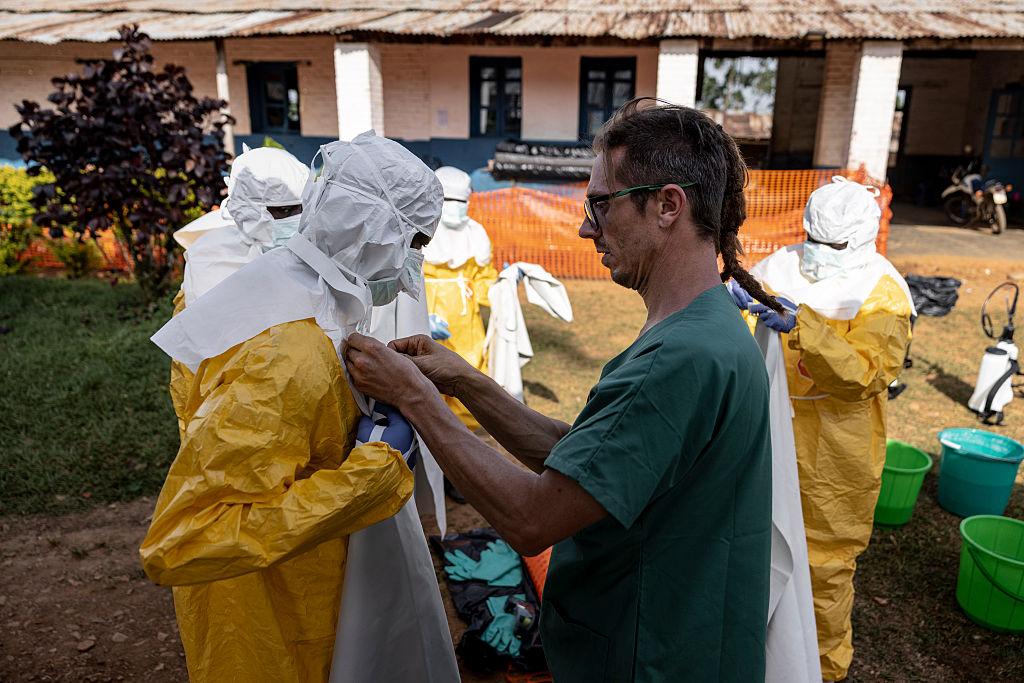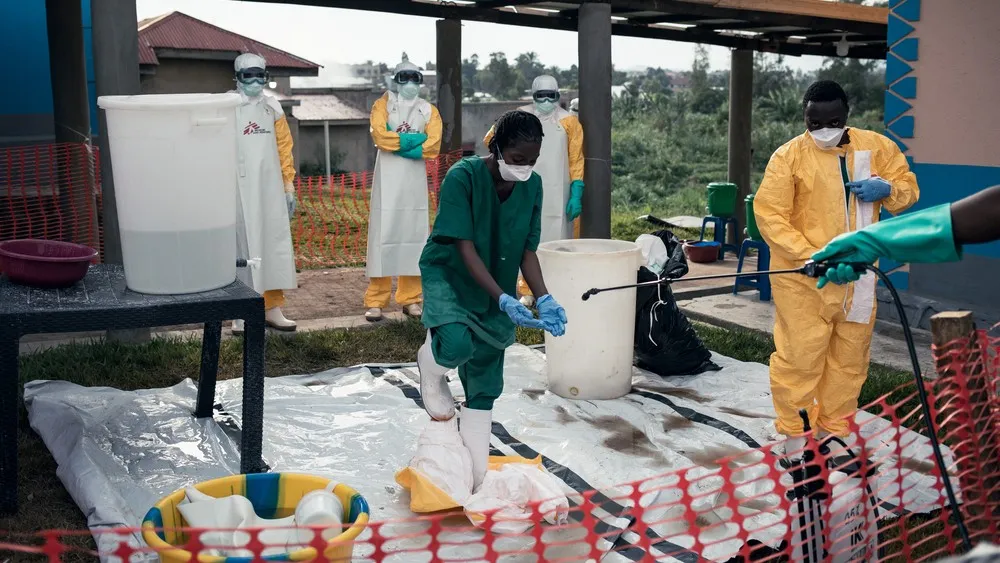
An Ebola outbreak in the Democratic Republic of Congo remains out of control six months after it began, with widespread transmission in health facilities and serious gaps in detecting infections, Médecins Sans Frontières said on Thursday.
Confirmed cases have exceeded 11,000 since the outbreak was declared in mid-May, making it the second-largest on record. It involves the rare Bundibugyo species of the virus, for which there are no approved vaccines or treatments.
MSF said funding committed to the response was failing to reach frontline teams, leaving health workers without pay or adequate training, ambulances without fuel and facilities short of supplies needed to handle suspected cases safely.
The charity’s international president, Dr Javid Abdelmoneim, said teams were witnessing unacceptable failures six months into the emergency. MSF urged the Congolese government and UN agencies to turn available resources into practical support for affected communities.
The government did not immediately respond to Reuters’ requests for comment.
At a separate briefing on Wednesday, British epidemiologist Neil Ferguson estimated that only about half of infections were being detected.
Ferguson, who has been modelling the outbreak in real time, said transmission could continue for another year. He warned that the outbreak could eventually exceed the 2014–2016 epidemic in West Africa, which recorded more than 28,600 cases and killed over 11,000 people.
His team estimated that between 2,000 and 3,000 people in Congo currently have Ebola.
MSF described major weaknesses in contact tracing and access to treatment. In Ituri province, just 9% of Ebola patients treated by its teams had previously been identified as contacts of known cases.
Nearly two-thirds of reported Ebola-related deaths over the past month occurred in communities rather than treatment centres, the charity said.
Health facilities themselves have also become significant sources of infection. In North Kivu’s Beni health zone, almost three-quarters of patients are believed to have contracted the virus in healthcare settings, according to MSF. Shortages of basic supplies, including water and chlorine, have undermined infection control.
Responding to Reuters’ questions about the criticism, the World Health Organization referred to comments made on Tuesday by its director-general, Tedros Adhanom Ghebreyesus, who acknowledged delays in paying health workers.
Tedros said the WHO was working with Congolese authorities, the Africa Centres for Disease Control and Prevention and other partners to strengthen the response. But attacks on health facilities and broader insecurity had become major obstacles.
He said an attack last week in Cantine-Aloya, North Kivu, killed 66 civilians, including three health workers — twice the death toll initially reported by local authorities.
The attack also disrupted monitoring of more than 1,000 contacts of Ebola cases and left three patients with confirmed infections unaccounted for, he said.