A growing confrontation between Islamic State (IS) and al-Qaeda-linked fighters is reshaping the security landscape across Africa’s Sahel region, as rival armed groups compete for territory, resources and influence in an increasingly unstable border region.
A senior Malian security official told Erem News that Jama’at Nusrat al-Islam wal-Muslimin (JNIM), an al-Qaeda-affiliated coalition, had captured additional villages and towns along the border between Mali and Burkina Faso.
The territorial gains come amid deadly clashes between JNIM and Islamic State’s Sahel Province, with both organisations seeking to strengthen their positions across the strategic tri-border area connecting Mali, Burkina Faso and Niger.
The official, who requested anonymity because of the sensitivity of the security situation, said the border region had become a major battleground between the rival organisations, complicating efforts by regional governments to restore control.
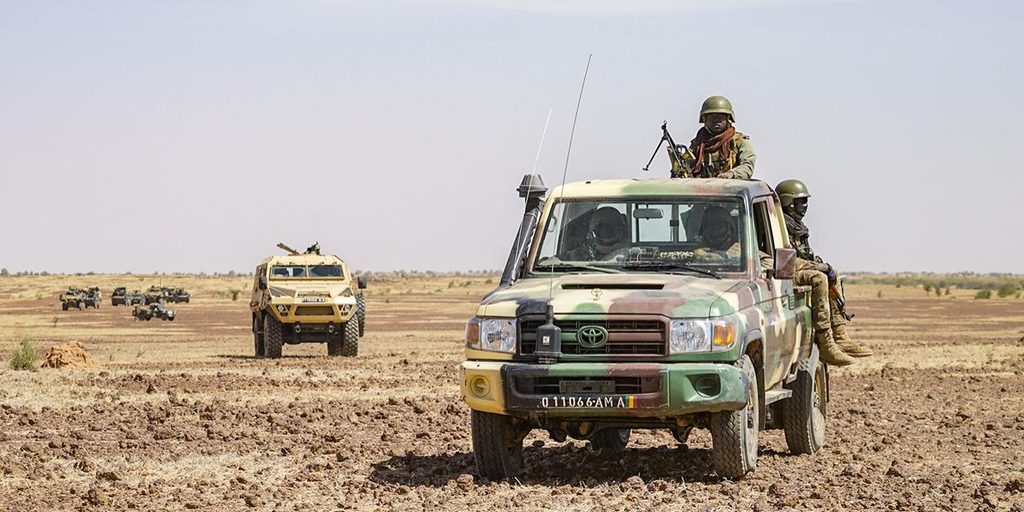
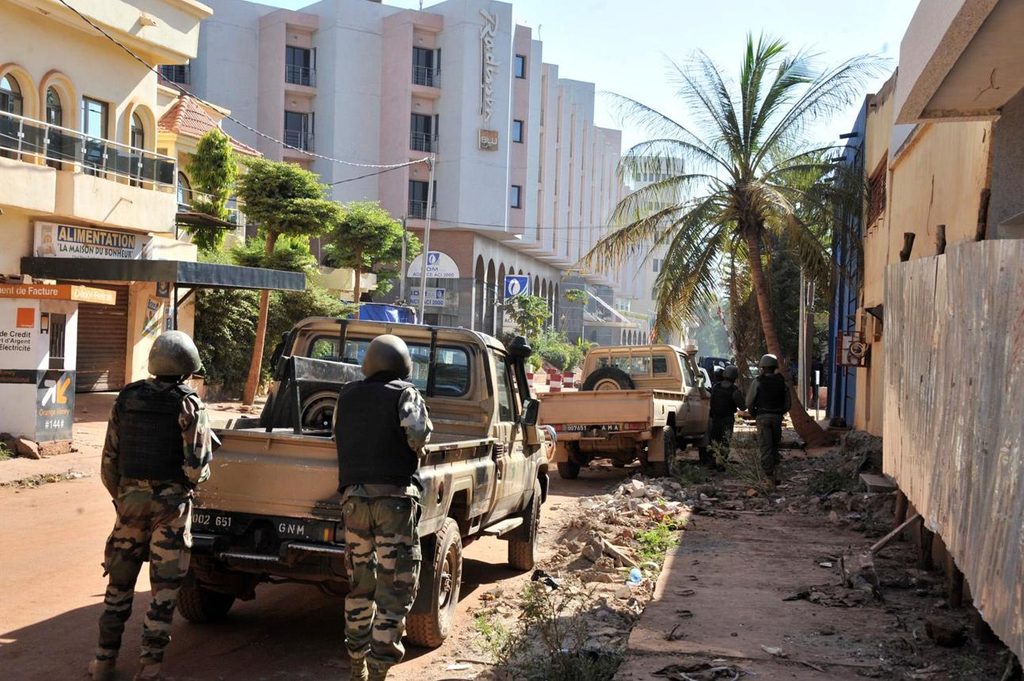
Government forces have begun repositioning their units as security conditions deteriorate, while hundreds of civilians have reportedly fled their homes amid fears of attacks and further fighting.
According to the official, authorities in the three Sahel countries are preparing a coordinated military response intended to halt the expansion of extremist groups and recover territory.
The official said the governments would not remain passive as armed organisations expanded their operations, adding that a joint strategy was being developed to strengthen military deployments and launch counteroffensives.
Malian military intensifies airstrikes
The latest developments coincide with an escalation in Malian military operations against JNIM, which is led by Iyad Ag Ghaly, a prominent figure in the region’s Islamist insurgency.
Malian forces have intensified airstrikes against positions associated with the organisation in an attempt to disrupt its advances and relieve pressure on towns facing restrictions on essential supplies.
JNIM fighters have increasingly targeted transport routes and supply corridors, including those used to deliver fuel to urban centres.
The disruption of fuel shipments has placed additional pressure on communities already struggling with insecurity and economic hardship.
Military efforts to reopen these routes have become an important part of the wider campaign against armed groups operating across central and northern Mali.
However, the simultaneous confrontation between JNIM and Islamic State has further complicated the security situation, leaving government forces facing multiple armed opponents across a vast and difficult-to-control region.
Competition over territory and smuggling routes
African affairs analyst Mohamed al-Haj Othman said the escalating confrontation between Islamic State and al-Qaeda-linked fighters was an expected consequence of their competition for economic resources and territorial influence.
Speaking to Erem News, Othman said the two organisations were competing to control lucrative taxation networks and cross-border smuggling routes used to transport valuable commodities and other resources.
He argued that control over these networks provides armed groups with financial resources that can sustain their operations, making the border region particularly attractive to competing organisations.
According to Othman, the intensifying rivalry presents a significant challenge for the military governments of Mali, Burkina Faso and Niger, which have formed the Alliance of Sahel States.
He warned that each territorial gain by either organisation further undermines state authority and raises questions about the ability of governments to enforce the law in remote border communities.
The competition is also contributing to shifts in the local balance of power, with armed groups attempting to consolidate their positions while preventing rivals from establishing permanent control.
The three countries have pledged to coordinate their security policies and military operations as part of efforts to confront the insurgencies that have spread across the region.
Nevertheless, years of fighting have left large areas vulnerable to attacks, despite repeated military campaigns and changes in regional security arrangements.
Military governments struggle to restore security
Mali, Burkina Faso and Niger have all experienced military coups in recent years, with their respective military authorities pledging to restore stability and reverse the territorial expansion of extremist organisations.
Despite those commitments, security conditions have continued to deteriorate in several areas, with armed groups maintaining the ability to launch attacks, disrupt trade and challenge government control.
The withdrawal of some Western military forces and changes in regional security partnerships have also altered the environment in which the three governments conduct counterinsurgency operations.
The formation of the Alliance of Sahel States has brought the three countries closer together politically and militarily, but the continuing violence highlights the difficulties involved in securing their extensive shared borders.
The region’s vast distances, limited infrastructure and long-established cross-border trading networks create additional obstacles for military forces attempting to prevent the movement of fighters and weapons.
No clear territorial advantage
Political analyst Mohamed Idris said the situation in the tri-border region remained highly fluid, with neither JNIM nor Islamic State establishing decisive superiority.
Speaking to Erem News, Idris said government forces had lost substantial ground in parts of the border area, but the rival extremist organisations were also struggling to achieve lasting dominance.
He explained that regular military units were repositioning to respond to emerging threats, while JNIM and Islamic State maintained control over different areas.
The result, he said, was a fragmented security environment in which several competing forces were attempting to weaken one another without possessing the capacity to establish permanent control across the entire region.
Idris cautioned against drawing firm conclusions about the future distribution of territory, arguing that the situation could continue changing as military operations and clashes between rival organisations intensified.
Each side was seeking to undermine the others, he said, but none appeared to possess the military and logistical advantages needed to impose a durable settlement.
The assessment suggests that the tri-border region could remain contested, with territorial gains and losses occurring as armed groups and government forces adjust their operations.
For civilians living in the affected communities, the continuing instability threatens to deepen an already serious humanitarian crisis.
Displacement, insecurity along transport routes and restrictions on the movement of essential goods have placed increasing pressure on populations caught between rival armed organisations and government military operations.
As Mali, Burkina Faso and Niger prepare further security measures, the confrontation between Islamic State and al-Qaeda-linked fighters is adding another dimension to a conflict that has already destabilised large parts of the central Sahel.
With no faction able to establish lasting control, the region faces the prospect of continued fighting, shifting territorial boundaries and further civilian displacement.