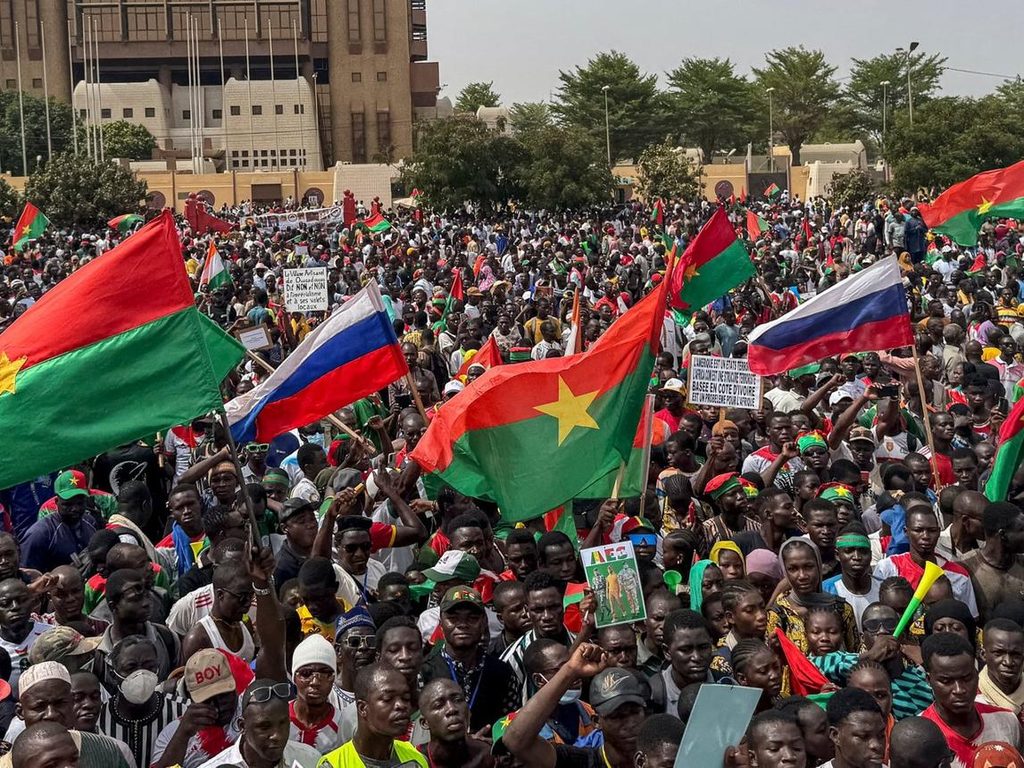
The 2026 African Youth Survey, commissioned by the South Africa-based Ichikowitz Family Foundation, found that 54 percent of respondents aged 18 to 24 considered Russia an influential player in their countries, compared with 44 percent in 2024.
France, once the dominant external power across much of West and Central Africa, registered 47 percent, placing it behind Russia in perceptions of foreign influence.
The findings, based on interviews with 4,901 young people across 16 African countries, illustrate a broader shift in political attitudes as African governments increasingly seek alternative international partnerships.
Although China and the United States continue to command greater recognition as influential powers, Russia’s growing appeal reflects its success in presenting itself as an alternative to Western political, military and economic influence.
The survey found that 83 percent of respondents who recognised Russia’s influence viewed its involvement positively, while 86 percent considered Moscow an ally to at least some extent.
The results suggest that Russia’s engagement with Africa, particularly through security cooperation and its emphasis on national sovereignty, has resonated with a generation increasingly critical of traditional Western relationships.
Former French territories lead the shift
Russia’s growing visibility was particularly pronounced in countries with historical ties to France, where political upheaval and changing security alliances have weakened Paris’s position.
In Burkina Faso, 95 percent of respondents recognised Russian influence, the highest proportion among the countries surveyed.
The figure reached 69 percent in the Republic of Congo, also known as Congo-Brazzaville, and 65 percent in Chad.
All three countries were formerly under French colonial rule, making the results particularly significant as Moscow expands its presence in regions where Paris once enjoyed considerable political and military influence.
The transformation has been especially visible across the Sahel, where successive military takeovers and disputes over foreign security operations have accelerated the withdrawal of French forces.
Between 2022 and 2023, France ended major military deployments in Mali, Burkina Faso and Niger amid deteriorating relations with the countries’ military-led governments.
Russia subsequently strengthened its security relationships with several governments, positioning itself as an alternative military partner.
In Niger, the military administration led by Abdourahamane Tiani ordered American forces to withdraw in 2024, bringing an end to a significant US military presence as Niamey deepened cooperation with Moscow.
Similar developments across the region have allowed Russia to expand its diplomatic and defence relationships while France faces increasing resistance to its longstanding involvement in African affairs.
However, Moscow’s growing popularity does not necessarily translate into unrestricted political support, with the survey also revealing substantial concern about foreign interference.
African youth demand sovereignty and economic benefits
Despite increasingly favourable perceptions of Russia, the findings indicate that young Africans remain wary of allowing external powers to exercise excessive influence over their countries.
Approximately 80 percent of respondents expressed concern about foreign involvement in their national affairs, compared with 72 percent two years earlier.
The increase suggests that enthusiasm for new international partnerships is accompanied by stronger demands for political independence and greater control over national resources.
When asked about their priorities in dealing with foreign governments, 39 percent identified protecting their countries’ natural resources as a major consideration.
Another 34 percent emphasised respect for national sovereignty, while 43 percent highlighted the importance of securing tangible economic benefits, particularly through infrastructure investment and development.
These priorities point to a changing approach among younger Africans, who increasingly appear to assess foreign partnerships according to their practical benefits rather than longstanding diplomatic relationships.
With Africa’s population exceeding 1.5 billion and a median age of approximately 19, the political attitudes of younger generations are expected to play an increasingly important role in shaping the continent’s international relationships.
The findings also underline the challenges facing countries seeking to maintain influence through historical connections alone, particularly when younger populations demand economic opportunities, investment and greater political autonomy.
Moscow’s diplomatic strategy gains momentum
Ivor Ichikowitz, founder of the foundation behind the survey, described Russia’s expanding influence as a development that competing international powers could no longer afford to dismiss.
He said Moscow had achieved a level of influence across parts of Africa that would have appeared difficult to imagine only a few years earlier.
The findings come shortly after the third Russia-Africa Summit, held in Moscow on October 28–29, where Russian President Vladimir Putin hosted African leaders and senior officials for discussions on economic, diplomatic and security cooperation.
Representatives from 48 African countries participated in the gathering, including delegations led by 22 heads of state or government.
The summit demonstrated Moscow’s determination to strengthen its position across the continent despite Western sanctions and the continuing geopolitical consequences of its war in Ukraine.
For African governments seeking to diversify their international relationships, Russia has increasingly presented itself as a partner willing to cooperate without the political conditions frequently associated with Western assistance.
Moscow has also emphasised its opposition to colonialism and foreign intervention, themes that have gained traction in parts of Africa where public dissatisfaction with former colonial powers remains strong.
Nevertheless, Russia’s approach has attracted scrutiny over the extent to which its security arrangements and economic partnerships will produce lasting benefits for African populations.
Competition shifts towards minerals, energy and trade
While Russian engagement in Africa has traditionally concentrated on military cooperation, arms supplies and diplomatic relationships, economic priorities are becoming increasingly prominent.
Discussions surrounding the Moscow summit highlighted growing interest in Africa’s critical mineral reserves, energy resources, agricultural markets and infrastructure development.
Russia has also sought to strengthen alternative international payment arrangements as it attempts to reduce the impact of Western financial sanctions.
Expanding cooperation on food security, energy production and mineral extraction formed part of the broader agenda, reflecting Moscow’s ambition to establish more substantial economic relationships beyond defence agreements.
The shift comes as the United States and China intensify competition for access to the continent’s strategic resources, including minerals essential to advanced manufacturing, renewable energy technologies and defence industries.
Beijing continues to maintain an advantage over Moscow in economic engagement and infrastructure investment, while Washington remains an important security and commercial partner for numerous African governments.
The African Youth Survey also found that China retained a more favourable overall standing among young Africans than Russia, illustrating the competitive environment Moscow faces despite its recent gains.
For France, the findings represent another indication that decades of established diplomatic relationships can no longer guarantee influence among younger African populations.
For Russia, they offer evidence that its diplomatic messaging and expanding security relationships are gaining recognition across a continent increasingly unwilling to rely on traditional foreign partners.
Yet the broader message from the survey extends beyond the rivalry between Moscow and Paris.
Young Africans appear increasingly determined to evaluate international powers according to their willingness to respect sovereignty, protect local economic interests and deliver meaningful development.