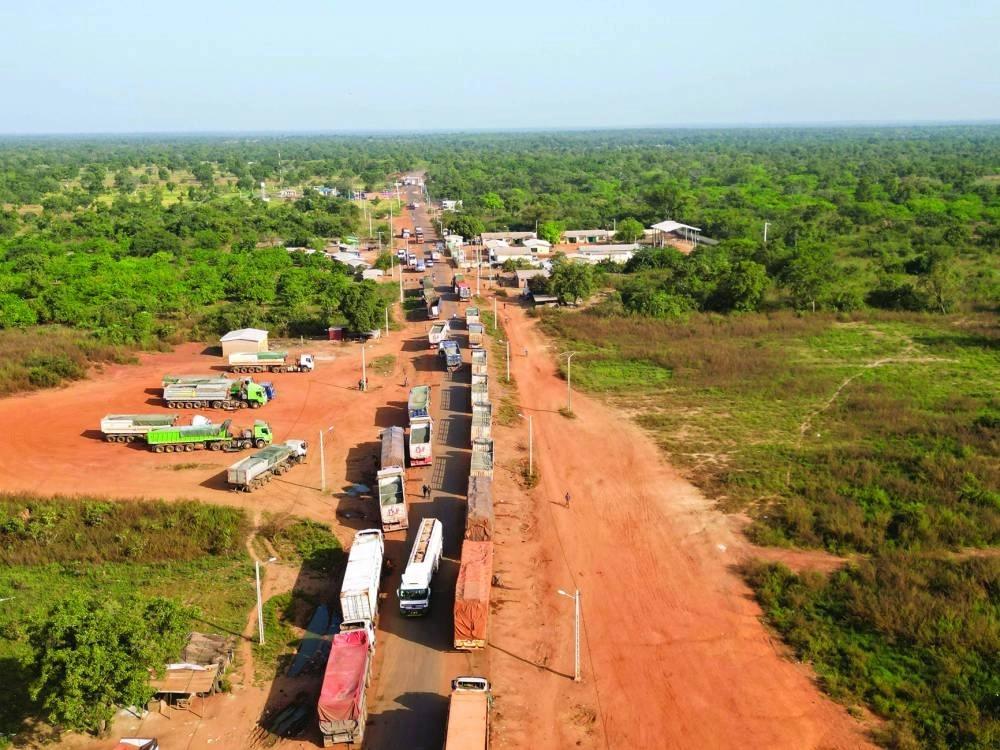
Al-Qaeda-linked militants are turning Mali’s vital supply routes and fuel convoys into instruments of economic warfare, placing growing pressure on the country’s military rulers and threatening to deepen an already severe security crisis, a regional analyst has warned.
Mohamed Abdelrahman Ould Abdallah, an expert on Sahel and West African affairs, said Jama’at Nusrat al-Islam wal-Muslimin (JNIM) was deliberately targeting commercial highways and fuel shipments to weaken Mali’s armed forces and undermine the military government’s ability to maintain control.
Speaking to Erem News, Ould Abdallah said the campaign had evolved beyond a fuel shortage into a broader strategy aimed at expanding militant influence, disrupting economic activity and increasing pressure on the capital, Bamako.
He warned that the consequences could extend beyond Mali’s borders, threatening regional trade and security across West Africa.
Supply routes become a battlefield
According to Ould Abdallah, JNIM has increasingly focused on disrupting commercial corridors connecting landlocked Mali to neighbouring countries, particularly Senegal and Ivory Coast.
Attacks on fuel tankers and commercial convoys have transformed essential transport routes into a strategic vulnerability for the Malian state.
The campaign threatens the flow of fuel, food and other critical supplies to Bamako and large parts of the country, forcing security forces to devote additional resources to protecting highways and transport convoys.
Ould Abdallah said the attacks were designed to exhaust Mali’s military capabilities while exposing weaknesses in the government’s ability to secure its territory.
The strategy also raises questions about whether Mali’s military leadership can protect the capital and maintain essential services while confronting armed groups across multiple regions.
Fuel crisis spreads through economy
The consequences of the blockade extend well beyond the availability of petrol and diesel.
Disruptions to fuel deliveries have affected electricity generation, transportation, commercial markets and essential public services, placing additional pressure on households and businesses already struggling with years of insecurity.
Mali depends heavily on road transport for imports, making its economy particularly vulnerable to attacks on cross-border supply corridors.
The ongoing disruption has also increased the financial burden on businesses and consumers, as higher transport costs and unreliable supplies affect economic activity.
Ould Abdallah said the widening impact demonstrated how armed groups could exploit economic vulnerabilities to weaken state institutions without necessarily capturing major cities.
Security arrangements face growing scrutiny
The analyst questioned the effectiveness of Mali’s security arrangements following the withdrawal of international forces and the reduced involvement of traditional foreign partners.
He said the country’s military authorities had yet to establish an effective response capable of containing the expansion of armed groups and securing critical infrastructure.
Despite changes in international security partnerships, militants have continued to challenge government control over important transport corridors and rural areas.
Ould Abdallah argued that military alliances alone would not resolve the crisis.
He called for a comprehensive regional and international strategy combining military security measures with stronger state institutions, civilian protection, border security and economic development.
Such an approach, he said, must also address the poverty, marginalisation and economic instability that have contributed to prolonged insecurity across the Sahel.
Warning of wider regional destabilisation
Ould Abdallah warned that a further deterioration in Mali’s security situation could have serious consequences for neighbouring states.
Mauritania, Senegal and Niger would face particularly significant risks, while Ivory Coast and Burkina Faso could also experience increased instability and disruptions to regional trade.
He said militant organisations operating across the Sahel did not recognise national boundaries, making the crisis a regional security challenge rather than an exclusively Malian problem.
The analyst urged greater international and regional cooperation, arguing that Mali’s worsening security situation could undermine stability throughout West Africa.
He also questioned the response of international powers that have repeatedly pledged to combat terrorism and support regional security.
Ould Abdallah said solidarity with Mali should be regarded as a security and humanitarian necessity, warning that allowing the country’s institutions to weaken further would carry consequences far beyond its borders.
The warning comes as JNIM continues to use attacks on transport infrastructure and supply convoys to challenge Mali’s military authorities, demonstrating how control over essential economic routes has become a central weapon in the country’s prolonged conflict.