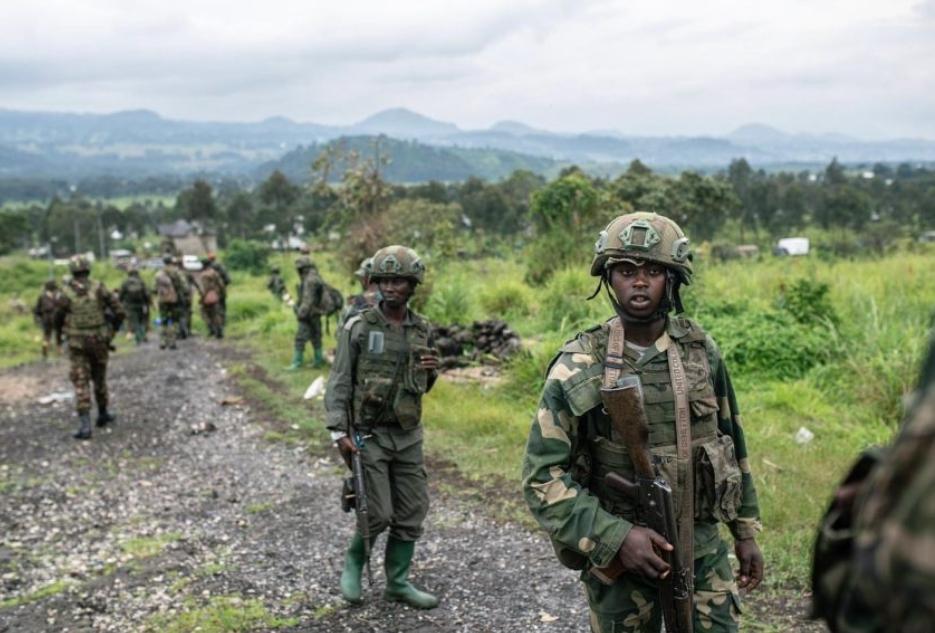
Fighting has intensified across two major fronts in eastern Democratic Republic of Congo, with government forces and allied militias reporting territorial gains in North Kivu while clashes escalate around the strategic Minembwe highlands in South Kivu.
The developments are increasing military pressure on the AFC/M23 and allied forces across a broad stretch of eastern Congo, although the fighting does not amount to a single coordinated north-south offensive. The two fronts involve different armed coalitions and remain geographically separated.
In North Kivu, the Congolese army, or FARDC, backed by pro-government Wazalendo fighters, has regained several positions in Masisi territory following weeks of advances and counteroffensives against the AFC/M23.
Local outlet Actualité.cd reported that government forces had retaken Miko, Remeka, Miano, Kaleta, Kasake and other villages around Ngungu by mid-September. Fighting has since continued around strategically important hills and roads in the area, with control of some positions repeatedly changing hands.
The Critical Threats Project, which tracks the Congo conflict, said on September 18 that pro-government forces had made “notable gains” in southern Masisi and were also contesting several routes linking Masisi with neighbouring Walikale territory.
Battle for western supply routes
One of the most active fronts runs toward Walikale, an area that provides access farther west into Congo and serves as an important corridor for moving fighters, ammunition and supplies.
FARDC and Wazalendo forces retook the strategic position of Minjenje on September 15 after several hours of fighting, forcing AFC/M23 fighters to withdraw toward Malemo in neighbouring Masisi, according to local reports.
But the battlefield remains highly fluid.
Actualité.cd reported on Friday that AFC/M23 forces continued to hold Malemo and had regained Kibati after government troops briefly occupied the settlement. FARDC and Wazalendo were meanwhile holding a belt of positions including Minjenje, Mpety, Luola, Ngambi, Buhimba and Chanjikiro.
That makes it premature to describe the fighting as a sustained government breakthrough. Instead, the latest clashes show both sides fighting over roads, hilltops and small settlements that could determine whether M23 can push farther west or whether Kinshasa can force it back toward its core positions in Masisi.
New pressure around Minembwe
Farther south, intense fighting has also continued around Minembwe and the surrounding highlands of South Kivu.
Local sources reported renewed clashes around Point Zéro, a strategically important elevated position in Mwenga territory, as well as fighting around Biziba and Irumba on the outskirts of Minembwe.
The confrontations pit FARDC troops, Wazalendo fighters and Burundian forces against M23-aligned armed groups, particularly Twirwaneho fighters operating in the highlands.
Point Zéro is important because it overlooks routes linking the Minembwe area with parts of Fizi and Mwenga. Control of the high ground can affect troop movements and supply routes across a difficult mountainous battlefield.
Fighting has also been reported in recent days around Mukoko, Rugezi, Nyaruhinga, Natulonge and other settlements across the high and middle plateaus.
Civilians again caught in the fighting
The renewed battles are worsening an already serious humanitarian situation.
Civil society groups in Fizi said fighting had forced schools to close, disrupted medical and humanitarian operations and displaced tens of thousands of people across the highlands. A local civil society assessment cited by Actualité.cd put the number displaced in affected communities at 41,952 people from 8,618 households.
Similar displacement has been reported along the Masisi-Walikale front, where civilians have repeatedly fled as villages change hands between government and rebel forces.
The widening battles leave the AFC/M23 confronting pressure on geographically separate fronts, potentially forcing it to distribute forces across a wider area. But government advances remain fragile, and recent fighting has repeatedly demonstrated how quickly settlements can change hands.
For Kinshasa, the immediate test will be whether FARDC and its allies can hold recently recovered positions and connect them into defensible lines rather than securing villages only temporarily.
For the AFC/M23, the challenge is maintaining supply and reinforcement routes across an increasingly dispersed battlefield while preventing local reverses from developing into a broader retreat.