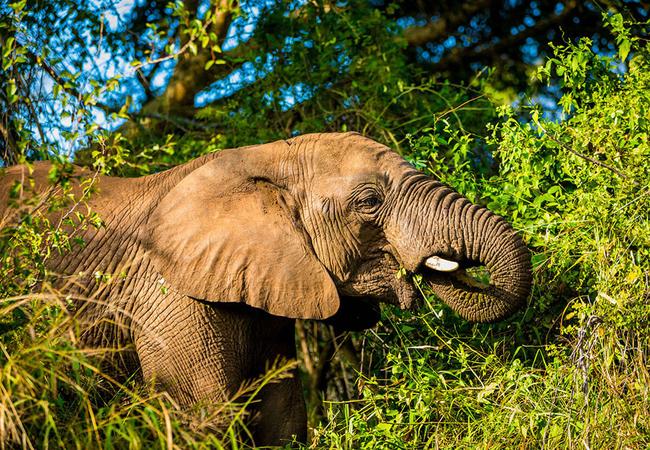
African elephants in Kenya may be using dozens of medicinal plants to treat illnesses in themselves and their young, according to new research that highlights the remarkable medical knowledge of wildlife and the importance of protecting forest habitats.
The study, published in the journal Scientific Reports, examined the behaviour of elephants living around Mount Elgon in western Kenya, where researchers worked with local wildlife experts, community elders and conservationists to investigate how the animals use plants.
Researchers identified 35 plant species that elephants reportedly select for medicinal purposes, including 25 that are also recognised locally for their healing properties.
The findings suggest that elephants may possess sophisticated knowledge of natural remedies, potentially using specific plants to treat different health conditions.
The Mount Elgon elephants have long attracted scientific interest for their unusual feeding habits. Known as salt-mining elephants, they enter caves and use their tusks to scrape mineral-rich rock, supplementing their diets with essential nutrients.
The latest research suggests their use of the surrounding forest may extend well beyond ordinary feeding.
Mothers may provide medicinal plants to calves
Among the findings were accounts of elephant mothers preparing medicinal plant material for their young.
One wildlife scout described observing mothers collecting a plant locally known as Angurweet, which is traditionally used to treat conditions including stomach aches.
According to the account, the elephants chewed the plant’s leaves and mixed them with roots from other trees, sometimes combining the material with their own milk before feeding it to their calves.
Researchers believe the observations could provide evidence of elephants administering natural remedies to sick offspring, although further investigation is needed to establish whether the behaviour constitutes deliberate medical treatment.
Professor Michael Huffman, a primatologist at Nagasaki University in Japan who was not involved in the study, described the account as intriguing but cautioned that additional evidence would be necessary to confirm that elephants provide targeted medical care to their young.
Scientists investigate forest’s natural pharmacy
The research team, working with the Mount Elgon Foundation, has begun gathering additional evidence by providing local wildlife experts with cameras to document elephant behaviour.
Scientists are also analysing the plants identified during the study to determine whether they contain biologically active compounds with potential medicinal applications.
Dr Fabien Schultz of the Bernhard Nocht Institute for Tropical Medicine in Hamburg said knowledge provided by local communities had helped researchers identify promising avenues for investigation.
The next stage will involve determining whether elephants deliberately select particular plants when experiencing specific health problems and whether those plants possess relevant medicinal properties.
Dr Elodie Freymann of Brown University, another lead researcher, said the findings raised important questions about the consequences of deforestation for both wildlife and humans.
Destroying forest habitats could deprive animals of the natural remedies they have evolved to use while eliminating plants that may hold the key to future medical discoveries.
Self-medication has already been documented in several animal species, including chimpanzees, orangutans, insects and other wildlife.
Researchers hope the Mount Elgon findings will deepen scientific understanding of how animals identify and use medicinal substances in their natural environments.
The study also strengthens the case for conserving biodiversity, with scientists warning that the destruction of forests could erase potentially valuable medicinal resources before their properties are fully understood.