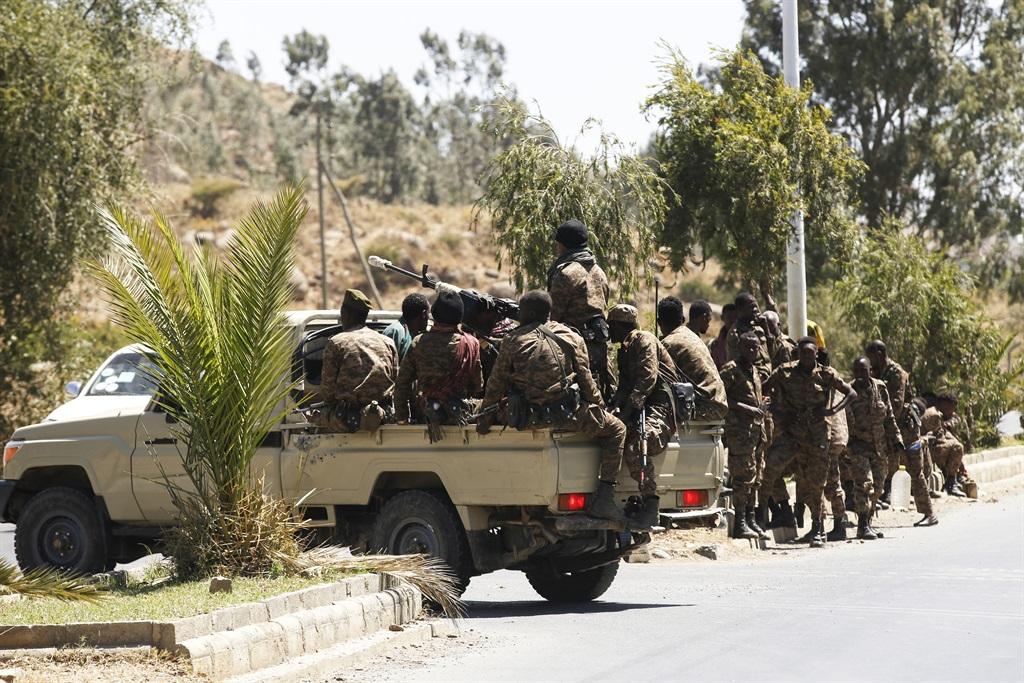
Ethiopia’s military said on Thursday it had repelled attacks by Tigrayan forces and their allies in the country’s north, issuing its first official account of renewed fighting that has raised fears of a return to full-scale civil war.
The army said clashes began in the Amhara region near the border with Tigray, where its troops inflicted heavy casualties on opposing forces and captured weapons. The claims could not be independently verified.
The statement came as fighting spread across northern Ethiopia following a sharp escalation between the federal government and the Tigray People’s Liberation Front (TPLF), which controls the northern region.
Both sides have accused each other of triggering the latest hostilities, threatening the fragile peace agreement that ended their devastating two-year war in 2022.
Tigrayan forces seized three airports from federal police on Wednesday, prompting Ethiopian Airlines to suspend flights to the region.
In neighbouring Afar, a humanitarian source told AFP that Tigrayan forces launched heavy artillery attacks on Thursday in an attempt to capture the town of Yallo, near the Tigray border.
TPLF vice-president Amanuel Assefa described the situation as a full-scale war, confirming that Tigrayan forces were fighting alongside allied armed groups in Afar and Amhara.
The TPLF has not responded to the army’s latest claims about battlefield losses.
Mekelle residents fear worsening humanitarian crisis
Despite the escalating clashes elsewhere, residents of Mekelle, Tigray’s regional capital, reported relative calm on Thursday, although armed Tigrayan fighters were visible in the streets.
A resident identified by the BBC as Fitsum said the city had experienced no major clashes but that fear of renewed fighting had brought everyday life to a near standstill.
He warned that cash shortages and prolonged economic hardship had left residents increasingly vulnerable.
Many people have relied on mobile banking because of a shortage of physical currency, raising concerns that any disruption to communications could leave families unable to purchase essential supplies.
Residents have also restricted their movements as uncertainty grows over the possibility of a wider conflict.
The latest escalation follows months of deteriorating relations between Prime Minister Abiy Ahmed’s government and Tigrayan authorities, with both sides accusing each other of breaching the African Union-brokered 2022 peace agreement.
On Sunday, the TPLF and six other armed groups announced a new alliance aimed at removing Abiy’s government from power, bringing together factions from several Ethiopian regions.
The renewed fighting has heightened fears of another humanitarian catastrophe in northern Ethiopia, where the previous war devastated infrastructure, displaced millions and pushed communities towards famine.
The African Union’s mediator estimated that approximately 600,000 people died during the 2020–2022 conflict, although the full death toll remains uncertain.
With military operations now extending into neighbouring regions and civilian transport disrupted, concerns are growing over the ability of the 2022 peace deal to prevent another prolonged conflict.