Explosions were heard overnight in Ethiopia’s capital Addis Ababa, including near military and security facilities, hours after authorities imposed an indefinite ban on drone flights over the city.
Residents and diplomatic sources reported blasts in western and southern Addis Ababa, including areas close to the military headquarters and the headquarters of Ethiopia’s intelligence service.
An opposition source told Reuters that anti-government forces were behind what it described as drone strikes on targets in the capital. The claim has not been independently verified, and Ethiopian authorities have not publicly confirmed the cause of the explosions.
One resident in the southern Gotera district told BBC Amharic that an explosion shortly after midnight was powerful enough to trigger car alarms. Another resident reported hearing a blast in Torhayloch, a western neighbourhood near the military headquarters.
There were no immediate official reports of casualties or damage.
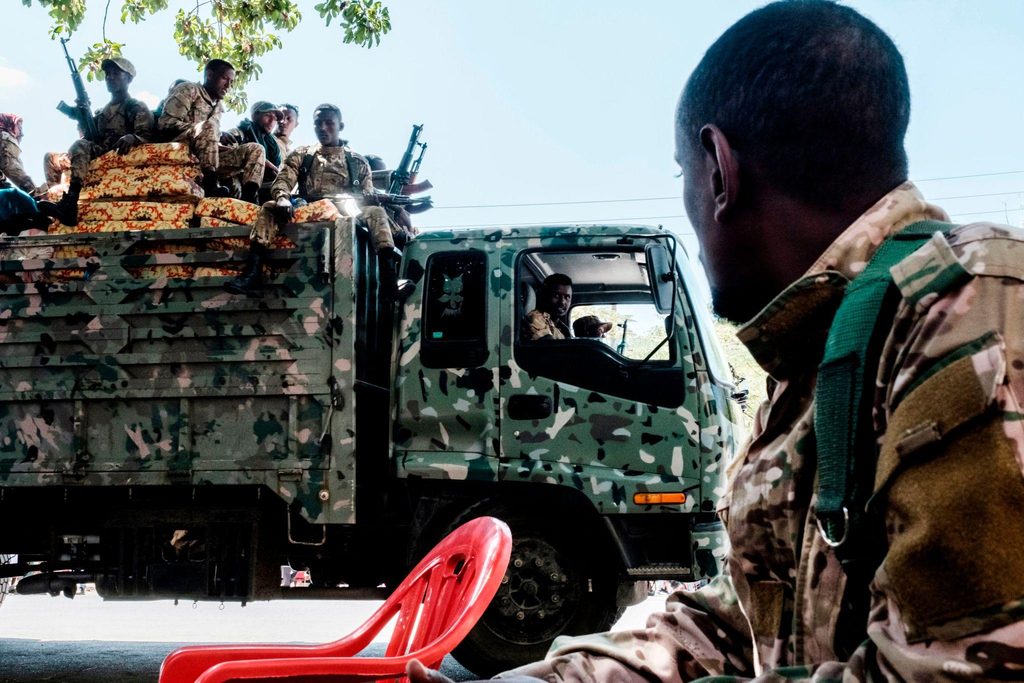
The explosions came amid a sharp escalation in Ethiopia’s northern conflict, where federal forces are fighting an alliance of armed groups that includes the Tigray People’s Liberation Front (TPLF) and Fano fighters from the Amhara region.
The alliance was formed last month by seven armed movements and says its objective is to remove Prime Minister Abiy Ahmed’s government.
Renewed fighting has spread across Tigray, Amhara and Afar after months of rising tensions between Addis Ababa and the TPLF. Both sides accuse the other of violating the 2022 Pretoria peace agreement that ended the devastating two-year Tigray war.
Federal troops and allied forces have recently advanced into parts of southern Tigray, including the strategically important town of Alamata, about 120 kilometres south of the regional capital Mekelle.
At least 52 civilians were reported killed during three days of fighting around Alamata, according to a medic cited by the BBC.
Communications have also been severely disrupted across Tigray, making independent verification of battlefield claims increasingly difficult. Reuters reported last week that internet and telecommunications services had been cut as fighting intensified.
Fighting has also been reported in neighbouring Afar and around Lalibela in the Amhara region, where federal troops are battling Fano fighters allied with the TPLF.
Hours before the Addis Ababa explosions, Ethiopia’s National Intelligence and Security Service announced an indefinite ban on drone flights over the capital and surrounding areas.
The agency said it would suspend permits for drone operations and warned that anyone violating the restrictions could face legal action. It said the measures were intended to protect senior officials, critical infrastructure and major public events.
Ethiopia’s government has accused neighbouring Eritrea of supporting opposition forces, an allegation Asmara rejects.
Eritrean Information Minister Yemane Gebremeskel has accused Abiy’s government of seeking to blame neighbouring countries for Ethiopia’s internal conflicts.
Relations between Ethiopia and Eritrea have deteriorated sharply since the end of the previous Tigray war, despite Eritrea having fought alongside Ethiopian federal forces against the TPLF during that conflict.
Tensions have also grown over Ethiopia’s push for direct access to the Red Sea, including repeated statements by Abiy about the strategic importance of Eritrea’s Assab port.
The overnight explosions represent a significant escalation if confirmed as opposition drone attacks, potentially extending the conflict far beyond the northern battlefront and into the Ethiopian capital.