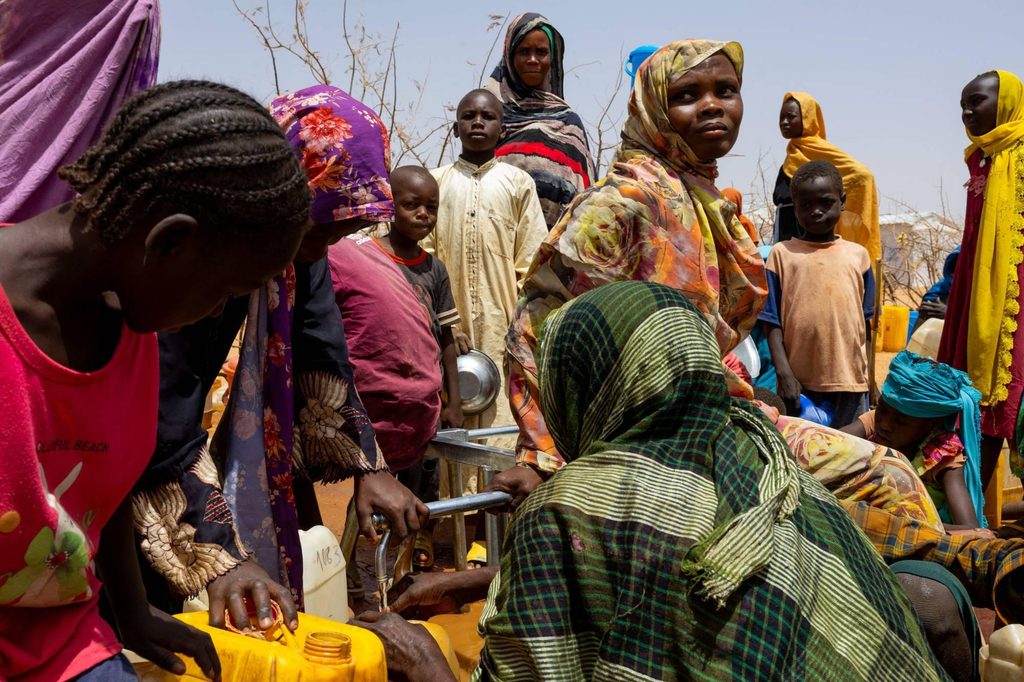
More than 300,000 refugees in Chad could lose access to essential services as a worsening funding crisis threatens humanitarian operations, the United Nations refugee agency warned on Tuesday.
UNHCR said 319,000 refugees face delays in registration, potentially leaving them without the documents needed to access food assistance, healthcare and education. The delays could also increase their risk of detention.
Dominique Hyde, UNHCR’s director of external relations, warned that funding shortages could deprive up to 200,000 women and girls of safe spaces and programmes designed to prevent and respond to violence.
Another 233,000 children could lose access to critical protection services.
The cuts also threaten livelihood programmes supporting nearly 400,000 refugees and members of host communities in Chad, including vocational training, employment and business development initiatives.
Hyde said these programmes were essential to helping displaced people become financially independent and reducing their long-term reliance on humanitarian assistance.
The warning comes as Chad struggles to accommodate hundreds of thousands of people fleeing Sudan’s war, placing additional pressure on already overstretched humanitarian services.
The funding crisis is also disrupting refugee protection services elsewhere. In Ethiopia, the number of safe houses for survivors of gender-based violence has more than halved over the past year, while newly arrived refugee families in Burundi risk losing family tracing and psychosocial support.
Assistance for Afghan returnees has also been sharply reduced as more than one million Afghans have returned or been deported this year.
UNHCR said its income fell from $5.2 billion in 2024 to $3.9 billion in 2025. By the end of July, the agency had received just 32 percent of the funding required for 2026.
The agency has already reduced its workforce by 33 percent, closed 140 offices and introduced $135 million in cost-saving measures.
Hyde warned that further cuts could force essential protection services to close, leaving vulnerable refugees exposed to greater risks of violence, exploitation and abuse.