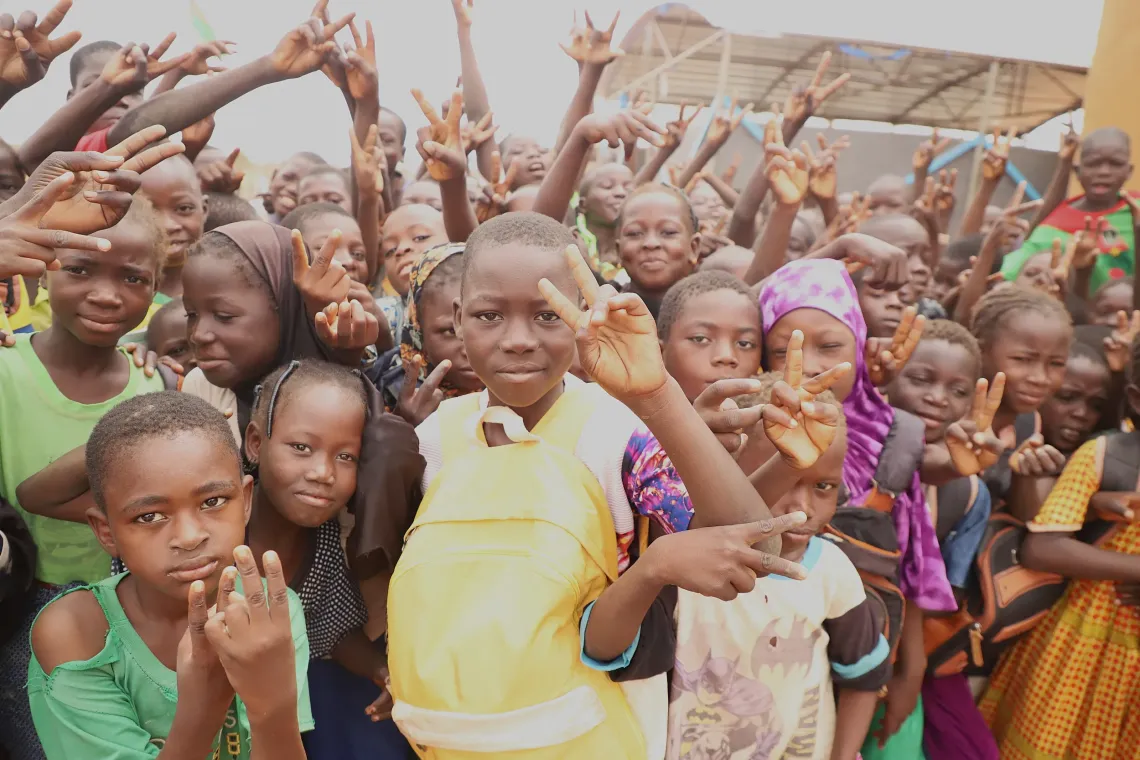
Nearly two million children across Mali, Burkina Faso and Niger are missing out on education as armed violence and insecurity keep thousands of schools closed, according to figures cited in regional reporting as the new academic year begins.
While millions of pupils returned to classrooms on Thursday, children in some of the central Sahel’s hardest-hit communities faced another year without regular lessons. Attacks, displacement and threats against teachers have disrupted schooling across the three countries.
Burkina Faso accounts for the largest share of closures in the figures reported by Erem News. More than 6,900 schools were described as closed, affecting nearly one million pupils and tens of thousands of teachers.
The report also said more than 2,500 schools had reopened during a period extending into 2026, including in Boucle du Mouhoun and the country’s northern and central-western areas. UNICEF and education authorities have established additional learning facilities to accommodate displaced children.
The figures cover different reporting periods and should not be treated as a single, independently verified assessment of conditions at the start of the school year.
In Mali, education-sector figures published in June put the number of non-functioning schools at 2,444 out of 11,860 — more than one in five — affecting approximately 733,200 children and 14,604 teachers.
The closures were concentrated in northern and central regions. Some schools were forced to shut by armed groups, while others were attacked, abandoned by teachers fearing for their safety or used to shelter displaced families.
Mali’s transitional leader, Assimi Goita, has designated 2026–2027 the “Year of Education and Culture”, but the continuing closures underline the obstacles facing efforts to restore access to classrooms.
Niger has fewer reported closures than its two neighbours, although insecurity continues to disrupt education, particularly in the western Tillaberi region.
A January 2026 brief by the Geneva Global Hub for Education in Emergencies, citing November 2025 data, recorded 1,084 non-functioning schools in Niger, affecting more than 80,000 children. Those figures predate the latest school opening.
According to Erem News, Niger’s Education Minister Elisabeth Cherif pledged continued support for families in insecure areas through temporary schools, catch-up learning centres, distance education and digital training.
Across the central Sahel, the barriers extend beyond militant attacks. Poverty, displacement, flooding and damaged infrastructure have compounded the education crisis, while the use of schools as shelters or by armed actors has further reduced available classroom space.
Children cut off from education also face heightened risks of exploitation and recruitment by armed groups, making the restoration of safe schooling a protection priority as well as an educational one.