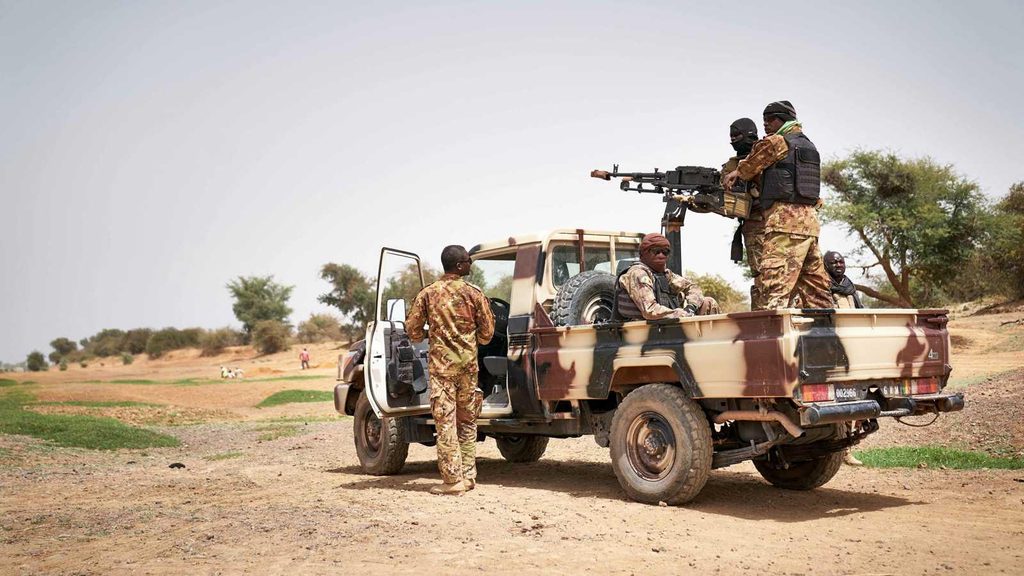
The scale of a devastating September 10 attack on a Malian army base is becoming clearer, with new accounts putting the number of soldiers killed at more than 100 and dozens more captured by Al-Qaeda-linked fighters.
The revised toll makes the assault on the Dioura military camp in central Mali one of the deadliest blows suffered by the country’s armed forces in years and comes as Bamako prepares to mark Independence Day on September 22.
Military, security and local sources told AFP that at least 100 Malian soldiers were killed in the September 10 attack, along with five Russian Africa Corps personnel.
The figure is roughly double an earlier estimate of at least 50 Malian troops killed, revealing a substantially heavier battlefield loss than initially reported.
Jama’at Nusrat al-Islam wal-Muslimin (JNIM), an Al-Qaeda affiliate that claimed responsibility for the attack, has put the toll even higher.
The group said its fighters killed 150 Malian soldiers, including senior officers, and captured 93 others. It has since released footage purporting to show dozens of captured Malian troops.
Those figures have not been independently verified, and Mali’s military has not released a full casualty count.
An officer from the Malian army’s general staff told AFP that a military police report listed around 100 personnel as missing, about 30 wounded and roughly 30 captured.
A local official separately told the news agency that more than 80 soldiers had been taken prisoner and that the Dioura camp was subsequently abandoned and stripped of weapons.
The Malian military has acknowledged losing personnel during the fighting but has focused its public statements on operations launched in the area since the September 10 assault.
On September 19, the army said forces around Dioura were continuing targeted strikes against militant positions near the garrison and on the outskirts of the town.
It said a large air-and-ground operation involving transport helicopters had allowed two army companies that had been defending the garrison to be evacuated.
The army said subsequent operations inflicted heavy human and material losses on JNIM, fighters from the Azawad Liberation Front and foreign combatants, while reconnaissance and search operations remained under way.
The continuing operation underscores how the battle for Dioura did not end with the initial assault, even as new casualty figures expose the severity of the losses suffered by government forces.
One security source told AFP that troops at the base had lacked sufficient air support and that many of the soldiers deployed there were on their first battlefield assignment.
The emerging death toll presents another serious security challenge for military leader Assimi Goita, whose government has made restoring state control and defeating armed groups a central justification for its rule.
Goita has led Mali since consolidating power following a 2021 military takeover.
Under his government, Bamako sharply reduced security cooperation with Western countries and turned toward Moscow for military support.
Russian Wagner personnel initially operated alongside Malian forces before Moscow’s state-controlled Africa Corps assumed a greater role.
Despite that shift, JNIM has continued expanding its operations and mounting increasingly ambitious attacks against Malian government positions.
The group has become one of the most powerful Al-Qaeda affiliates in the Sahel, operating extensively across Mali and neighboring parts of Burkina Faso and Niger.
The September 10 Dioura assault — and the much higher casualty figures now emerging more than a week later — is likely to deepen scrutiny of Mali’s security strategy and the effectiveness of Russian-backed military operations.
For now, the precise toll remains contested.
But accounts from military, security and local sources indicate that the losses were considerably heavier than first reported, while JNIM’s release of footage showing purported prisoners has added to evidence of the scale of the setback suffered at Dioura.