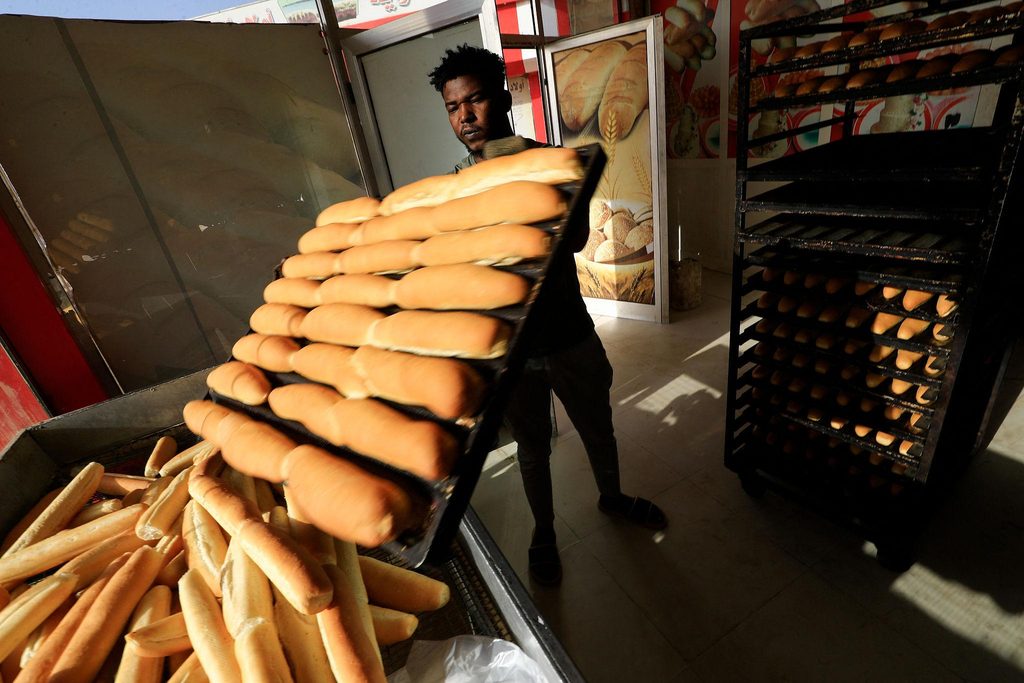
A growing bread shortage has forced several bakeries in Sudan’s capital, Khartoum, to suspend operations after wheat flour producers reportedly halted sales to local bakeries, adding to mounting economic pressures on residents.
Bakery owners told local Sudanese media that flour distribution companies had stopped supplying their businesses, leaving many unable to maintain production and forcing others to increase bread prices.
Several bakeries across Khartoum state have introduced new prices of 1,000 Sudanese pounds for two loaves, as operators struggle with rising production costs and the continued depreciation of the national currency.
According to bakery owners interviewed by local Sudanese media outlet Darfur24, some flour companies have allegedly begun withholding supplies in anticipation of further price increases.
One bakery owner said suppliers were reluctant to sell at current prices because of exchange-rate volatility and concerns about potential losses.
Another operator in the Salha neighbourhood of southern Omdurman said his bakery had been forced to purchase flour on the open market for 170,000 Sudanese pounds after regular distributors suspended sales.
He said suppliers had attributed the decision to rising production expenses that were making existing selling prices financially unsustainable.
Other bakery owners warned that a 25-kilogram bag of flour could reach 200,000 pounds within the coming week if supply disruptions persist.
One operator estimated that producing bread from a 50-kilogram bag of flour now costs more than 460,000 pounds, while profits amount to no more than 15,000 pounds.
He attributed the shrinking margins to sharp increases in the prices of diesel, cooking gas, yeast, salt, ice and other essential production supplies.
The latest disruption comes amid a broader deterioration in Sudan’s economy, with the national currency trading at approximately 9,000 pounds to the US dollar on the parallel market, according to local market reports.
Earlier in October, Sudan Tribune reported that bakery operators in Khartoum had announced price increases as rising input costs and currency depreciation threatened their ability to remain operational.
The crisis also follows previous bakery closures and long queues for bread in parts of Omdurman, where residents have faced increasing difficulty obtaining basic food supplies.
Khartoum authorities had previously held discussions with flour producers and bakery representatives over rising prices and distribution difficulties. Officials acknowledged in September that reliance on fuel-powered operations and exchange-rate instability were increasing milling costs.