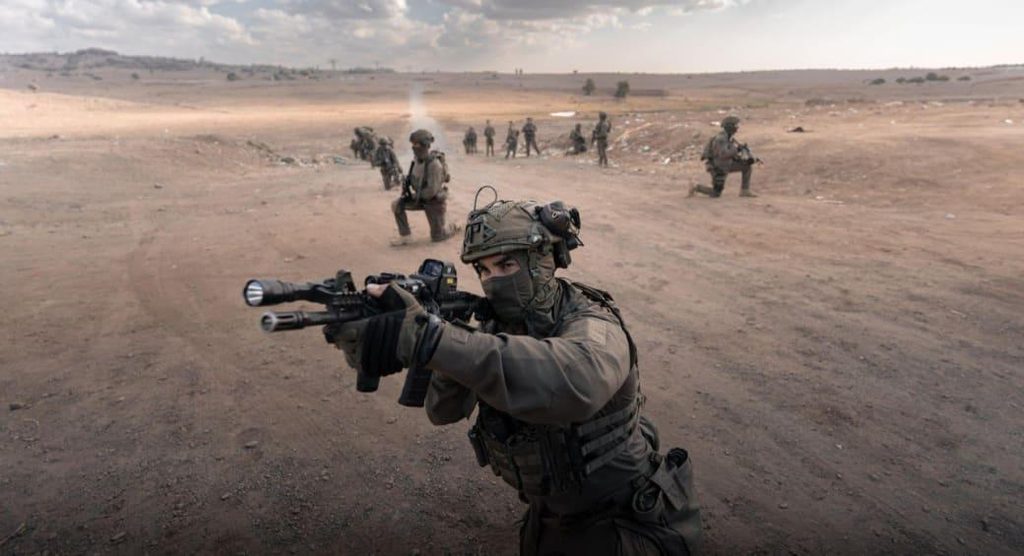
The Israeli military has completed a secret exercise simulating surprise attacks, infiltrations and system failures, with commanders struggling to establish a clear operational picture, according to Israeli media reports cited by Erem News on Sunday.
The exercise, codenamed “Dawn 2,” tested the military’s ability to respond to complex emergencies across multiple fronts under extreme pressure, the Israeli newspaper Maariv reported, citing a military source.
Fewer than 10 people in the military knew about the drill in advance, according to the report.
The exercise began in the Northern Command area and included a simulated infiltration by 10 to 15 hostile fighters. Other scenarios involved an attack on Route 60, an infiltration into the settlement of Shiloh, and missile strikes targeting perimeter fencing, Tel Aviv’s Azrieli towers and strategic sites.
Troops were also tested on their response to simultaneous raids on three settlements.
The military source said no final conclusions had been reached and readiness assessments would continue over the coming days.
While air and naval forces carried out their assigned tasks and readiness checks proceeded on schedule, military headquarters encountered difficulties piecing together events and identifying the source of command problems, the report said.
The exercise was intended in part to test whether shortcomings exposed during the October 7, 2023, attacks had been addressed.
According to the source, one lesson was the need to give regional commanders authority to activate forces across the three territorial commands and their subordinate units, supported by the necessary logistics network.
The source also stressed the importance of directing logistical support where it was needed and preventing units from moving into areas that did not require them.
During the drill, the military deliberately disabled systems, disrupting the General Staff’s response. Commanders issued a written order to transfer a battalion to the Gaza Division, but delays en route prompted the dispatch of a replacement battalion commander, according to the report.
The source said the experience of October 7 demonstrated that each of three divisions needed an assigned reserve battalion in its area, alongside a dedicated operational support unit. Division commanders should have authority to activate those reserve forces, the source added.
The exercise did not simulate direct Iranian military intervention. According to the source, such a development would require the military to halt the drill and mobilise all its forces.
On the eastern front, the report said the military received intelligence concerning potential raids at four or five locations, although it did not clearly establish whether this information formed part of the exercise or reflected an actual threat.
The military said the drill was designed to assess readiness ahead of the holiday period and revisit a long list of failures identified during the October 7 attacks.