A Kenyan court on Friday sentenced cult leader Paul Mackenzie to 200 years in prison for orchestrating the deaths of 190 children through starvation and other killings, in one of the deadliest cult-related atrocities in modern history.
Justice Diana Kavedza imposed two consecutive 100-year sentences, one for murders committed through deliberate starvation and another for direct killings.
Mackenzie, who led an apocalyptic religious movement operating near Kenya’s Indian Ocean coast, was convicted of ordering followers to starve themselves and their children in the belief that death would secure their passage to heaven before the end of the world.
Prosecutors said members of the group enforced the deadly fasting regime through threats, beatings and confinement, preventing victims from accessing food or water.
Investigators discovered severely malnourished bodies buried in shallow graves across Shakahola Forest, near the coastal town of Malindi. Some victims were found in latrines, while others had reportedly been buried alive.
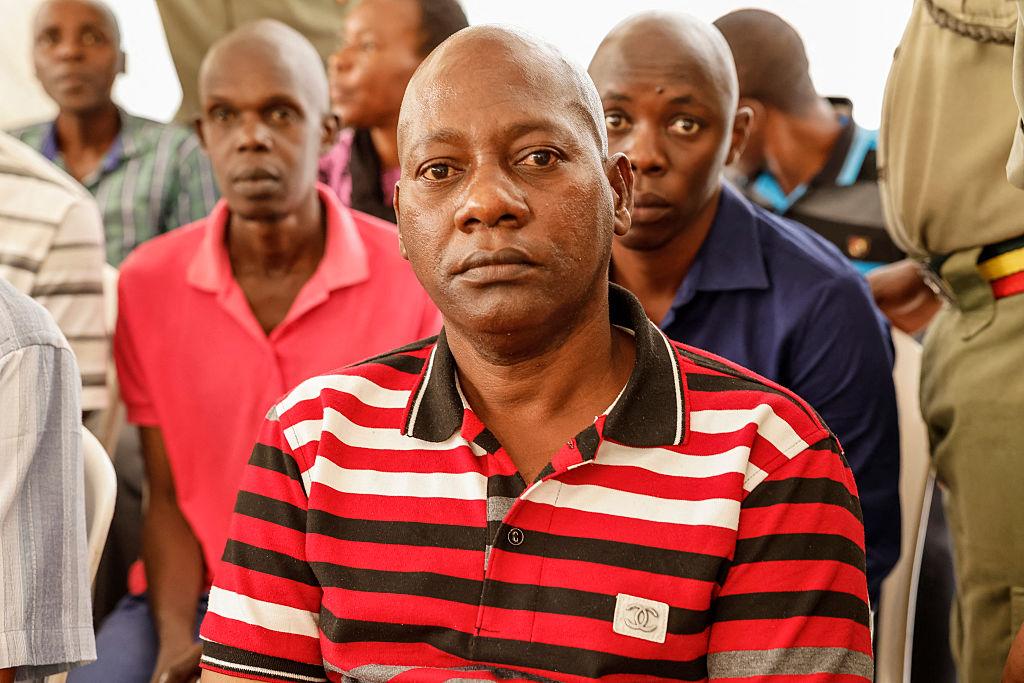
Mackenzie showed no visible reaction as the sentence was delivered during proceedings held in a tent outside the courthouse.
He had denied ordering the killings and maintained that followers had voluntarily chosen to fast. The court dismissed his defence.
Another 28 people convicted alongside Mackenzie received prison sentences ranging from 10 to 160 years.
Defence lawyer Lawrence Obonyo said he intended to appeal the verdict.
Children subjected to starvation and violence
The court heard that Mackenzie exploited his followers’ religious beliefs and personal vulnerabilities to establish control over their lives.
Justice Kavedza said his influence, reinforced through a charismatic media presence, enabled him to persuade families to participate in increasingly extreme fasting practices.
Children were among the most vulnerable victims, with some forced to witness their siblings die after days without food.
Those who attempted to obtain food or water were beaten, restrained or confined inside buildings used to enforce the starvation regime, the judge said.
The atrocities came to international attention in April 2023, when Kenyan authorities began exhuming bodies from Shakahola Forest.
Although the trial concerned 190 children and one adult victim, Kenya’s National Commission on Human Rights reported that 448 bodies were eventually recovered from the forest.
Mackenzie faces separate allegations involving the deaths of another 52 people at a location approximately 30 kilometres away. He has pleaded not guilty in that case.
Together, the discoveries have raised the suspected death toll to around 500.
Father describes loss of six children
Among the families devastated by the killings is 48-year-old Stephen Mwiti, whose six children died after their mother took them to Shakahola.
His wife was among those convicted alongside Mackenzie.
Mwiti questioned how children could have been subjected to the deadly fasting practices, regardless of whether adults had willingly participated.
He said no punishment could reverse the loss of his children and expressed hope that Mackenzie would remain imprisoned for the rest of his life.
The cult leader’s own family was also affected.
His son, Dan Mackenzie, said he abandoned the religious movement after rejecting its teachings about reaching heaven through starvation.
He said he lost a younger brother and several friends in Shakahola and welcomed the court’s decision as a measure of justice for the victims.
Authorities accused of ignoring years of warnings
The sentencing has renewed scrutiny of Kenyan authorities, who faced repeated warnings about Mackenzie’s activities years before the mass graves were discovered.
Police investigated his premises as early as 2017, while authorities closed his church in Malindi in 2019.
Following the closure, Mackenzie relocated his religious operations to the remote Shakahola Forest, where the killings later took place.
Human rights organisations have accused government agencies, security officials and local administrators of failing to intervene despite mounting evidence of dangerous practices within the group.
Ojiro Odhiambo, head of rapid response at the Kenya Human Rights Commission, welcomed the convictions but said responsibility should extend to officials who failed to prevent the deaths.
Justice Kavedza also criticised institutional failures and called on Kenya’s parliament to introduce safeguards against similar tragedies.
President William Ruto previously acknowledged that his government had failed to prevent the deaths and accepted responsibility for those shortcomings.
Following the discovery of the graves in 2023, his administration established a task force to examine oversight of religious organisations.
Although proposals to strengthen regulation were introduced in 2024, the legislative changes have yet to become law.
The Shakahola killings rank among the deadliest incidents involving apocalyptic religious movements, alongside the 1978 Jonestown massacre in Guyana and the deaths of hundreds of members of a Ugandan religious sect in 2000.
The 200-year sentence marks a major legal milestone in the Shakahola case, although families of victims and human rights advocates continue to demand accountability for the authorities’ failure to stop the killings.