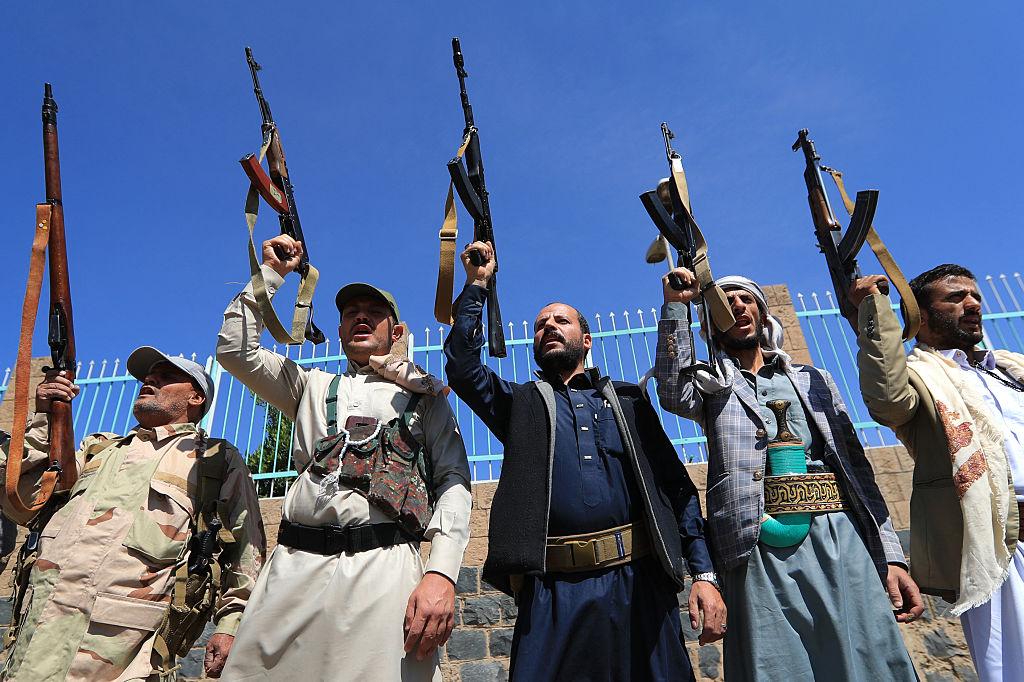
Saudi Arabia has rejected a report that Yemen’s Houthi movement demanded $51 billion and formal recognition as the country’s rulers in exchange for ending attacks on the kingdom, dismissing the claims as fabricated.
The Wall Street Journal reported on Thursday, citing people familiar with the discussions, that Riyadh had approached the Iran-backed group to explore a negotiated end to hostilities following a series of attacks on Saudi oil facilities and commercial shipping.
According to the newspaper, the Houthis initially sought $51 billion in compensation for years of Saudi-led airstrikes and a prolonged blockade of Yemen. The movement also reportedly demanded that Riyadh formally recognise its authority over the country.
However, Saudi Deputy Foreign Minister for Public Diplomacy Rayed Krimly categorically rejected the report, saying the allegations had no basis in fact.
In a statement posted on X, Krimly accused the newspaper’s authors or their sources of fabricating the claims. He also criticised the Houthis for attacking commercial shipping and civilian infrastructure, while stressing that Yemen already has an internationally recognised government.
The conflicting accounts come amid renewed fighting that has heightened concerns over Saudi Arabia’s security and the future of Yemen’s protracted conflict.
The Houthis have intensified missile and drone attacks against Saudi targets while expanding their military presence near the strategically important Bab al-Mandab Strait, a critical passage for international maritime trade.
The movement has also advanced towards Aden, the southern port city that serves as the seat of Yemen’s internationally recognised government.
Yemeni political analyst Majed al-Madhaji, a co-founder of the Sana’a Center for Strategic Studies, warned that any financial settlement with the Houthis could encourage further demands against Saudi Arabia.
Meanwhile, retired US Army Colonel David Des Roches told The Wall Street Journal that the Houthis’ use of short-range ballistic missiles against locations such as Aden was complicating efforts by the Saudi-led coalition to reinforce government-held territory.
He argued that Saudi Arabia faces mounting difficulties in countering threats across its extensive territory, particularly as its air defence systems must respond to potential attacks from several directions.
Des Roches suggested that military pressure on the ground could prove necessary to contain Houthi advances, although Riyadh faces significant limitations in deploying additional forces.
The latest developments follow allegations by Yemen’s internationally recognised government that Iran’s Islamic Revolutionary Guard Corps (IRGC) and Lebanon’s Hezbollah are directly involved in planning and supervising Houthi military operations.
Rashad al-Alimi, chairman of Yemen’s Presidential Leadership Council, said on Tuesday that Iranian military specialists were helping coordinate operations and develop the group’s missile, drone and naval capabilities.
Al-Alimi accused Tehran of expanding its involvement beyond supplying weapons and training, alleging that Iranian personnel were participating directly in the management of military operations.
The allegations have not been independently verified.
Despite the reported diplomatic contacts, no agreement has been announced, and the competing accounts underscore the uncertainty surrounding efforts to halt the renewed confrontation between Saudi Arabia and the Houthis.