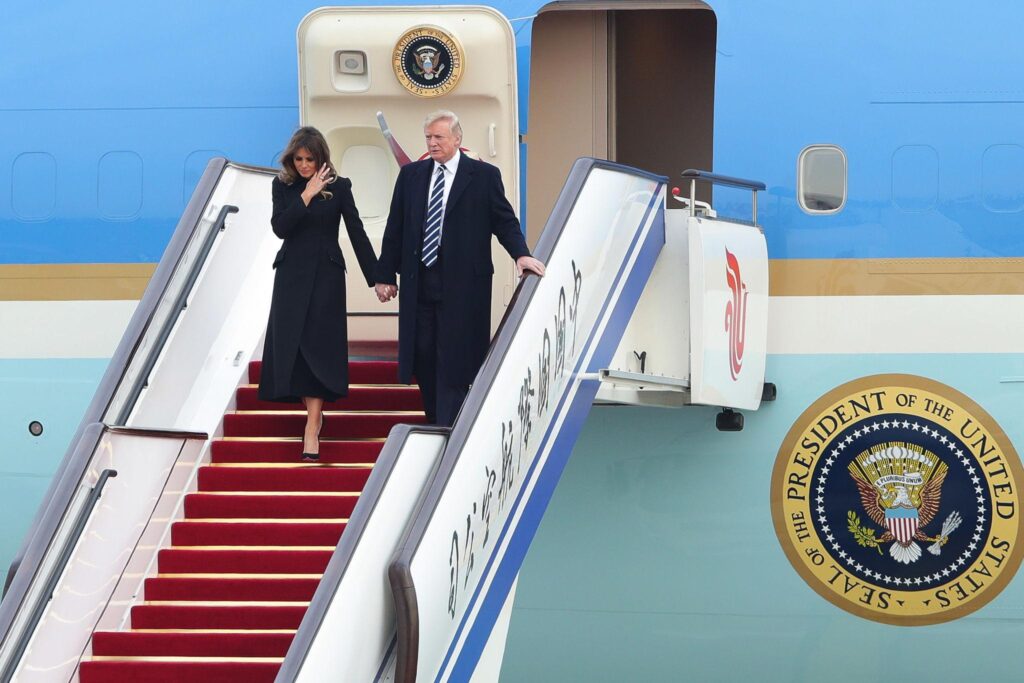
US President Donald Trump arrived in Beijing on Wednesday for a closely watched two-day summit with Chinese President Xi Jinping as tensions over trade, Taiwan, artificial intelligence and the Middle East dominate the agenda.
Trump landed at Beijing Capital International Airport alongside a high-profile delegation that included senior administration officials, business executives and technology leaders such as Elon Musk and Jensen Huang.
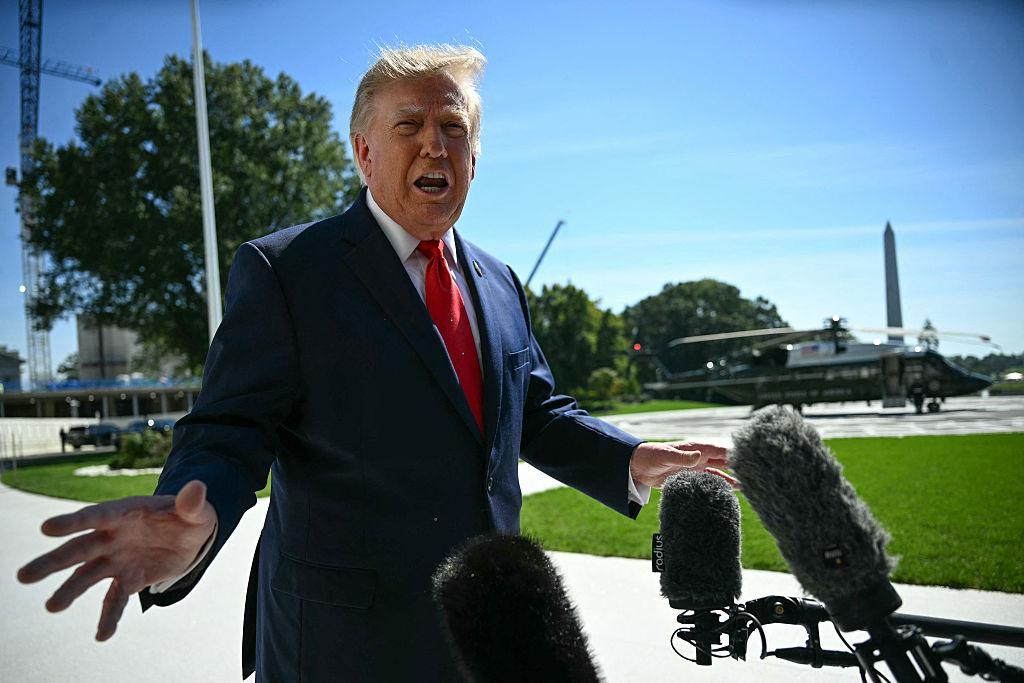
Speaking before departing Washington, Trump described the United States and China as the world’s “two superpowers” and signaled that trade would be the primary focus of talks with Xi.
“We have a lot of things to discuss,” Trump told reporters. “Trade more than anything else.”
The visit comes amid mounting global economic uncertainty linked to the ongoing US-Iran conflict and disruptions in the Strait of Hormuz, which have pushed oil and gas prices sharply higher and raised fears of slower global growth.
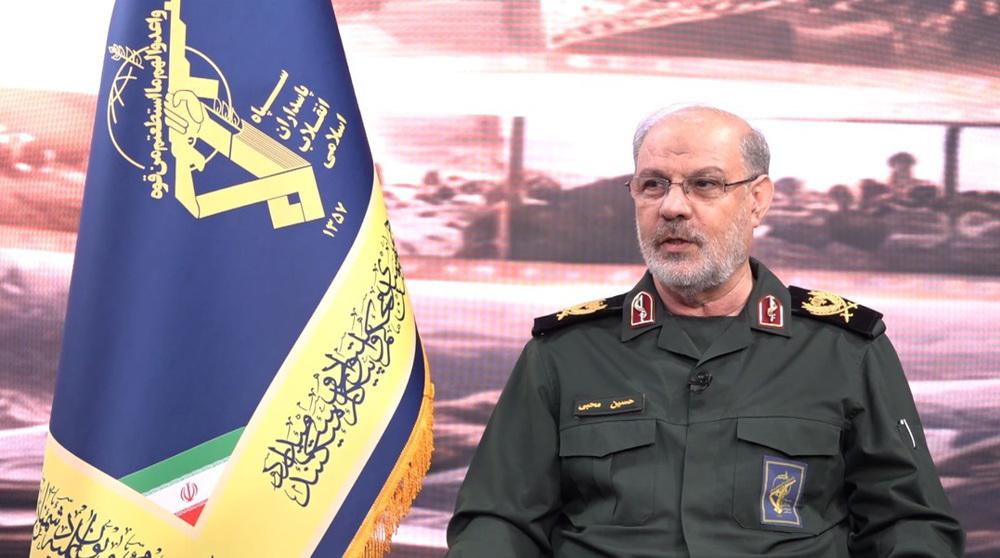
Despite speculation that Iran could feature prominently during the summit, Trump downplayed the issue, insisting the United States had the situation “under control,” even after Iranian Foreign Minister Abbas Araghchi visited Beijing last week for talks with Chinese officials.
The White House is hoping the summit can produce economic breakthroughs, including expanded Chinese purchases of American agricultural products and aircraft, while also laying groundwork for a proposed bilateral trade coordination mechanism aimed at preventing a renewed tariff war.
Relations between Washington and Beijing have remained fragile since last year’s escalation in tariffs and export controls, which triggered Chinese restrictions on rare earth mineral exports before both sides agreed to a temporary truce in October.
Taiwan is also expected to emerge as a major flashpoint during the summit.
Trump confirmed earlier this week that he plans to discuss a delayed $11 billion US weapons package for Taiwan that was approved in late 2025 but has yet to be fully implemented.
China has repeatedly condemned US arms sales to the self-governing island, which Beijing claims as its own territory. In an editorial published ahead of the summit, the Chinese Communist Party newspaper People’s Daily described Taiwan as the “first red line” in China-US relations and warned it remained the most dangerous source of confrontation between the two powers.
The issue has gained additional significance because Taiwan remains central to the global semiconductor industry and the development of artificial intelligence technologies. The United States has increasingly relied on Taiwanese chip imports while simultaneously pushing to expand domestic semiconductor manufacturing through new investment initiatives.
Trump also used the trip to promote greater access for American companies inside China, saying one of his top requests to Xi would be opening the Chinese market further to US businesses and technology firms.
“I will be asking President Xi … to ‘open up’ China,” Trump wrote on social media while aboard Air Force One.
Chinese officials are expected to host Trump with a formal state welcoming ceremony in Beijing, while both sides prepare for intensive talks on trade, technology competition, regional security and strategic stability in Asia.