A senior adviser to Sudanese army chief Abdel Fattah al-Burhan has criticised a US-backed ceasefire proposal, claiming it could entrench a de facto division of Sudan similar to Libya’s rival administrations.
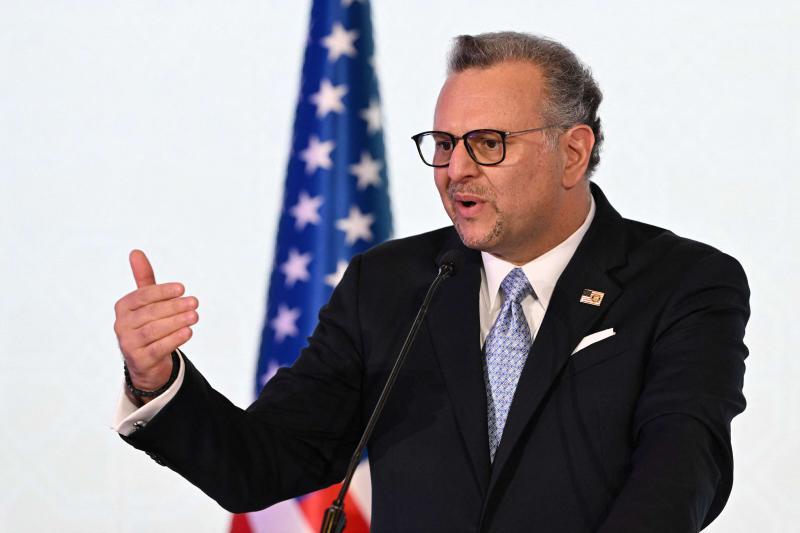
Amjad Farid, an adviser to Burhan on political and international affairs, told Reuters that the proposal being advanced by US Senior Adviser for Arab and African Affairs Massad Boulos risked preserving separate military and political spheres controlled by Sudan’s warring forces.
The US proposal calls for an immediate 90-day humanitarian ceasefire, followed by negotiations toward a permanent end to the war and a civilian-led political transition.
TASIS and the Rapid Support Forces have previously accepted the proposed 90-day humanitarian truce while rejecting demands that their forces withdraw from all territories they control before negotiations begin.
An RSF official told Sudan Tribune in July that its response to Washington included proposals covering security arrangements, restructuring state institutions, transitional justice and political negotiations leading to a transitional government. The RSF maintained that territorial withdrawals should be addressed through subsequent ceasefire and security negotiations rather than imposed as a condition for starting the truce.
TASIS has similarly said it supports an immediate humanitarian ceasefire and a civilian political process while opposing the Port Sudan military authorities’ demand for a full RSF withdrawal before talks begin.
No new TASIS statement responding specifically to Farid’s latest partition allegation had been verified on Wednesday.
Farid said the Port Sudan authorities had submitted amendments to the American proposal, including a demand for an internationally monitored RSF withdrawal from urban areas.
He accused Washington of failing to adequately address those demands.
“Mr Boulos seems to be putting pressure on us to accept a de facto partitioning of the country similar to Libyan model,” Farid told Reuters.
Farid also argued that the US approach could preserve a future military and political role for the RSF.
His comments represent the position of Burhan’s camp and do not establish that partition is an intended or inevitable consequence of the US proposal.
Washington has described its objective as an immediate humanitarian truce followed by negotiations, a permanent ceasefire and a transition to civilian government. The State Department said last week that both the Sudanese army and RSF should accept a humanitarian truce without preconditions.
The dispute comes amid worsening relations between Washington and the Port Sudan military authorities.
Reuters reported last week that the United States withheld Burhan’s visa for the UN General Assembly as Washington pressed him to accept the ceasefire proposal.
Two Sudanese diplomats told Reuters that representatives of the Port Sudan authorities had been preparing to meet Boulos in Washington last week, but the meeting was cancelled following the visa dispute.
The US State Department did not immediately respond to Reuters’ request for comment on Farid’s latest remarks.
Washington has also explicitly rejected claims by either military camp to represent Sudan’s legitimate constitutional government.
“Neither the Sudanese Armed Forces, the Rapid Support Forces, nor their respective leaders, represent legitimate, constitutional governance for Sudan,” State Department spokesman Tommy Pigott said in a September 22 statement.
The United States said both forces rule through military power and called for an inclusive political dialogue leading to civilian government.
Sudan’s war erupted in April 2023 following the collapse of a power-sharing arrangement between the army and the RSF during a stalled transition toward civilian rule.
The conflict has since caused a massive humanitarian crisis and divided territorial control across the country.
TASIS has established an administration centred in Nyala in Darfur, appointing officials in areas controlled by its forces and allies. The development has fuelled debate over the risk of Sudan developing rival centres of government.
Farid argued that freezing existing front lines without resolving competing political and military structures could institutionalise such a division.
The United States has accused forces on both sides of serious abuses during the conflict. Washington determined that members of both the army and RSF committed war crimes. US authorities have also sanctioned Burhan after accusing army forces of attacks on civilians and obstruction of humanitarian assistance.
The tensions also come against the backdrop of Washington’s chemical-weapons findings against the army-aligned authorities. In April 2025, the United States formally determined that Sudan’s government had used chemical weapons during the war in 2024, a finding that later triggered US sanctions and a declaration that Sudan was not complying with its obligations under the Chemical Weapons Convention. The British government subsequently described the US finding as a determination that the Sudanese Armed Forces had used chemical weapons.
Washington has continued to press both sides to halt fighting and enter negotiations, saying neither military leadership has a legitimate claim to govern Sudan.