Sudan’s SAF and intelligence services are being accused of playing an increasingly active role in Ethiopia’s internal tensions, as renewed conflict risks turning western Tigray into a wider regional flashpoint.
A recent analysis by ACLED, the Armed Conflict Location & Event Data Project, warned that moves by the Tigray People’s Liberation Front to restore its full authority over Tigray could create a growing threat across the Horn of Africa.
The report said the dispute is no longer confined to Ethiopia’s internal politics. Instead, it is increasingly shaped by competing regional interests involving Sudan, Eritrea and other actors seeking influence around Ethiopia’s borders.
The latest escalation followed the TPLF’s decision in May to reinstall Tigray’s regional government, whose mandate had expired in 2020. The move ignored the interim administration created under the peace agreement that ended the earlier Tigray war.
According to the report, that step marked the start of a new phase of military and political pressure aimed at western Tigray, a disputed area claimed by both Tigrayan and Amhara forces. Addis Ababa has made clear that any attempt to alter control over the region by force would cross a red line.
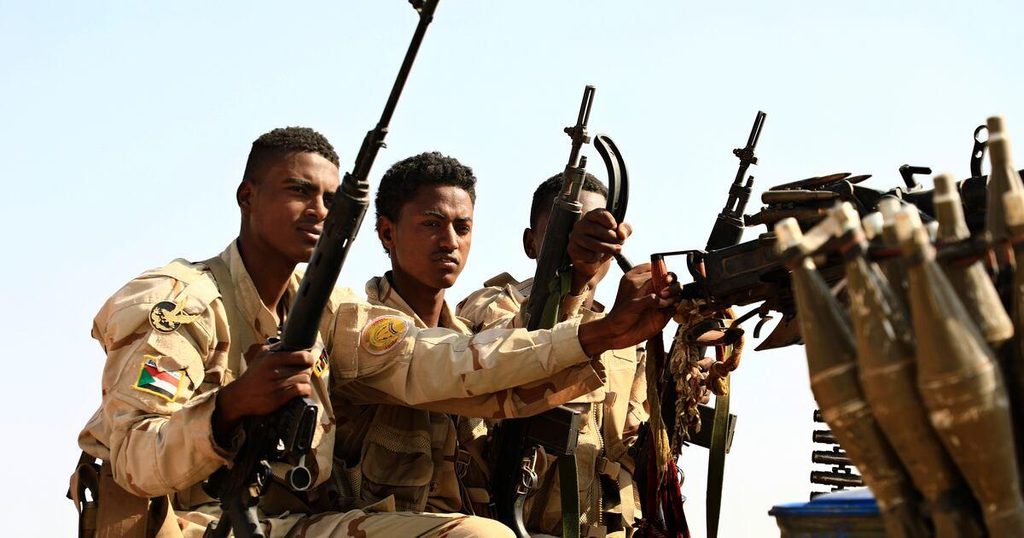
The most serious allegation concerns General al-Burhan’s army (SAF) and military intelligence. The report said SAF are likely to support any TPLF-backed military move toward western Tigray by providing weapons, supplies and logistical space, including hosting Tigrayan Defense Forces elements on Sudanese territory.
The claims fit into a broader pattern. Foreign Policy and Critical Threats have previously reported that Burhan’s SAF provided weapons and logistical support to the TPLF during the 2020–2022 Tigray war, pointing to long-standing ties between the two sides.
ACLED also noted that on May 5, the same day the TPLF formally announced the reinstatement of Tigray’s regional government, Sudanese forces mobilized troops and heavy equipment in Gedaref state, which borders western Tigray and Ethiopia’s Amhara region.
The timing has raised questions over whether the deployment was part of a wider plan. If Tigrayan forces move from the east, allied Amhara factions move from the south, and Sudan-backed forces apply pressure from the west, Ethiopian federal forces could face pressure on several fronts at once.
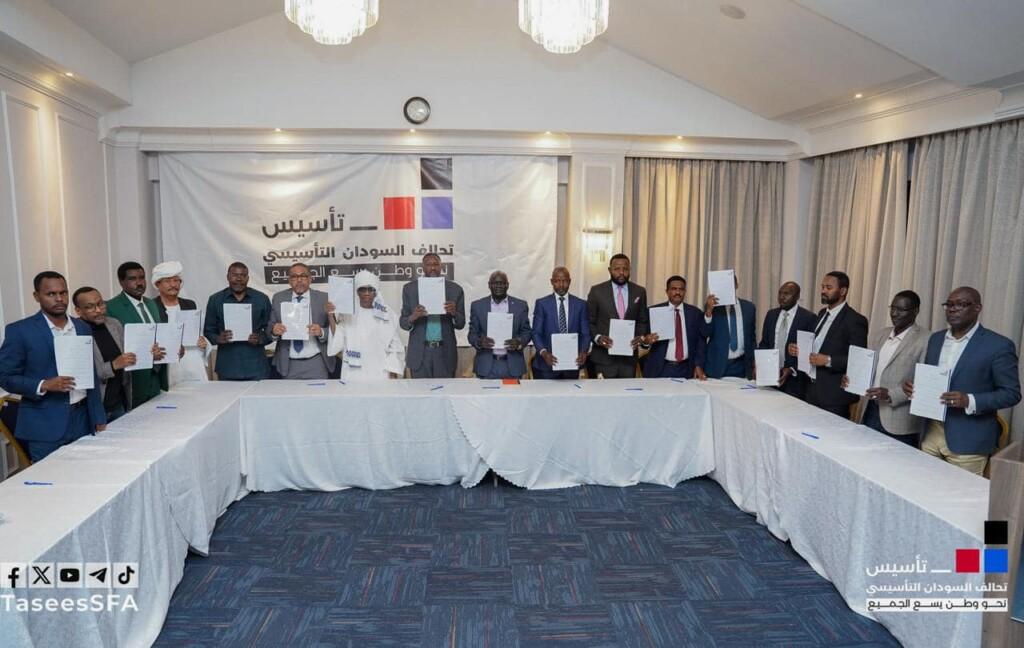
The political dimension has also deepened. Port Sudan, the SAF’s wartime seat of power, recently hosted a conference for the “Tsemedo” movement under the supervision of Sudan’s General Intelligence Service.
ACLED described the gathering as the first open unified front bringing together regional state and non-state actors opposed to the Ethiopian government. Participants reportedly included figures linked to Eritrea, Sudanese military officials, breakaway elements from the Ogaden National Liberation Front, Amhara nationalist figures and smaller armed opposition groups.
Horn Review has reported that Sudan is playing two roles: hosting groups aligned with the TPLF and serving as a logistics route for weapons entering Ethiopia’s Amhara region.
SAF is not acting alone. Chatham House and other analysts have pointed to a broader alignment involving Sudan, Eritrea and Egypt, all of which share concerns about Ethiopia’s growing regional influence.
That alignment was highlighted by Eritrean President Isaias Afwerki’s visit to Cairo on June 8, where he met Egyptian President Abdel Fattah el-Sisi for talks that included security developments in the Horn of Africa. The visit came only weeks after the Tsemedo conference in Port Sudan and the TPLF’s move to restore its regional government.
Horn Review has also reported that Eritrean officials have helped train Sudanese forces and facilitate arms transfers. Analysts say Egypt, one of the main backers of Sudan’s SAF, sees the emerging alignment as a way to pressure Ethiopia from both the north and west.
The timeline points to a sharp escalation. On January 29, Tigrayan forces launched coordinated operations to regain control of Tselemt. Four days later, Amhara Fano fighters attacked the Tekezé Zib militia in western Tigray, as Eritrean and Tigrayan military movements were also reported near the same area.
Then came May 5, when SAF accused Ethiopia of launching drone strikes on Khartoum while the TPLF announced the reinstatement of its expired regional government. Less than two weeks later, the Tsemedo conference was held in Port Sudan, alongside reported Sudanese military mobilization in Gedaref.
Tensions between Sudan and Ethiopia have been deteriorating since 2025. Burhan’s SAF has accused Addis Ababa of hosting a secret camp for Rapid Support Forces fighters in Ethiopia’s Benishangul-Gumuz region, claiming that more than 4,000 RSF fighters were present there by January.
In May, Sudan also accused Ethiopia of launching drones from Bahir Dar airport to strike Khartoum airport on May 1.
Ethiopia has pushed back by accusing Sudan of becoming a hub for anti-Ethiopian forces. Ethiopia’s Foreign Ministry has alleged that Sudanese military intelligence provided weapons and financial support to Tigrayan fighters.
The deterioration marks a sharp reversal from earlier attempts to contain tensions. In July 2024, Ethiopian Prime Minister Abiy Ahmed traveled to Port Sudan for talks with Sudanese army chief Abdel Fattah al-Burhan. The meeting was reportedly aimed at ending mutual support for each side’s enemies.
In June 2025, Ethiopia’s intelligence chief Redwan Hussein also visited Port Sudan to urge Sudanese leaders not to interfere in Ethiopia’s internal conflicts.
Those understandings now appear to have collapsed.
The danger is that western Tigray is no longer merely a local territorial dispute. If the Tsemedo-aligned network, Tigrayan forces, Amhara factions and Sudan-backed actors all move at once, Ethiopia’s federal forces could be pulled into a multi-front confrontation.
For the wider region, the risk is a proxy war across the Horn of Africa at a time when Sudan itself remains consumed by war between the army and the Rapid Support Forces.
For civilians in Tigray, Amhara, Oromia and Sudan’s border regions, the price could be devastating: renewed displacement, sectarian violence and another cycle of war driven by regional power calculations.
General al-Burhan’s SAF, already fighting on multiple fronts at home, appears to be using Ethiopia’s internal divisions as leverage against Addis Ababa. But in doing so, it risks dragging Sudan deeper into a regional conflict whose consequences would be paid by civilians far beyond the battlefield.