A covert Iran–Sudan arms network is facing mounting scrutiny after U.S. prosecutors exposed an Oman-based corporate channel allegedly used to funnel weapons to General al-Burhan’s SAF — with Sudanese analysts now questioning whether the operation extended into official circles.
At the centre of the case is Shamim Mafi, an Iranian national accused by U.S. authorities of brokering weapons deals between Tehran and Sudan using an Oman-registered firm, Atlas International Business.
Prosecutors allege the network facilitated the transfer of drones, ammunition and bomb components in early 2025, pointing to what they describe as a covert procurement pipeline linking Iran to Sudan’s military apparatus.
The emergence of the Oman-based structure has triggered a wave of allegations across Sudanese political circles, with analysts and commentators claiming the network may have operated under the cover of legitimate business activity while obscuring the true nature of the transactions.
Some have gone further, alleging the structure could not have functioned without at least a degree of awareness within official networks in the Sultanate of Oman, raising questions over whether oversight mechanisms were bypassed — or quietly circumvented.
One such claim, raised by Sudanese commentator Tsabih Ali, alleges links between the company’s operations and Sudanese diplomatic channels in Muscat. The claims remain unverified.
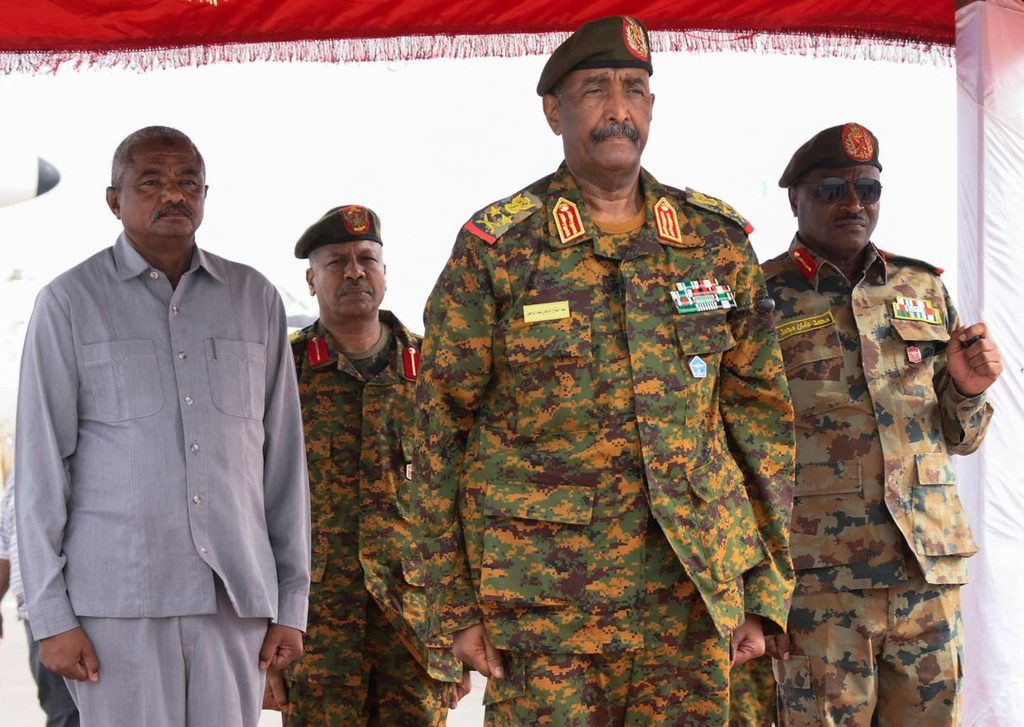
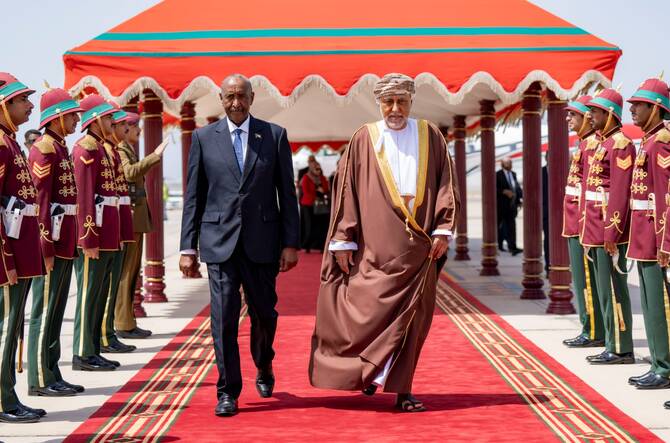
The allegations surfaced as Abdel Fattah al-Burhan travelled to Oman this week, where he met Sultan Haitham bin Tariq in talks officially described as focusing on bilateral relations and regional developments.
The timing of the visit has fueled further speculation among Sudanese observers, with some suggesting it may be tied to growing international pressure following the U.S. case and the exposure of alleged procurement routes.
Neither Sudanese nor Omani authorities have publicly addressed the allegations.
What is clear, however, is that the U.S. case has brought into the open a previously opaque supply chain — one that analysts say may represent only part of a broader network through which Iranian weapons have reached Sudan over recent years.
As scrutiny intensifies, attention is shifting from the mechanics of the deals themselves to a more consequential question: who enabled the network to operate — and how far its reach extends.