Tensions are rising in Sudan’s eastern Kassala state after leaders from the Beni Amer and Habab communities accused Hadandawa chief Mohamed al-Amin Tirik of fueling tribal division with remarks about demarcating tribal borders and reviewing identity documents.
The dispute follows statements by Tirik that were widely understood as questioning the Sudanese identity of the Beni Amer and Habab and linking them to Eritrea. His remarks triggered anger in Kassala, where community leaders demanded the dismissal of Interior Minister Babiker Samra and Kassala governor al-Sadiq al-Azraq.
Beni Amer leaders described Tirik’s comments as tribal abuse and hate speech, warning that the issue could not be treated as a local disagreement while the Port Sudan authorities and their officials in Kassala remained silent or appeared to endorse the rhetoric.
They said calls to demarcate tribal boundaries in eastern Sudan were acceptable only if handled fairly and according to recognized maps, agreements and traditional frameworks. But they stressed that their Sudanese identity and citizenship rights were not open to review or political bargaining.
The Beni Amer administration accused the Port Sudan authorities of siding with Tirik through the conduct of the interior minister and Kassala governor, saying both officials had failed to act against those accused of spreading hate speech.
They said officials had ignored inflammatory rhetoric and rewarded those behind it instead of holding them accountable.
The latest dispute has revived fears that eastern Sudan’s unresolved questions of land, identity and representation are being exploited by political actors at a time when the country remains consumed by war.
Community voices close to the Beni Amer and Habab have warned that the rhetoric used in Kassala mirrors earlier campaigns that sought to portray the two communities as outsiders, despite their long-standing presence in eastern Sudan and their deep social ties across the region.
The dispute also comes despite an agreement signed in Kassala in October 2023 by 11 tribal administrations and community bodies. The agreement committed signatories to rejecting hate speech, upholding traditional reconciliation mechanisms known as the qald, and holding a wider conference on eastern Sudan.
Tirik said he would hold a press conference on Thursday to respond to the accusations raised by Beni Amer leaders.
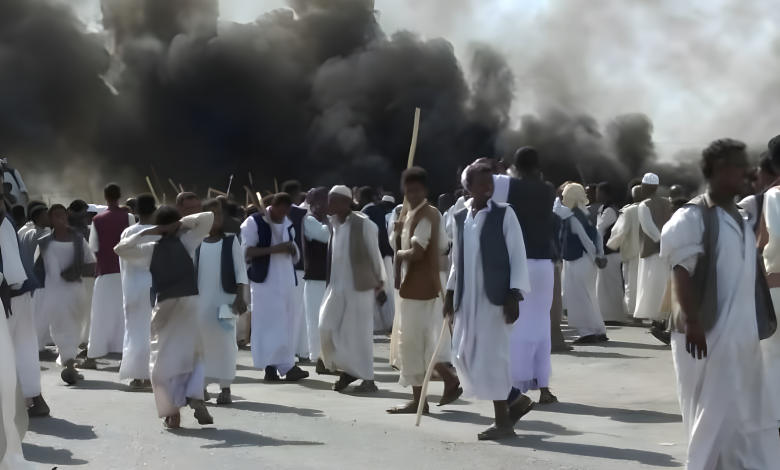
Eastern Sudan witnessed deadly tribal clashes in 2019 and 2020, leaving dozens of people killed or wounded. The latest tensions have raised fears of renewed violence in Kassala and other parts of the region.
Commenting on the situation, journalist Aza Ira said hate speech had spread in Kassala in recent days amid silence from security authorities, a silence she said could be interpreted as evidence that the state government was part of the incitement campaign.
Mukhtar Hussein, head of the Beni Amer and Habab Gathering and chairman of the Shilab Gathering, said the issue of borders was “clear and well known” and should be handled through established frameworks, maps and agreements.
Speaking at a press conference at the Beni Amer tribal administration headquarters in Kassala, Hussein said the community’s presence in Sudan and its full citizenship rights were beyond question.
“We are in Sudan, and we do not accept anyone questioning our belonging,” he said. “When we speak about rights, we speak from the reality of our presence on our land.”
Hussein said the Beni Amer have deep historical and social ties with other communities in the region, far from political exploitation or attempts to create division.
He called for coexistence, dialogue and the rejection of tribal disputes, saying: “At the same time, we extend a white hand to all components of Sudan.”
Hussein added that several leaders from the Hadandawa administration and other communities had affirmed that social relations between eastern Sudan’s tribal groups remained strong, and that what unites people is greater than their disagreements.