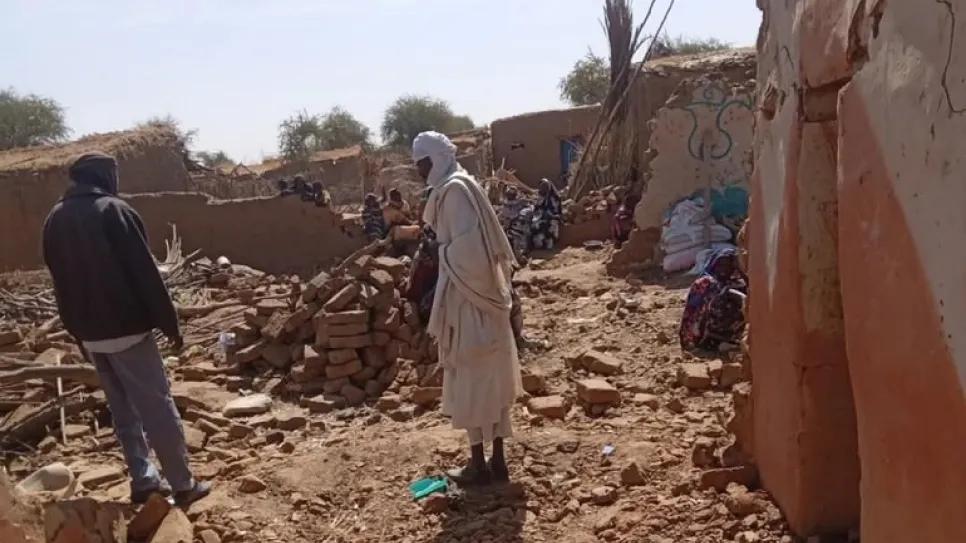
A new report has documented what it describes as a systematic pattern of airstrikes and drone attacks on civilian areas across Darfur, accusing both General al-Burhan’s army (SAF) and the Rapid Support Forces of carrying out attacks that may amount to war crimes under international humanitarian law.
The report, titled “Scars of the Wounds: Documenting Airstrikes and Drone Attacks on Civilians in Darfur,” was published by The Rights Project, or TRP. It examines attacks carried out between November 2024 and April 2026 against markets, hospitals, displacement camps, schools, homes, wedding celebrations and commercial districts.
According to the report, the documented attacks killed or injured hundreds of civilians and caused extensive damage to infrastructure essential for daily life. Researchers said many of the strikes appeared to be indiscriminate or disproportionate, raising serious concerns under international humanitarian law.
The report attributes most of the documented air and drone strikes to the SAF. It also accused the Rapid Support Forces of attacking civilian locations, including displacement camps in and around El Fasher.
Among the incidents highlighted was a December 2025 drone strike on Katila in South Darfur. Witnesses said more than 100 civilians attending a public gathering were killed, including women and children.
The report also documented an April 2026 airstrike on a wedding celebration in Kutum that reportedly killed between 40 and 56 people.
Researchers recorded repeated attacks on displacement sites, including a May 2025 drone strike on Abu Shouk camp in El Fasher. Civilians sheltering inside a school were killed and around 20 others were wounded, according to the report.
Witnesses interviewed by researchers described repeated bombardment that forced displaced families into overcrowded underground shelters.
The report also documented what it described as “double-tap strikes,” in which aircraft or drones returned to bomb the same location after civilians and rescue workers gathered to assist victims of an initial attack.
Researchers said this pattern was recorded in Nyala, Katila, El Daein and Al Kuma.
The attacks have caused lasting humanitarian consequences, the report said, destroying health facilities, markets, schools and commercial centres, disrupting livelihoods and inflicting widespread psychological trauma on civilians living under the constant threat of aerial attack.
The report concluded that several documented attacks may amount to war crimes or other international crimes because they targeted civilian sites or caused severe and disproportionate civilian harm.
It called on the SAF and the RSF to halt unlawful attacks, investigate alleged violations and allow international investigators access to the affected locations.
The report also urged the International Criminal Court to investigate alleged air and drone attacks against civilians in Darfur.
It called on the United Nations Security Council and the UN Independent International Fact-Finding Mission for Sudan to investigate the attacks, identify those responsible and strengthen accountability mechanisms.