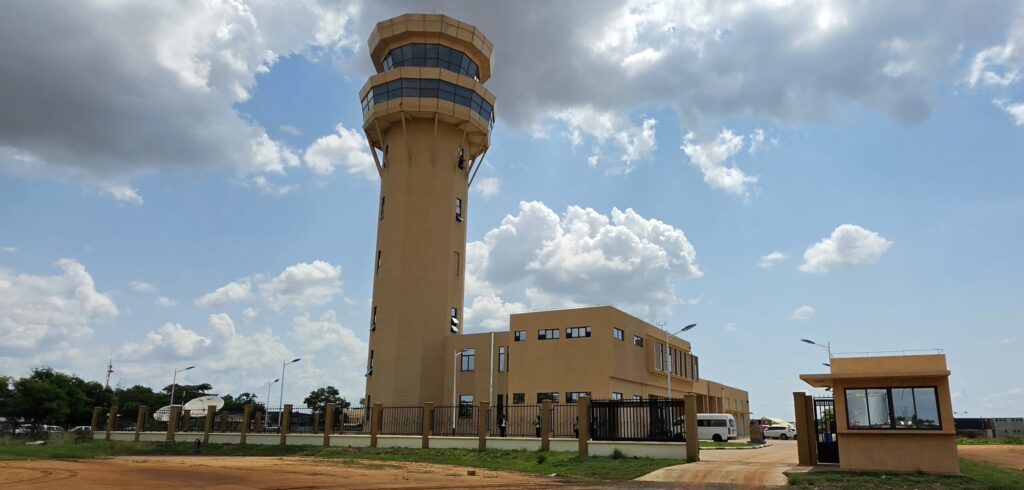
South Sudan has launched its first national air traffic management system, marking a major step toward full control of its own airspace nearly 15 years after gaining independence from Sudan.
President Salva Kiir Mayardit inaugurated the system on Monday from the new control tower at Juba International Airport, saying the move would allow South Sudanese authorities to independently monitor and regulate flights across the country’s airspace.
“This is a proud moment for every South Sudanese,” Kiir said during the ceremony. “We have finally regained full control of our airspace.”
Since South Sudan became independent in 2011, Sudan had continued to manage key parts of the new country’s airspace under transitional arrangements carried over from the period when the two countries were one state.
Officials said the new system includes six advanced radars, three primary and three secondary, giving South Sudan broad coverage and placing its air traffic management capabilities among the most advanced in Africa.
They said the radar network provides wider coverage than several countries in the region, including Kenya, and would improve aviation safety, coordination and revenue collection.
More than 80 South Sudanese personnel have been trained by Chinese experts to operate and manage the system, officials added, as part of efforts to build national capacity in the civil aviation sector.
The African Civil Aviation Commission welcomed the project as an important step for aviation safety and regional air traffic coordination, saying it would support air transport growth at both regional and continental levels.
During the ceremony, presidential envoy for special programmes Adut Salva Kiir Mayardit was honoured for his role in supporting the project from its early stages through completion. South Sudan’s Civil Aviation Authority also presented President Kiir with an award and certificate of appreciation for his continued backing of the aviation sector.
Authorities said the launch formally ends South Sudan’s dependence on Sudan for airspace management and gives Juba full authority to supervise air traffic and collect overflight fees independently.
Between 2011 and 2015, Sudan’s Civil Aviation Authority continued to manage South Sudan’s air navigation services. In 2016, the two governments signed a three-year agreement under the supervision of the International Civil Aviation Organization, allowing a Sudanese committee to continue managing and monitoring Juba’s airspace while South Sudan trained its own personnel.
In 2021, Juba announced that it had regained control of its lower airspace, while Sudan continued to manage the upper airspace.
South Sudan established its Civil Aviation Authority in March 2013 as the country’s first national body responsible for regulating and managing air transport, less than two years after independence.
The country also launched South Supreme Airlines as its first domestic carrier, aimed at linking Juba with several major towns.
Work on the air traffic management system began in July 2020 and was completed in December 2023 by China Harbour Engineering Company before becoming ready for operation.
In April 2024, Kiir said South Sudan was close to regaining full control of its airspace, adding that the move would allow the country to register airlines and collect sovereign aviation fees independently.