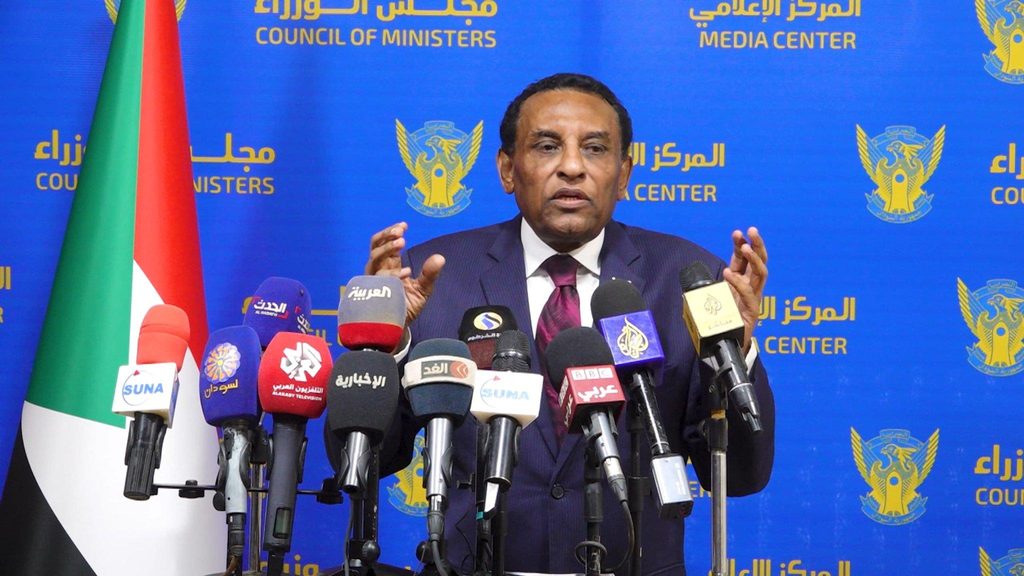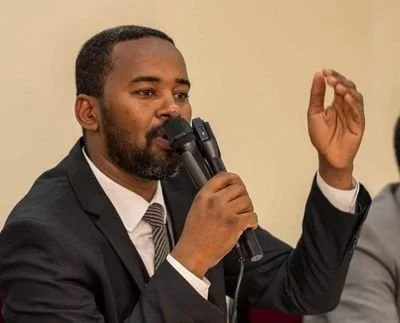
Hasab al-Nabi Mahmoud Hasab al-Nabi, chairman of the Sudan Liberation Democratic Movement, has called on the international community to take decisive measures against the SAF government if it continues to reject efforts to end Sudan’s war, urging immediate diplomatic pressure to secure a humanitarian truce.
Hasab al-Nabi, who also serves on the leadership body of the Sudan Founding Alliance (TASIS), criticised the SAF government’s rejection of Ethiopia’s initiative to host an inclusive Sudanese dialogue.
Speaking to Erem News on Wednesday, Hasab al-Nabi said Addis Ababa’s proposal came at a particularly critical moment, amid intensifying military confrontations and the expansion of fighting towards Sudan’s border regions.
He said the initiative could open the door to further diplomatic efforts aimed at ending the conflict and securing a peaceful political transition.
However, he argued that the SAF government’s rejection of the proposal had once again demonstrated its unwillingness to pursue a negotiated settlement.
Hasab al-Nabi stressed that international support for the Ethiopian initiative remained essential despite opposition from the army-aligned administration.
He called on the international community to pressure the SAF government into participating in negotiations and adopt decisive measures should it persist in rejecting efforts to halt the fighting.
Calls for an immediate humanitarian truce
The Sudan Liberation Democratic Movement chairman said securing an agreement to end hostilities must remain the immediate priority, particularly amid mounting humanitarian and economic pressures across Sudan.
He accused SAF forces of triggering renewed waves of displacement, exacerbating a humanitarian crisis that has devastated communities across the country.
Hasab al-Nabi said any credible initiative aimed at ending the war deserved support, regardless of its origin, stressing that genuine international pressure was needed to secure at least a temporary humanitarian truce.
Such a step, he said, could lay the foundations for broader negotiations and a comprehensive peace settlement.
His remarks follow the SAF government’s rejection of Ethiopian Prime Minister Abiy Ahmed’s invitation to host Sudanese political, civilian and military actors for talks in Addis Ababa, an initiative welcomed by both TASIS and the civilian coalition Somoud.
Dismantling entrenched political networks
In a statement, the Sudan Liberation Democratic Movement welcomed Ethiopia’s initiative but stressed that sustainable peace could not be achieved without addressing the structural and political causes of Sudan’s prolonged instability.
The movement called for dismantling the entrenched system of political patronage and institutional capture known in Sudan as tamkeen, reforming state institutions and establishing a unified, professional national army accountable to constitutional civilian authority.
It rejected power-sharing arrangements between warring parties and any political settlement that could facilitate the return of organisations it accused of capturing state institutions and driving Sudan into its current crisis.
The movement said an inclusive political dialogue should bring together Sudanese political, civilian and community forces committed to peace and democratic transformation, safeguarding the Sudanese people’s right to determine their country’s future and manage its resources independently.
It also reaffirmed its commitment to establishing a decentralised democratic civilian state founded on equal citizenship, justice, equitable distribution of power and wealth, and the participation of all Sudanese regions and communities in national governance.
The movement urged regional countries and the international community to continue supporting political and humanitarian efforts to end the war and provide the necessary guarantees for the success of the dialogue and the implementation of its outcomes.
It reiterated its readiness to support all serious initiatives aimed at ending the conflict, restoring security and stability, and enabling the Sudanese people to rebuild their country and determine their political future freely.