For two decades, Global Firepower has published an annual ranking of the world’s militaries, measuring armies by manpower, weapons, aircraft, tanks and budgets.
The index is often cited by officials and media outlets as if it were a definitive measure of military strength. But the platform itself describes its work as a source for entertainment, general reference and historical value, not as a certified strategic assessment.
That distinction matters in Sudan.
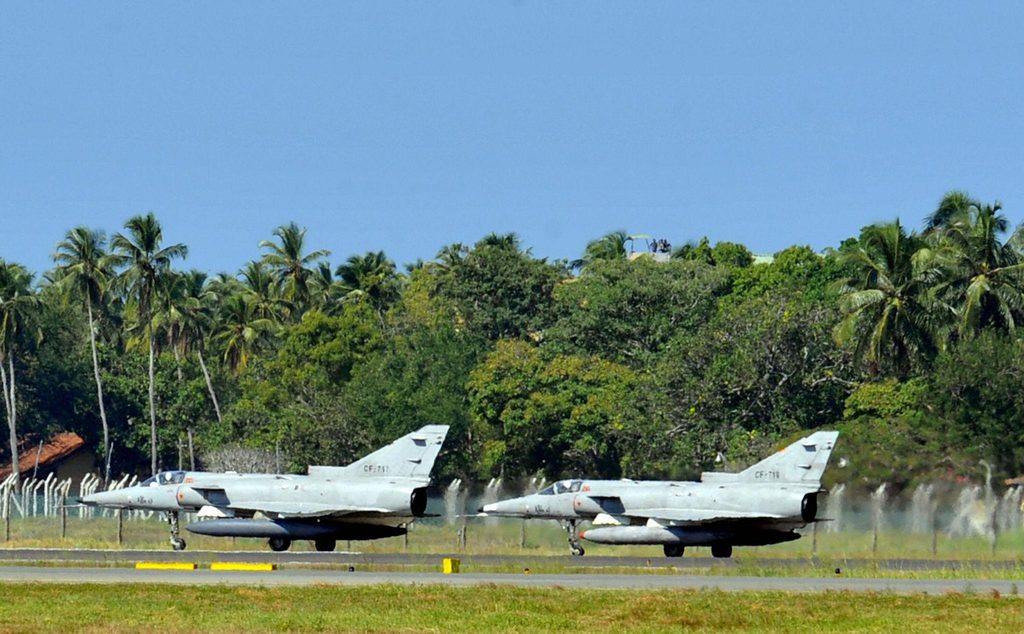
In its 2026 ranking, Global Firepower places Sudan 66th out of 145 countries, with a power index score of 1.3563. On paper, the figure suggests a sizeable army with regional weight. The listed numbers include 184 military aircraft, 91 fighter aircraft and 224 main battle tanks.
Some estimates have gone further, suggesting that Sudan’s armoured corps alone holds around 1,000 tanks of different types, alongside large numbers of armoured vehicles.
But the problem is that such rankings count equipment. They do not measure whether it works, whether soldiers are trained to use it, whether commanders can deploy it effectively, or whether morale can survive real pressure.
Sudan’s war has exposed that gap brutally.
When fighting broke out on April 15, 2023, between the Sudanese Armed Forces and the Rapid Support Forces, the first battles centred on Khartoum, including the presidential palace, Khartoum International Airport and the SAF’s own General Command.
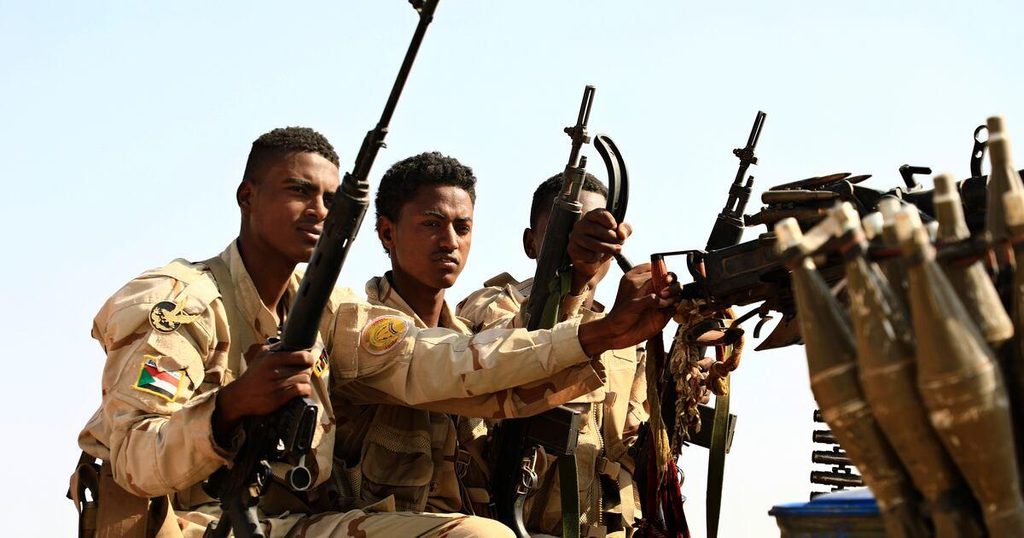
The army was not facing another state. It was facing a mobile force built largely around armed vehicles and light battlefield movement. Yet senior SAF commanders, including SAF chief Abdel Fattah al-Burhan, remained trapped inside the General Command for months.
Reports cited in the original article said the presidential guard responsible for protecting the leadership had only around 400 fighters, three tanks and several armoured vehicles against more than 200 RSF combat vehicles surrounding the headquarters from different directions.
For four months, an army ranked 66th in the world could not break the siege of its own command centre in the capital.
Another early sign appeared far from Khartoum, at Merowe airport. In the first hours of the war, RSF fighters seized the strategic airbase, where Egyptian personnel and aircraft were present. Footage circulated at the time showed Egyptian soldiers in RSF custody, while Cairo later said the troops had been in Sudan for joint training with the SAF.
The incident was more than a temporary battlefield embarrassment. It showed that even one of Sudan’s most sensitive military sites, linked to air operations and foreign military coordination, could be penetrated at the very start of the war. A professional army may lose ground in battle, but the speed and symbolism of Merowe exposed a deeper problem: poor anticipation, weak protection of strategic assets and confusion in the chain of command.
The war also exposed the condition of Sudan’s armour.
Videos from the Shajara armoured corps base in Khartoum, along with satellite images, showed tanks scattered in open yards, many appearing abandoned, rusted or poorly maintained. Workshops looked empty or inactive, while equipment appeared to have been left to decay before the war even reached the base.
When RSF forces attacked, they said they destroyed five tanks, four armoured vehicles and five military vehicles, while capturing dozens of soldiers. Other equipment reportedly fell into RSF hands with little resistance.
That is the kind of weakness a numerical ranking does not capture. A rusting tank and a battle-ready tank may appear the same in a table, but they are not the same in war.
The same problem can be seen in the air force.
In October 2024, the RSF downed an Ilyushin IL-76 aircraft over North Darfur’s Malha area. The aircraft was reportedly carrying medical supplies and equipment for El-Fasher. All five crew members were killed.
A year later, in November 2025, another IL-76 was brought down over Babanusa in West Kordofan. Images of the wreckage indicated the use of Chinese-made FK-2000 missiles, according to the original report.c
In April 2025, the RSF also announced the downing of a Sudanese Antonov military aircraft near El-Fasher, killing its crew.
In Omdurman, a separate crash involving a Sudanese military aircraft killed 46 people, including soldiers and civilians. Among the dead was Major General Bahr Ahmed, commander of the SAF’s central military region in Khartoum.
These losses point to a deeper operational crisis. Sudan’s air force has struggled to sustain supply routes, protect aircraft and operate effectively in an active war zone against a force that is not a conventional state military.
The map of the war has told a similar story.
When the RSF took Nyala in October 2023, Sudan’s second-largest city and the capital of South Darfur, it marked the collapse of SAF’s central weight in the region.
The collapse in Darfur was not limited to Nyala. Within days of RSF taking South Darfur’s capital, further SAF positions fell across the region. The 21st Infantry Division in Zalingei, Central Darfur, was overrun at the end of October 2023, while the SAF’s 15th Division base in El-Geneina, West Darfur, also fell to RSF forces.
These were not minor outposts. They were named SAF formations in state capitals. Their fall underlined that the crisis was not only a question of losing cities, but of entire military structures failing to hold ground under pressure. In a real war, divisions are not measured by how many soldiers appear on a roster, but by whether they can fight, coordinate, resupply and survive.
In December 2023, the RSF seized Wad Madani, the capital of Gezira state, after the withdrawal of the First Infantry Division. The retreat raised enough questions for the SAF’s General Command to announce an investigation.
El-Fasher became another decisive test. From May 2024, the RSF imposed a siege on the city from all directions. For around 500 days, the SAF failed to break the encirclement. The fall of Bara in North Kordofan removed one of the last nearby positions that could have been used as a launch point to relieve the city.
By October 2025, the RSF had taken El-Fasher, tightening its control over all five Darfur states and their military divisions. The SAF lost its last foothold in a region that makes up roughly one third of Sudan’s territory.
In March 2026, the losses extended toward the southeast when the RSF took Kurmuk in Blue Nile state near the Ethiopian border.
A widely circulated audio recording attributed to the commander of the 16th Infantry Division referred to a withdrawal caused by a “certain situation.” The phrase did little to explain the retreat from a sensitive border area and instead added to the perception of a military leadership unable to provide a convincing account of repeated losses.
One of the most revealing indicators of military strength is not found in Global Firepower’s tables: the morale of the soldier.
The Heglig episode may be one of the clearest examples of this collapse in battlefield morale. After RSF advanced on the oilfield area, thousands of Sudanese soldiers crossed into South Sudan’s Rubkona County. South Sudanese officials said the troops were disarmed after handing over tanks, armoured vehicles and artillery.
For any army, losing ground is part of war. But crossing an international border and surrendering heavy equipment to a neighbouring army is something else entirely. It speaks to a breakdown not only in tactical control, but in the will of units to remain inside the battle at all.
Similar scenes have been reported along the borders with Chad and South Sudan, where Sudanese soldiers crossed out of the battlefield with weapons and equipment.
RSF commanders have also called on the Sudan Liberation Movement led by Abdel Wahid Mohamed Nur to hand over SAF soldiers and allied fighters who had fled into areas under the movement’s control in Jebel Marra. The fact that soldiers from a regular army sought protection from an armed movement shows how far the crisis of battlefield morale has gone.
This is the weakness that military rankings fail to measure.
The issue is not only how many tanks, aircraft or soldiers an army claims to have. It is whether those assets can be used, whether commanders can lead, whether troops can hold their ground, and whether the institution still commands loyalty when the battlefield turns against it.
Global Firepower may count Sudan’s equipment. But Sudan’s war has asked a harsher question: what can the SAF actually do with it?
Between rusting tanks in Shajara, aircraft falling from the sky, units surrendering weapons at foreign borders, the fall of division headquarters across Darfur, and the months-long siege of the SAF chief inside his own headquarters, Sudan’s 66th-place ranking tells only part of the story.
The battlefield has told the rest.