Sudanese academic and writer Ibrahim Barsi has called for the former National Islamic Front and its affiliated networks to be designated as a terrorist organisation, arguing that Sudan’s Islamist movement transformed the state into an ideological security machine that used religion, armed mobilisation and financial networks to sustain decades of violence.
In a lengthy analysis published on June 7, Barsi said the movement that brought Omar al-Bashir to power through the June 30, 1989 coup was not merely a political party, but a comprehensive project that sought to reshape the Sudanese state, society, economy and public discourse through Islamist ideology.
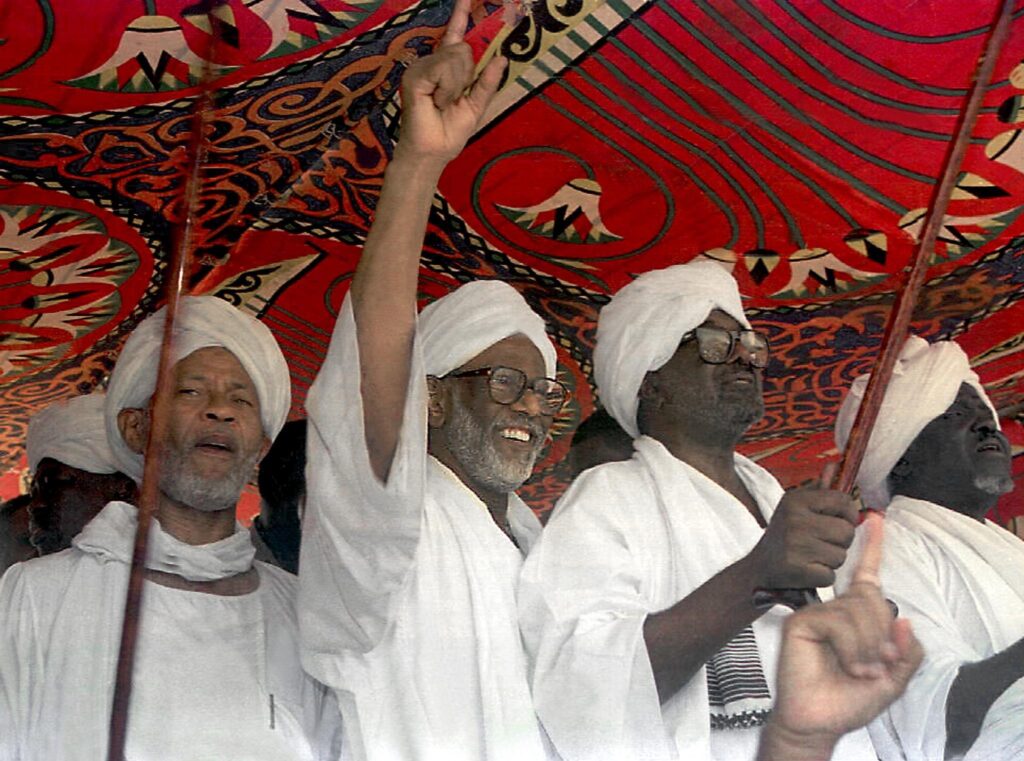
He argued that the coup, engineered by Hassan al-Turabi and carried out by Bashir, created what he described as a “dual state”: one visible through ministries and official institutions, and another hidden inside security agencies, party structures, business fronts, charities, student organisations, armed formations and media outlets.
According to Barsi, this system fused religion with power, security with commerce, and political loyalty with access to wealth and protection. He said senior Islamist figures including Turabi, Ali Osman Mohamed Taha, Nafie Ali Nafie, Salah Gosh, Awad al-Jaz, Bakri Hassan Saleh, Abdel Rahim Mohamed Hussein and Ahmed Haroun helped build what he described as an “Islamist-security complex” that dominated Sudan for three decades.
The analysis said one of the most consequential chapters in this period was Sudan’s relationship with al-Qaeda during Osama bin Laden’s stay in the country between 1991 and 1996. Barsi said bin Laden’s presence in Sudan was enabled by a permissive political and security environment, with front companies, construction projects and financial channels operating under the broader umbrella of the Islamist state.
He argued that Sudan became a space where religious mobilisation, business interests and extremist logistics overlapped, allowing networks linked to armed Islamist groups to move people, money and documents through Khartoum, Port Sudan and border regions.
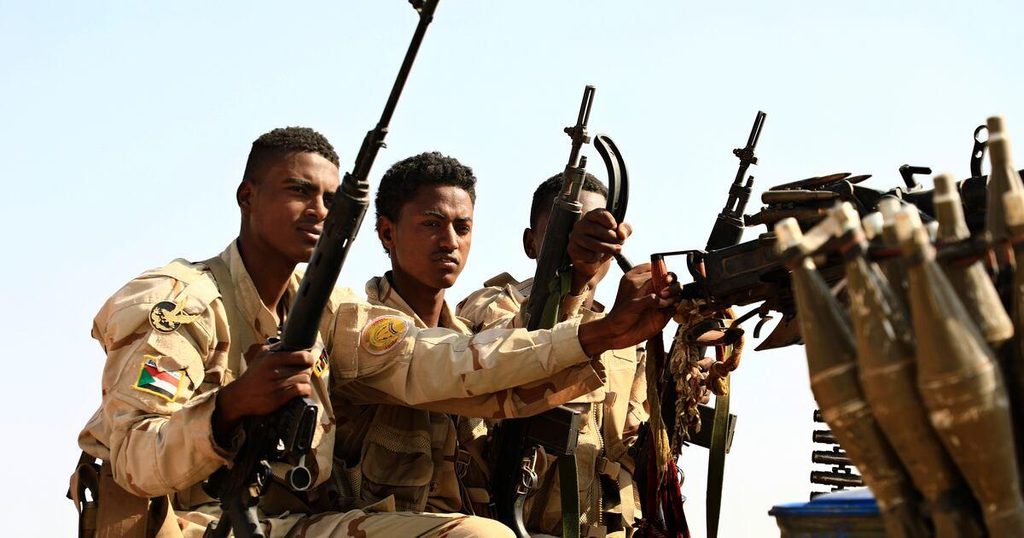
Barsi also linked the Islamist project to the creation of armed formations inside Sudan, including the Popular Defence Forces, Mujahideen units, Popular Security networks and later the Janjaweed in Darfur. He said these groups were used to fight internal wars under religious slogans, particularly in the Nuba Mountains, Blue Nile and Darfur.
The article pointed to atrocities committed in Darfur after 2003, including mass displacement, scorched-earth campaigns, sexual violence and attacks on civilians. It noted that international rights groups and UN bodies documented many of these abuses, while Omar al-Bashir, Ahmed Haroun and Ali Kushayb later became the subject of International Criminal Court proceedings over alleged war crimes and crimes against humanity.
Barsi further argued that the Islamist state extended its influence beyond Sudan through regional weapons routes and militant networks. He referred to reported arms routes through eastern Sudan toward Sinai and Gaza, as well as strikes on suspected weapons convoys in 2009 and the Yarmouk military complex in Khartoum in 2012.
The writer said Sudan was not necessarily the command centre for groups such as al-Shabaab or Boko Haram, but that the Bashir-era Islamist state offered a model for how an ideologically driven movement could capture state institutions, security organs, media platforms and the economy to sustain long-term violence.
Inside Sudan, Barsi said universities, mosques, unions and charities became key spaces for mobilisation. He accused Islamist-linked student groups and security networks of using intimidation and violence on campuses, while business networks connected to the regime expanded through banking, construction, military industries, agriculture, communications and charities.
He also described Sudan’s intelligence apparatus as the backbone of the Islamist system, accusing it of overseeing arrests, torture, disappearances and proxy wars while simultaneously presenting itself to foreign governments as a counterterrorism partner after the September 11 attacks.
Barsi said this dual strategy allowed the former regime to survive internationally by cooperating with Washington on some terrorism files, while continuing to deploy ideological militias and coercive networks inside Sudan.
The analysis argued that the Islamist movement’s danger did not end with Bashir’s fall in 2019. Barsi said the network adapted, re-entered state institutions and reappeared during the war that broke out in 2023 between General al-Burhan’s SAF and the Rapid Support Forces.
He pointed to the emergence of ideologically driven armed groups such as the Al-Baraa Ibn Malik Brigade and other Islamist-linked formations fighting alongside General al-Burhan’s SAF as evidence that the old movement continues to shape Sudan’s current conflict.
Barsi said designating the National Islamic Front and its affiliated networks as terrorist entities should not be viewed as a political slogan, but as a legal and moral step to dismantle what he described as the financial, ideological and security infrastructure behind decades of violence in Sudan.
He argued that the elements required for such a designation were present in the movement’s record, including violence against civilians, alleged logistical support for extremist networks, parallel financial and organisational structures, and responsibility for war crimes and crimes against humanity.
Barsi concluded that accountability must go beyond individual leaders and include the wider system that justified violence in the name of religion, national salvation and political loyalty. Without dismantling that structure, he warned, Sudan risks remaining trapped in a recurring cycle of coups, militias and ideological war.