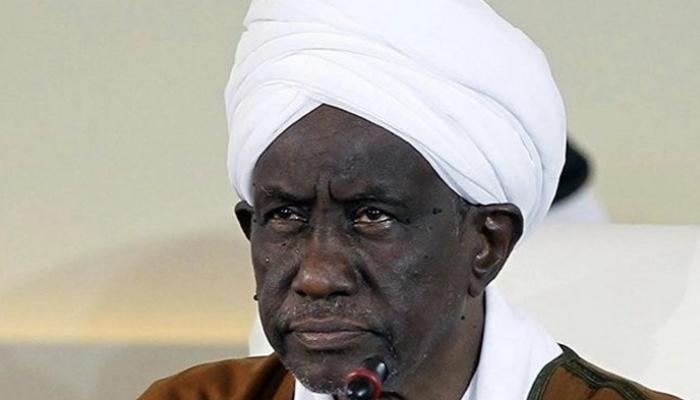
A senior figure in Sudan’s dissolved National Congress Party is reportedly pushing an initiative to contain widening internal divisions within the country’s Islamist movement, as rival factions clash over the future of their alliance with General Abdel Fattah al-Burhan’s SAF.
According to informed sources and local media reports, former vice president Ali Osman Taha is seeking to establish a mechanism to manage growing disputes between two main wings of the dissolved party. One camp is aligned with Ali Karti and Ahmed Haroun, while the other includes Nafie Ali Nafie and Ibrahim Mahmoud Hamid.
The rift has reached unprecedented levels in recent months, prompting party figures to search for temporary arrangements that would prevent the internal crisis from expanding into broader organisational fractures.
Sudanese News, citing party sources, reported that the adopted plan is based on freezing contentious files and postponing decisions on them during the current phase. The plan would allow active organisational sectors, especially student, youth and mobilisation networks, to continue operating without major changes that could trigger a wider confrontation inside the movement.
Observers say Taha, while attempting to present himself as a distant mediator, is closer to the Ali Karti camp, which favours flexible alliances as a route back into Sudan’s political scene. This contrasts with the more hardline current led by Nafie Ali Nafie.
Karti’s wing has adopted a strategy of aligning with General al-Burhan’s SAF, viewing support for the SAF leadership as the main — and perhaps only — path for the Islamists to regain influence and secure a place in any future political arrangement.
As a historic architect of political pragmatism within the Islamist movement, Taha understands that the party’s survival now depends either on an army victory in the current war or on the continuation of instability that allows the movement to operate with greater freedom, observers said.
They argue that Taha’s attempt to freeze internal disputes and delay a reckoning effectively reflects the Karti camp’s position and signals continued support for the army.
The Nafie Ali Nafie current, however, represents the party’s old guard and rejects reliance on the current army leadership, noting that the decision to dissolve the party was issued after the 2019 revolution under the same post-Bashir military order.
Nafie’s camp accuses Karti’s faction of bypassing internal party regulations, monopolising decision-making and taking major political decisions without returning to the movement’s consultative institutions.
The dispute highlights the depth of the crisis inside Sudan’s Islamist networks, whose wartime strategy has increasingly depended on preserving their influence through the army while avoiding a full public reckoning over their role in Sudan’s political collapse.